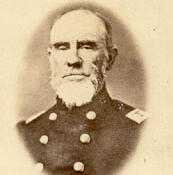
James Harrison Cravens (August 12, 1802 – December 4, 1876) was a U.S. Representative from Indiana and a prominent nineteenth-century lawyer, legislator, and Civil War officer. A second cousin of fellow Indiana congressman James Addison Cravens, he was associated with the Whig Party during his tenure in the U.S. House of Representatives and later aligned with the Free-Soil movement in state politics.
Cravens was born on August 12, 1802, in Harrisonburg, Virginia. He pursued legal studies in his native state and was admitted to the bar in 1823. Immediately after his admission, he commenced the practice of law in Harrisonburg. In the same year, 1823, he moved to Franklin, Pennsylvania, where he resumed his legal practice, continuing to establish himself as an attorney in the expanding communities of the early republic.
In 1829 Cravens relocated to Madison, Indiana, marking the beginning of his long association with that state. In Madison he engaged in agricultural pursuits in addition to his professional work, reflecting the dual role of many early Indiana professionals who combined farming with public life. His political career in Indiana began with service in the Indiana House of Representatives in 1831 and 1832. In 1833 he moved to Ripley County, Indiana, where he continued to practice law and managed a farm, further entrenching himself in the civic and economic life of southeastern Indiana. He advanced to the Indiana State Senate, serving there in 1839.
Cravens entered national politics as a member of the Whig Party and was elected to the Twenty-seventh Congress, representing Indiana in the U.S. House of Representatives from March 4, 1841, to March 4, 1843. During this single term in Congress, he participated in the legislative process at a time of significant political and economic debate in the United States, representing the interests of his Indiana constituents and contributing to the work of the Whig majority in the House. His service in Congress occurred during a period marked by questions of federal economic policy and the evolving sectional tensions that would later culminate in the Civil War.
After leaving Congress, Cravens remained active in Indiana politics. In 1849 he was the unsuccessful candidate of the Free-Soil Party for Governor of Indiana, reflecting his alignment with the emerging anti-slavery coalition that opposed the expansion of slavery into the western territories. He returned to the Indiana House of Representatives in 1856, again serving as a state legislator. That same year he was an unsuccessful candidate for election to the office of attorney general of Indiana, demonstrating his continued prominence and ambition within state political circles.
During the American Civil War, Cravens served in the Union Army, holding the rank of lieutenant colonel in the Eighty-third Regiment, Indiana Volunteer Infantry. His regiment saw service in the Western Theater, and during Confederate General John Hunt Morgan’s raid into Indiana in 1863, Cravens and his soldiers were taken captive. His military service, including his capture during Morgan’s Raid, underscored his commitment to the Union cause in a period of national crisis.
James Harrison Cravens spent his later years in southeastern Indiana. He died in Osgood, Indiana, on December 4, 1876. He was interred in Versailles Cemetery in Versailles, Indiana, closing a life that had encompassed legal practice, agriculture, state and national legislative service, and military command during the Civil War.
Congressional Record