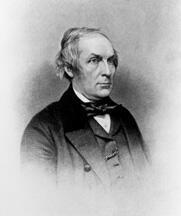
James Cooper, a 19th‑century American soldier and politician, was born on May 8, 1810, in Frederick County, Maryland. He came of age in the early national period, when the United States was expanding westward and sectional tensions over slavery and federal power were beginning to intensify. Although born in Maryland, Cooper would become most closely associated with neighboring Pennsylvania, where he later established his legal and political career and from which he would ultimately rise to national office.
Cooper received a formal education that prepared him for the legal profession, studying law in Pennsylvania after relocating from Maryland as a young man. He was admitted to the bar and commenced practice in Gettysburg, Pennsylvania, a community that would later gain historic prominence during the Civil War. His legal training and growing reputation as an able attorney provided the foundation for his entry into public life, aligning him with the Whig Party, which championed a strong legislative role in government, internal improvements, and a cautious approach to territorial expansion.
Cooper’s political career advanced steadily in Pennsylvania. Before reaching the national stage, he served in state-level public office, where he developed a reputation as a capable Whig legislator and an articulate spokesman for his party’s principles. His combined experience as a lawyer and state politician, along with his identification with Pennsylvania’s interests, positioned him as a credible candidate for higher office. In addition to his civilian political work, Cooper also pursued a military path, reflecting the era’s close ties between public service and martial readiness; he would later be recognized as both an American soldier and politician.
James Cooper served in the United States Congress as a Senator from Pennsylvania from 1839 to 1855, completing three terms in office. A member of the Whig Party throughout his congressional career, he contributed to the legislative process during a period marked by debates over economic policy, westward expansion, and the balance of power between free and slave states. His service in Congress occurred during a significant period in American history, as the nation grappled with issues that would culminate in the Civil War. As a member of the Senate, Cooper participated in the democratic process and represented the interests of his Pennsylvania constituents, working within the Whig framework of cautious expansion, support for internal improvements, and a strong but constitutionally limited federal government.
During his years in national office, Cooper’s dual identity as a soldier and statesman informed his approach to public affairs. The pre–Civil War era saw increasing concern over national defense, the security of expanding frontiers, and the role of the federal government in maintaining order and cohesion among the states. Cooper’s background made him attuned to these questions, and his legislative work unfolded against the backdrop of rising sectionalism, the Mexican–American War, and the intensifying national argument over slavery in the territories. His long tenure in Congress, spanning from 1839 to 1855, placed him among the more experienced Whig figures of his generation.
After leaving the Senate in 1855, Cooper’s public life continued to reflect his combined military and political experience. As the United States moved closer to civil conflict, his earlier service as an American soldier and politician remained part of the broader cadre of leaders whose careers bridged the antebellum and Civil War eras. Although the Whig Party itself fractured and declined in the 1850s, the issues that had defined Cooper’s congressional service—federal authority, economic development, and sectional compromise—remained central to the national crisis that followed.
James Cooper died on March 28, 1863, in the midst of the Civil War era that his generation of politicians had struggled, unsuccessfully, to avert. He was 52 years old. His life and career, rooted in Maryland birth, Pennsylvania legal and political practice, and long service in the United States Congress from 1839 to 1855, illustrate the trajectory of a Whig statesman navigating the turbulent decades before the Union’s rupture. Remembered as both an American soldier and a Pennsylvania politician, Cooper’s career reflects the complexities and challenges of national leadership in the antebellum United States.
Congressional Record