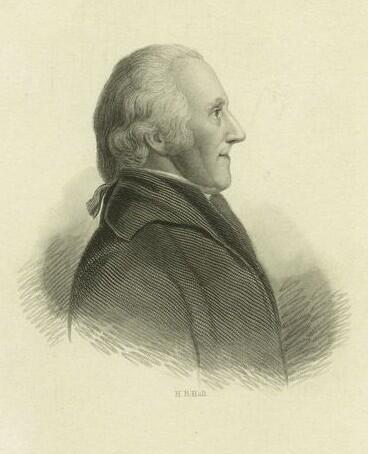
James Graham Clinton (January 2, 1804 – May 28, 1849) was an American lawyer and politician who served two terms as a U.S. Representative from New York from 1841 to 1845. He was part of the prominent Clinton family that produced a number of political and military leaders in the early days of the American republic, and his life and career were closely intertwined with the political development of New York State in the first half of the nineteenth century.
Clinton was born in Little Britain, Orange County, New York, on January 2, 1804. He was the son of Mary Little (1768–1835) and Major-General James Clinton (1736–1812), a brevet major general in the American Revolutionary War who had distinguished himself in several campaigns. Through his father’s first marriage to Mary De Witt (1737–1795), he was the half brother of DeWitt Clinton (1769–1828), the influential 6th Governor of New York and a leading advocate of the Erie Canal, and of George Clinton, Jr. (1771–1809), who served as a U.S. Representative from New York. His uncle was George Clinton (1739–1812), a central figure in early American politics who served as the 1st and 3rd Governor of New York from 1777 to 1795 and as Vice President of the United States from 1805 to 1812 under Presidents Thomas Jefferson and James Madison. His grandfather, Col. Charles Clinton (1690–1773), was an Anglo-Irish officer who served as a colonel during the French and Indian War, further underscoring the family’s long-standing military and public service tradition.
Clinton received his early education in the common schools of the region and at Newburgh Academy in Newburgh, New York, institutions that prepared many young men of the period for professional and civic life. He subsequently studied law, following a path common among politically inclined members of his generation and family. After completing his legal studies, he was admitted to the bar in 1823 and commenced the practice of law in Newburgh. His legal career placed him at the center of local affairs in Orange County and provided the foundation for his later judicial and political responsibilities.
In addition to his private practice, Clinton held several important local legal and judicial posts. He served as Orange County Master in Chancery, a position that involved responsibilities in equity jurisprudence under New York’s then-existing court system. He also served as judge of the county court of common pleas, where he presided over civil and lesser criminal matters, contributing to the administration of justice at the county level. These roles enhanced his standing in the community and deepened his experience in public administration and the law.
Clinton’s interests extended beyond the courtroom into business and infrastructure development, reflecting the economic transformations of New York in the antebellum period. He served as a director of the Newburgh Whaling Company, an enterprise connected to the broader maritime and commercial activities of the Hudson River region. He was also a director of the Delaware and Hudson Railway, one of the early transportation ventures that helped open up interior markets and resources, particularly in coal and other commodities, to the ports of the Northeast. In addition, he held the rank of colonel in the New York Militia, continuing the family’s military tradition and participating in the state’s organized defense structure during a period of relative peace but ongoing concern for readiness.
Clinton entered national politics as a member of the Democratic Party and was elected to the U.S. House of Representatives as a Democrat to the Twenty-seventh and Twenty-eighth Congresses, serving from March 4, 1841, to March 3, 1845. Representing New York, he took part in congressional debates during a time marked by economic recovery efforts following the Panic of 1837 and by growing sectional tensions. During the Twenty-eighth Congress he served as chairman of the Committee on Public Expenditures, a position that placed him in a key role overseeing and reviewing federal spending practices. His committee chairmanship reflected both the confidence of his colleagues and his engagement with issues of governmental accountability and fiscal management. He was not a candidate for reelection in 1844 and, upon the expiration of his second term, returned to New York to resume the practice of law.
In his later years, Clinton continued his legal and business activities in New York. He died in New York City on May 28, 1849, at the age of 45. Initially interred in the family cemetery at Little Britain, he was later reinterred at Woodlawn Cemetery in New Windsor, New York. His burial among his relatives in Orange County symbolized his enduring connection to the region and to the extended Clinton family, whose members played a significant role in the political and military history of both New York and the United States.
Congressional Record