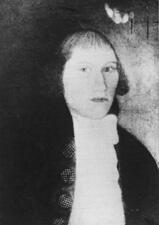
James Burrill Jr. was born on April 25, 1772, and became a prominent Federalist statesman and jurist from Rhode Island during the early national period of the United States. Over the course of his career, he emerged as an influential legal and political figure in his home state, ultimately attaining national office as a United States senator. His life and work unfolded against the backdrop of a formative era in American history, in which the institutions of the young republic were still taking shape and partisan alignments were evolving.
Burrill pursued higher education at the College of Rhode Island and Providence Plantations in Providence—later known as Brown University—and graduated in 1788. His early completion of a collegiate education at a leading New England institution prepared him for a career in law and public service. This academic foundation, achieved at a time when relatively few Americans attended college, positioned him to enter the legal profession and to participate actively in the civic and political life of Rhode Island.
By the late 1790s, Burrill had established himself in public office. In 1797, he became the attorney general of Rhode Island, a position he held until 1814. During these seventeen years, he was responsible for representing the state in legal matters and overseeing the enforcement of its laws, thereby gaining a reputation as a capable and experienced legal officer. Also in 1797, he was an unsuccessful candidate in a special election for the United States Congress, an early indication of his national political ambitions. After concluding his long tenure as attorney general, he continued to advance in the state’s legal hierarchy and, in 1816, was appointed Chief Justice of the Rhode Island Supreme Court. He served as chief justice from 1816 to 1817, presiding over the state’s highest court and further solidifying his standing as a leading jurist.
Burrill’s judicial service soon gave way to a career on the national stage. A member of the Federalist Party, he was elected to the United States Senate as a senator from Rhode Island and took his seat in 1817. His term in the Senate extended from 1817 until his death in 1820, encompassing what is often referred to as the “Era of Good Feelings,” a period marked by shifting party structures and the gradual decline of the Federalist Party. During his time in office, he served one term in the Senate and contributed to the legislative process as a representative of Rhode Island’s interests in the federal government. As a senator, he participated in the democratic process at a time when the nation was grappling with issues of expansion, economic policy, and the evolving balance between state and federal authority.
Burrill’s service in Congress occurred during a significant period in American history, as the United States continued to define its political identity following the War of 1812 and to navigate emerging regional and partisan tensions. As a Federalist senator, he was part of a political movement that advocated for a strong national government and commercial development, even as that party’s influence waned on the national scene. In representing Rhode Island, he worked to ensure that the concerns of his constituents were heard in the Senate, thereby linking the local interests of his state to the broader national agenda.
Beyond his formal offices, Burrill was recognized in intellectual and civic circles. In 1815, he was elected a member of the American Antiquarian Society, reflecting his engagement with the scholarly and historical interests that were gaining prominence in the early republic. His prominence in Rhode Island was such that the town of Burrillville, Rhode Island, was later named in his honor, a lasting testament to his impact on the state’s public life. His family connections also extended his legacy into the cultural sphere: his grandson, George William Curtis, became a noted American writer and public speaker.
James Burrill Jr.’s career was cut short by illness. While still serving in the United States Senate, he died of tuberculosis in Washington, D.C., on December 25, 1820. He thus became one of the members of the United States Congress who died in office during the nineteenth century. Following his death, he was interred in the Congressional Cemetery in Washington, D.C., a burial place for many national legislators and public officials. His life and work have been documented in historical and biographical sources, including a memoir by Zachariah Allen published in 1875 in the Proceedings of the Rhode Island Historical Society and the official Biographical Directory of the United States Congress, which together underscore his significance as a jurist, public servant, and Federalist senator from Rhode Island.
Congressional Record