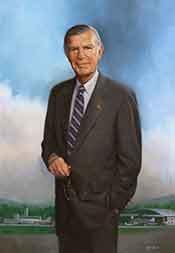
James Soloman Biery (March 2, 1839 – December 3, 1904) was an American lawyer, educator, and Republican politician who represented Pennsylvania in the United States House of Representatives during the Forty-third Congress. Over the course of his public life he combined careers in teaching, the ministry, law, and politics, becoming a prominent figure in Allentown and in the political life of Pennsylvania in the post–Civil War era.
Biery was born on March 2, 1839, on a farm in Venango County, Pennsylvania, near the town of Emlenton. He was raised in a rural setting and received his early education in the local district schools. Seeking further instruction beyond the common schools, he attended Emlenton Academy, which provided a more advanced curriculum than was typical of the area at the time. His formative years in Venango County coincided with the early development of the Pennsylvania oil regions, an environment that would shape his first professional endeavors.
After completing his studies at Emlenton Academy, Biery became a schoolteacher. He taught for three years in the oil regions of Pennsylvania, an area undergoing rapid economic and social change following the discovery of oil in the 1850s and 1860s. In 1861, he moved to Allentown, Pennsylvania, where he continued to teach for an additional eight years. During this period he established himself in the community as an educator and began to broaden his intellectual and professional interests beyond the classroom.
While residing in Allentown, Biery undertook the study of theology for two years, reflecting an early inclination toward religious and moral questions that were prominent in American public life in the mid-nineteenth century. He subsequently turned his attention to the law, reading law in the traditional manner under established practitioners rather than through formal law school training, which was still uncommon at the time. He was admitted to the bar in 1868 and commenced the practice of law in Allentown, building a legal career that would serve as the foundation for his later political service.
Biery entered elective office shortly after beginning his legal practice. In 1869 he was elected to the Pennsylvania House of Representatives, where he served as a member of the state legislature. His service in Harrisburg placed him within the ranks of the post–Civil War Republican leadership in Pennsylvania, a state that was central to national politics during Reconstruction. His legislative experience at the state level helped to elevate his profile within the party and prepared him for federal office.
In 1872, Biery was elected as a Republican to the Forty-third Congress, representing Pennsylvania in the U.S. House of Representatives from March 4, 1873, to March 3, 1875. His term in Congress coincided with the administration of President Ulysses S. Grant and with ongoing national debates over Reconstruction, economic policy, and civil service reform. Although details of his specific committee assignments and legislative initiatives are less extensively documented, his service placed him among the cohort of Republican lawmakers managing the transition from wartime to peacetime governance. Biery chose not to be a candidate for renomination in 1874 and thus served a single term in the House.
Following his departure from Congress, Biery returned to Allentown and resumed the practice of law. In addition to his legal work, he engaged in literary pursuits, reflecting the broad intellectual interests he had cultivated since his early studies in theology and law. He remained a respected member of the Allentown community, known for his professional work and his prior public service at both the state and national levels.
James Soloman Biery died in Allentown, Pennsylvania, on December 3, 1904. He was interred in Fairview Cemetery in Allentown, where his grave marks the resting place of a nineteenth-century Pennsylvanian who moved from rural beginnings in Venango County to a career in education, law, and Republican politics, culminating in service in the United States Congress.
Congressional Record