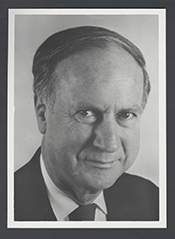
James Woodson Bates (August 25, 1788 – December 26, 1846) was an American lawyer, jurist, and statesman from Sebastian County, Arkansas, who represented the Arkansas Territory as a non-voting delegate to the United States House of Representatives. His congressional service, spanning two terms, occurred during a formative period in American expansion and territorial organization, during which he participated in the legislative process and represented the interests of his territorial constituents.
Bates was born on August 25, 1788, in Goochland County, Virginia, at his parents’ plantation known as Belmont. He was the ninth child of Thomas Bates and Caroline Woodson Bates and belonged to a prominent political family. His older brother Frederick Bates became the second governor of Missouri, and his younger brother Edward Bates later served as Attorney General of the United States in the cabinet of President Abraham Lincoln. Raised in this politically engaged environment, James Bates pursued higher education at Yale University before transferring to the College of New Jersey (now Princeton University), where he graduated in 1807.
After completing his formal education, Bates read law and soon joined the westward movement that was drawing many ambitious young professionals beyond the Appalachian frontier. In 1807, his brother Frederick was serving as Secretary of the Missouri Territory, based in St. Louis. James and his younger brother Edward followed Frederick to St. Louis, where James began the practice of law. This early legal career in the Missouri Territory placed him at the center of the developing legal and political institutions of the trans-Mississippi West.
When the Arkansas Territory was created in 1819, Bates moved south to its capital, Arkansas Post, becoming one of the first lawyers in the new territory. That fall he was elected as the territory’s non-voting delegate to the United States House of Representatives. As a member of the Unknown Party representing Arkansas, he contributed to the legislative process during two terms in office. Bates served in Congress from December 21, 1819, until March 3, 1823, choosing not to stand for re-election in 1822. His tenure coincided with a significant period in American history marked by territorial expansion, debates over slavery and governance in the territories, and the gradual development of Arkansas’s political identity within the Union.
During his congressional service, Bates relocated to a small settlement on the White River known as Poke Bayou. When the town plat was laid out in 1821, the settlement was renamed Batesville in his honor, reflecting his growing prominence in the region. At the conclusion of his congressional term, he returned to Batesville and resumed the practice of law. In 1824 he became a local judge, riding the fourth judicial circuit through the western part of the Arkansas Territory, which required extensive travel and close engagement with the legal and civic affairs of scattered frontier communities.
Bates’s judicial career advanced further when President John Quincy Adams appointed him to the superior court of the Arkansas Territory in 1828. He served on this high territorial court until the advent of the Jackson administration, when President Andrew Jackson replaced him with Judge Charles S. Bibb. Despite this change, Bates remained influential in territorial affairs. In 1835 he served as a delegate to the constitutional convention that framed the first constitution for the new state of Arkansas, helping to shape the legal and governmental foundations under which Arkansas would enter the Union in 1836.
While serving as a circuit judge, Bates met Elizabeth Moore, a wealthy widow, and the two later married. Following their marriage, he moved to her Moore Farm near Van Buren in Crawford County, in what would later be part of Sebastian County, Arkansas. There he continued his public service, holding positions as a probate court judge and as a registrar in the federal land office, roles that placed him at the intersection of property law, estate administration, and the management of public lands during a period of rapid settlement. Like many members of the territorial and early state elite in the South, Bates owned slaves, a fact that reflected and reinforced the social and economic structures of the region in his era.
James Woodson Bates died on December 26, 1846, at Van Buren, Arkansas. He was interred in a private family graveyard on the Moore farm near Van Buren. His career as a lawyer, territorial delegate, judge, and constitutional convention delegate linked the early legal and political development of Arkansas to the broader story of American westward expansion in the first half of the nineteenth century.
Congressional Record