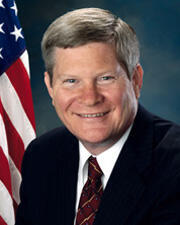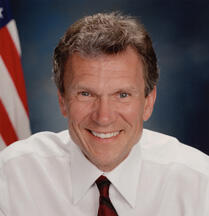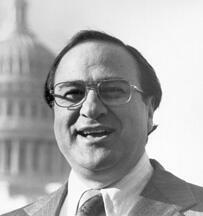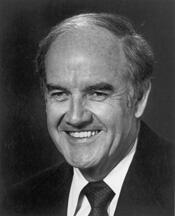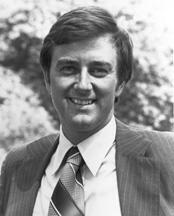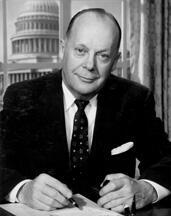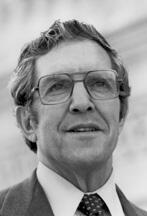
Ellis James Abdnor (February 13, 1923 – May 16, 2012) was an American politician and public servant who rose from modest beginnings in rural South Dakota to serve in both houses of the United States Congress and in the federal executive branch. He was born in Kennebec, Lyman County, South Dakota, on February 13, 1923, the son of Lebanese immigrants Samuel Joseph Abdnor and Mary (née Wehby) Abdnor. A second‑generation Lebanese American, he would later become, like his South Dakota congressional colleague James Abourezk, one of the earliest U.S. senators of Lebanese descent. Known throughout his career as a common, decent, plain‑spoken man, he earned the affectionate nickname “the people’s Senator” for his down‑home manner and close relationship with constituents and staff.
Abdnor’s early life was shaped by service and education. During World War II he served in the United States Army, contributing to the nation’s war effort before returning to civilian life. After the war, he attended the University of Nebraska, where he graduated in 1945 and became a member of the Sigma Chi fraternity. From 1946 to 1948, he worked as a teacher and coach, reflecting an early commitment to youth and community development. In the early 1950s he served as chief clerk of the South Dakota Legislature, gaining firsthand experience with legislative procedure and state government that would inform his later political career.
Abdnor entered elective office as a member of the South Dakota Senate, in which he served from 1957 to 1969. Over more than a decade in the state legislature, he developed a reputation as a “nice‑guy public servant” with a warm and approachable style that resonated with voters and colleagues alike. His staff and associates would later describe him as both an honorable mentor and a friend, underscoring the personal loyalty he inspired. In 1969 he became the 30th Lieutenant Governor of South Dakota, serving under Governor Frank Farrar until 1971. He sought the Republican nomination for the United States House of Representatives in 1970 but was unsuccessful in that bid, temporarily pausing his ascent to federal office.
In 1972, Abdnor was elected as a Republican to the United States House of Representatives from South Dakota’s 2nd congressional district, beginning his service in the 93rd Congress on January 3, 1973. He served in the House until January 3, 1981, a period that encompassed five terms in the United States Congress when combined with his later Senate tenure. His service in Congress occurred during a significant period in American history, including the aftermath of the Vietnam War, the Watergate era, and major shifts in economic and agricultural policy. As a member of the House, he participated actively in the legislative process and represented the interests of his largely rural South Dakota constituents, laying the groundwork for his later focus on agriculture, water resources, and fiscal policy.
Abdnor ran for the United States Senate in 1980, challenging three‑term incumbent and 1972 Democratic presidential nominee George McGovern. Arguing that McGovern was out of touch with South Dakota, Abdnor won the election by a wide margin and took office as U.S. Senator from South Dakota on January 3, 1981. As a member of the Senate, he served on the Appropriations Committee and the Environment and Public Works Committee, chairing three subcommittees, including the Environment and Public Works Subcommittee on Water Resources. During his Senate service from 1981 to January 3, 1987, he participated in the democratic process at a pivotal time in national politics, representing South Dakota’s interests in federal budget debates, agricultural policy, and infrastructure development.
A fiscal conservative, Abdnor played a notable role in efforts to restrain federal deficits. On April 2, 1984, he introduced S. 2516, the Deficit Reduction Act, which served as a forerunner to the Gramm–Rudman–Hollings Balanced Budget Act. As chair of the Senate Environment and Public Works Subcommittee on Water Resources, he exerted leadership in passage of legislation requiring cost‑sharing for federal water development projects. His interest in water policy stemmed from the central importance of water to South Dakota’s primary industry, agriculture, and from the state’s long‑standing expectation of irrigation development in exchange for the inundation of Missouri River bottom lands behind large federal dams built for flood control and navigation. Among his accomplishments were authorization of the Grassropes irrigation project and the Walworth, Edmunds, Brown (WEB) rural water system, reauthorization of the Belle Fourche irrigation project, and the inclusion of oats—an important South Dakota crop—in the federal farm program. In 1986, after winning a bruising Republican primary against Governor Bill Janklow by a wide margin, Abdnor narrowly lost his bid for Senate re‑election to then‑Representative Tom Daschle, ending his Senate service on January 3, 1987.
After leaving the Senate, Abdnor continued his public service at the national level. He was appointed the 15th Administrator of the Small Business Administration (SBA), serving from 1987 to 1989 under Presidents Ronald Reagan and George H. W. Bush. In that role he oversaw federal programs designed to support small businesses, a key component of both the national and South Dakota economies. He also remained active in Republican politics and public affairs. Notably, he served in an advisory capacity for John Thune’s successful 2004 campaign to unseat Senate Democratic Leader Tom Daschle, his onetime opponent, demonstrating his enduring influence in South Dakota political life.
Abdnor’s legacy extended through the many public servants who began their careers on his staff and later assumed significant roles in federal and state government. Future U.S. Senator John Thune worked for him, as did John Hamre, who became Undersecretary of Defense; Jeff Trandahl, Clerk of the U.S. House of Representatives; Bruce Knight, Undersecretary for Marketing and Regulatory Programs at the U.S. Department of Agriculture; Larry Parkinson, Deputy Assistant Secretary for Law Enforcement and Security at the U.S. Department of the Interior and Director of the Office of Enforcement at the Federal Energy Regulatory Commission; and Phil Hogen, Chairman of the National Indian Gaming Commission. Other former staff members included Vern Larson, South Dakota State Treasurer and Auditor; South Dakota State Senators Walter Conahan, Mike Vehle, Lee Schoenbeck, and Scott Heidepriem; South Dakota State Representative Sean O’Brien; Charlotte Fischer, South Dakota Public Utilities Commissioner; Roland Dolly, Commissioner of Economic Development for South Dakota; and Stephen Censky, Administrator of the Foreign Agricultural Service, Chief Executive Officer of the American Soybean Association, and later United States Deputy Secretary of Agriculture. Ellis James Abdnor died on May 16, 2012, at the age of 89, leaving a record of service that spanned state government, the United States Congress, and the federal executive branch, and a reputation as a plain‑spoken, constituent‑focused public servant.
Congressional Record