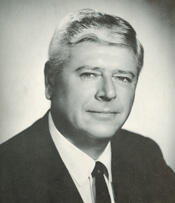
Jacob Alexander Preston (March 12, 1796 – August 2, 1868) was a U.S. Representative from Maryland and a physician who combined medical practice, agriculture, and public service during a period of significant political and social change in the United States. A member of the Whig Party, he served one term in the U.S. House of Representatives, representing Maryland in the Twenty-eighth Congress from 1843 to 1845.
Preston was born on March 12, 1796, at the family estate known as the “Vineyard” in Bel Air, Harford County, Maryland. He was the son of Sarah (née Bond) and Bernard Preston. Through his mother’s family, he was the grandson of Jacob Bond, a substantial landowner near Bel Air, which placed him within a locally prominent landholding family in early nineteenth-century Maryland. He attended the common schools of the area, receiving the basic education typical of the period before pursuing professional training.
Preston studied medicine in Baltimore and graduated from the medical department of the University of Maryland at Baltimore in 1816 with the degree of Doctor of Medicine. Following his graduation, he established himself as a practicing physician. He began his medical career in Perryman, Maryland, and over time extended his practice into several surrounding jurisdictions, including Harford, Baltimore, and Cecil counties. In addition to his medical work, he engaged in agricultural pursuits, managing and working land in a region where farming formed a central part of the local economy.
During the War of 1812, Preston served as a lieutenant in a Maryland regiment, participating in the defense of his state at a time when Maryland was a key theater of conflict. His combination of military service, professional standing as a physician, and ties to the landowning community helped establish his reputation and provided a foundation for his later political career.
Preston entered national politics as a member of the Whig Party, which in his era advocated for congressional supremacy, economic development, and internal improvements. He was elected as a Whig to the Twenty-eighth Congress and served as a U.S. Representative from Maryland from March 4, 1843, to March 3, 1845. During this single term in office, he participated in the legislative process at a time of growing sectional tension and debate over economic and territorial issues. Representing the interests of his Maryland constituents, he contributed to the work of Congress during a significant period in American history. He chose not to stand for renomination in 1844 and concluded his congressional service at the end of his term.
After leaving Congress, Preston returned to private life in Maryland, resuming both his medical practice and his agricultural activities. He continued to live in Perryman, maintaining his role as a local physician and landowner. His family connections extended his influence into subsequent generations. He married Caroline Perryman, the daughter of George Perryman, further linking him to another established Maryland family. The couple’s children included Emily, John Fisher, and J. Alexander. His grandson, John F. Preston, went on to serve as inspector general of the United States Army, and his grandnephew, Walter W. Preston, became a judge, indicating the continued public prominence of the extended Preston family.
Jacob Alexander Preston died on August 2, 1868, at his home in Perryman, Maryland. He was interred in Old Spesutia Cemetery at St. George’s Churchyard in Perryman. His life reflected the intertwined roles of physician, farmer, soldier, and legislator in nineteenth-century Maryland, and his single term in Congress as a Whig representative formed part of a broader career of professional and civic engagement.
Congressional Record