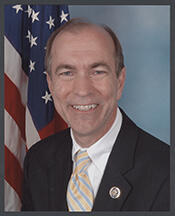
Jacob Thompson Baker (April 13, 1847 – December 7, 1919) was an American attorney, banker, real estate developer, and Democratic Party politician who represented New Jersey’s 2nd congressional district for one term from 1913 to 1915. He was also the first mayor of the reincorporated city of Wildwood, New Jersey, and played a central role in the founding and development of Wildwood and Wildwood Crest as resort communities.
Baker was born on a farm in Union County, Pennsylvania, near Cowan, on April 13, 1847. He was educated in the local public schools and later attended Bucknell University in Lewisburg, Pennsylvania. His early life in rural Pennsylvania and his formal education there laid the foundation for a professional career that combined law, finance, and public service.
After completing his studies, Baker read law and was admitted to the bar in 1870. He commenced the practice of law in Lewisburg, Pennsylvania, where he became a member of the Pennsylvania Bar Association. In addition to his legal practice, he emerged as an important figure in the development of public utilities in Pennsylvania, helping to organize and guide enterprises that supported the state’s growing infrastructure. He also entered the banking field, serving as president of the Union National Bank of Lewisburg, a position that underscored his prominence in local financial and civic affairs.
Baker’s political involvement began in Pennsylvania, where he aligned with the Democratic Party. He was several times the unsuccessful Democratic nominee to represent Union County in Congress. During the administration of President Grover Cleveland, he was offered multiple federal appointments, which he declined. Around 1905, despite having moved permanently to New Jersey, he was elected permanent chairman of the Pennsylvania Democratic State Convention, reflecting his continued influence in Pennsylvania Democratic politics even after his relocation.
Around 1905, Baker moved to the city of Wildwood, New Jersey, where he and his brothers became leading figures in the creation and development of Wildwood and neighboring Wildwood Crest as seaside resort towns. He engaged extensively in real estate and development, helping to shape the physical and economic landscape of the area. In Wildwood he served as president of the Wildwood Title and Trust Company and of the Wildwood and Delaware Short Line Railroad, positions that placed him at the center of local finance, land development, and transportation. His work in these roles contributed significantly to the growth of the Jersey Shore as a regional vacation destination.
Baker quickly became active in New Jersey Democratic politics. In 1910, he served as a delegate to the New Jersey Democratic State Convention, where he seconded the nomination of Woodrow Wilson for governor, aligning himself with the progressive wing of the party. In 1911, he was elected the first mayor of the reincorporated city of Wildwood, New Jersey, further cementing his leadership in local affairs. In 1912, he was chosen as a district delegate to the Democratic National Convention, representing New Jersey’s 2nd congressional district in the national party deliberations that nominated Woodrow Wilson for the presidency.
In the 1912 elections, Baker was elected as a Democrat to the United States House of Representatives from New Jersey’s 2nd congressional district, serving one term from March 4, 1913, to March 3, 1915. His service in Congress occurred during a significant period in American history, at the outset of the Wilson administration and amid major debates over tariff reform, banking and currency legislation, and progressive-era regulatory measures. As a member of the Democratic Party representing New Jersey, he participated in the legislative process and represented the interests of his coastal and South Jersey constituents. He was an unsuccessful candidate for reelection in 1914, losing to Republican Isaac Bacharach. Until 1936, he remained the only Democratic representative in the history of the district, underscoring the political difficulty of maintaining Democratic representation there in that era.
After leaving Congress, Baker returned to Wildwood and resumed his real estate and development activities. He continued to be identified with the growth and promotion of Wildwood as a resort, drawing on his experience in banking, transportation, and land development. His later years were marked by both his ongoing civic involvement and personal tragedy. Baker and his wife had at least four daughters, among them Katharine (often spelled Katherine) Baker, who became a leading suffragist, lawyer, and magazine writer, and who served as a corporal in the French Army during World War I. Katherine Baker died on September 23, 1919, following a physical breakdown caused by pleurisy and pneumonia contracted during the war.
Jacob Thompson Baker died of uremia at St. Agnes’s Hospital in Philadelphia on December 7, 1919, only a few months after the death of his daughter Katherine. He was interred in Cold Spring Presbyterian Cemetery in Cold Spring, New Jersey. His former residence in Wildwood, known as the J. Thompson Baker House, was later recognized for its historical significance and was added to the National Register of Historic Places in 1966, preserving the memory of his role in the civic and political life of both Pennsylvania and New Jersey.
Congressional Record