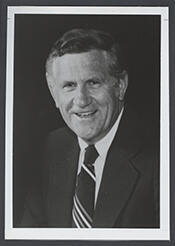
Karen Lorraine Jacqueline “Jackie” Speier (born May 14, 1950, in San Francisco, California) is an American lawyer and Democratic politician who served as a Representative from California in the United States Congress from April 8, 2008, to January 3, 2023. She was born to Nancy (née Kanchelian) and Manfred “Fred” Speier in an apolitical household. Her mother, born in Fresno and of Armenian descent, lost most of her extended family in the Armenian genocide, while her father immigrated from Germany and was the son of a Jewish father and a Catholic mother. Speier took “Jacqueline” as her confirmation name in honor of Jacqueline Kennedy. She grew up in the San Francisco Bay Area and graduated from Mercy High School in Burlingame, California, before attending the University of California, Davis, where she earned a Bachelor of Arts degree. She went on to receive a Juris Doctor from the University of California, Hastings College of the Law in San Francisco in 1976, preparing for a career that would combine law and public service.
Speier entered politics as a congressional staffer for Representative Leo Ryan, who represented a district encompassing much of the territory she would later serve in Congress. In November 1978, she joined Ryan’s fact-finding mission to Jonestown, Guyana, to investigate allegations of human rights abuses by Jim Jones and the Peoples Temple, whose largely American membership had relocated there in 1977 and 1978. On November 18, 1978, as the delegation attempted to depart from an airstrip near Jonestown, they were ambushed by Peoples Temple members. Five people, including Ryan, were killed. Speier, attempting to shield herself behind the wheels of a small airplane, was shot five times and lay wounded for approximately 22 hours before help arrived. That same day, more than 900 Peoples Temple members died in Jonestown and Georgetown in a mass murder–suicide. In the aftermath, Speier made her first bid for elective office, running unsuccessfully in the Democratic primary to fill Ryan’s vacant seat; she lost to Ryan’s former chief of staff, G. W. “Joe” Holsinger, who in turn lost the special election to Republican San Mateo County Supervisor Bill Royer.
Speier’s first electoral victory came in 1980, when she was elected to the San Mateo County Board of Supervisors, defeating a 20‑year incumbent and becoming the youngest person ever elected to that board. She was reelected in 1984 and later served as chairwoman of the Board of Supervisors. In 1986, midway through her second term, she successfully ran for the California State Assembly from a district in northern San Mateo County, winning by only a few hundred votes. She was reelected four more times, and in her final Assembly race she appeared on the ballot as the nominee of both the Democratic and Republican parties. Term limits prevented her from seeking reelection to the Assembly in 1996, but in 1998 she was elected to the California State Senate, representing parts of San Francisco and San Mateo counties. Reelected in 2002 with 78.2 percent of the vote, she became assistant president pro tempore of the Senate and was instrumental in securing $127 million to launch Caltrain’s “Baby Bullet” express service, for which locomotive No. 925 was named in her honor. Throughout her legislative service in Sacramento, she emphasized consumer protection and transportation policy. In 2006, she sought statewide office in the Democratic primary for lieutenant governor of California, running against Insurance Commissioner John Garamendi and State Senator Liz Figueroa; Garamendi prevailed with 42.5 percent of the vote to Speier’s 39.7 percent and Figueroa’s 17.8 percent, and Speier was termed out of the State Senate that same year.
On January 13, 2008, Speier announced her candidacy for the U.S. House of Representatives in California’s 12th Congressional District, the seat long held by Tom Lantos and historically associated with her mentor Leo Ryan. Lantos, who had announced on January 2, 2008, that he would not seek reelection, endorsed her on January 17, 2008, shortly before his death on February 11, 2008. Speier won the April 8, 2008, special primary election to fill the remainder of Lantos’s term, securing an outright majority and avoiding a June runoff. She took office that year and subsequently won a full term in November 2008 with 75 percent of the vote. Over the course of eight terms in office, serving until January 3, 2023, she represented first the 12th and then the 14th congressional district after redistricting, covering much of the same San Mateo and San Francisco territory she had served at the local and state levels. Her tenure in Congress occurred during a significant period in American history, and as a member of the House of Representatives she participated in the democratic process and represented the interests of her constituents while contributing actively to the legislative process.
Speier’s congressional service was marked by work on national security, military justice reform, and government accountability. She served on the House Committee on Armed Services, chairing the Subcommittee on Military Personnel and serving on the Subcommittee on Readiness. She also sat on the House Permanent Select Committee on Intelligence, including the Subcommittee on Counterterrorism, Counterintelligence and Counterproliferation and the Subcommittee on Intelligence Modernization and Readiness. On July 11, 2008, she introduced her first bill, the Gasoline Savings and Speed Limit Reduction Act, which proposed a national speed limit of 60 miles per hour in urban areas and 65 miles per hour on less populated highways. She became a leading advocate for reforming the military justice system, working to remove cases of sexual assault and serious felonies from the traditional chain of command. On September 16, 2020, she introduced the I Am Vanessa Guillén Act, named for Army Specialist Vanessa Guillén, and reintroduced it on May 13, 2021; the legislation sought to make sexual harassment a standalone offense under the Uniform Code of Military Justice, take prosecution decisions for sexual assault and harassment outside the chain of command, and create a process for compensating survivors when the military had been negligent. On June 23, 2021, she introduced the Vanessa Guillén Military Justice Improvement and Increasing Prevent Act, further advancing efforts to move prosecution decisions for serious crimes in the armed forces away from commanding officers.
Beyond military justice, Speier was active in addressing sexual harassment and abuse more broadly. In September 2016, she proposed the Federal Funding Accountability for Sexual Harassers Act, aimed at curbing sexual abuse and harassment of women in STEM fields by increasing transparency around federally funded harassers. On October 27, 2017, amid the #MeToo movement, she released a video recounting her own experience of sexual harassment on Capitol Hill, stating that when she was in her twenties, G. W. “Joe” Holsinger, then chief of staff to Representative Leo Ryan, had kissed her and forced his tongue into her mouth. She described Congress as a breeding ground for hostile work environments and called for stronger sexual harassment training and accountability. She also worked with Representative Bennie Thompson to seek a prohibition on members sleeping in their congressional offices, framing it as a matter of workplace standards and ethics. In national security and defense policy, she emerged as a prominent critic of the F‑35 Joint Strike Fighter program, arguing that continuing to fund aircraft with ejector-seat issues, cyber vulnerabilities, aerodynamic flaws, maintenance problems, speed and weapons limitations, and overheating risks was “borderline malfeasance.” She co-sponsored the Protecting NATO Skies Act of 2019 to block delivery of F‑35 aircraft to Turkey after President Recep Tayyip Erdoğan agreed to purchase and deploy Russian S‑400 air defense systems. During the Trump administration, she was an early proponent of invoking the Twenty-fifth Amendment to remove President Donald Trump from office, citing what she characterized as erratic behavior and mental instability, particularly in response to the August 2017 Unite the Right rally in Charlottesville, Virginia, and tensions with North Korean leader Kim Jong-un. By October 2021, she had voted in line with President Joe Biden’s stated positions 100 percent of the time and was mentioned as a possible candidate for a national security role in his administration, though she was not ultimately appointed.
Speier’s personal life intersected with her public career at several critical junctures. In 1987, she married Steven Sierra, an emergency-room physician. The couple had a son, Jackson Kent, in 1988 while she was serving in the California State Assembly. In 1994, Sierra died in a car accident at age 53, when Speier was two months pregnant with their second child, a daughter, Stephanie, who later became a reporter for the ABC television affiliate in the San Francisco Bay Area. In 2001, Speier married Barry Dennis, an investment consultant. Throughout her congressional tenure, she participated in several caucuses, including the Congressional Arts Caucus, the Congressional Asian Pacific American Caucus as an associate member, the Congressional Taiwan Caucus, and the U.S.–Japan Caucus, reflecting her engagement with cultural, ethnic, and international issues important to her district and to U.S. foreign policy.
On November 16, 2021, Speier announced that she would not seek reelection in the 2022 midterm elections, bringing to a close eight terms in the U.S. House of Representatives. She left Congress on January 3, 2023, after nearly four and a half decades in public life at the county, state, and federal levels. In September 2023, she declared her intention to run once again for the San Mateo County Board of Supervisors in the 2024 election, more than 40 years after first winning a seat on that body. She was subsequently elected to the Board of Supervisors in 2024, returning to the local office where her electoral career had begun. Speier’s career, shaped by early personal tragedy in Jonestown, long service in California’s legislature, and a 15‑year tenure in Congress during a consequential period in American politics, has been characterized by advocacy for consumer protection, transportation, military personnel, and survivors of sexual harassment and assault, as well as steadfast representation of her Bay Area constituents.
Congressional Record