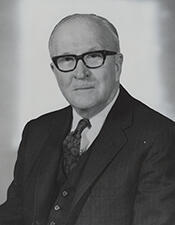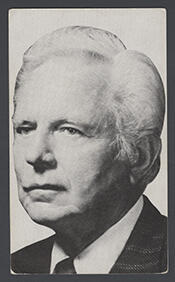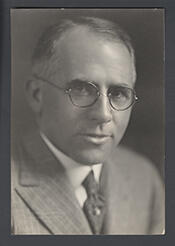
Israel Moore Foster (January 12, 1873 – June 10, 1950) was a Republican Representative in the United States Congress from the state of Ohio, serving three terms from 1919 to 1925. A member of the Republican Party, he contributed to the legislative process during a significant period in American history, participating in the democratic process and representing the interests of his Ohio constituents in the House of Representatives.
Foster was born in Athens, Ohio, on January 12, 1873. He attended the public schools of Athens and went on to enroll at Ohio University, also in Athens, from which he graduated in 1895. Immediately after completing his undergraduate studies, he pursued legal training, studying law at Harvard Law School in 1895 and 1896. He then returned to Ohio to complete his legal education, graduating from the Ohio State Law School in 1898. That same year he was admitted to the bar and commenced the practice of law in Athens, Ohio.
In addition to his private legal practice, Foster quickly became active in public service at the local and state levels. He served as prosecuting attorney of Athens County from 1902 to 1910, a role in which he was responsible for representing the state in criminal prosecutions and overseeing the administration of justice in the county. He also maintained a long association with his alma mater, serving as a member and secretary of the board of trustees of Ohio University for twenty-four years, where he helped guide the institution’s governance and development. Within party politics, he held the position of secretary of the Republican State central committee in 1912, reflecting his growing influence in Ohio Republican circles.
Foster was elected as a Republican to the Sixty-sixth, Sixty-seventh, and Sixty-eighth Congresses, serving in the United States House of Representatives from March 4, 1919, to March 4, 1925. His three terms in office coincided with the post–World War I era, a time marked by significant social, economic, and political change in the United States. While in Congress, he is best known for proposing the Child Labor Amendment to the United States Constitution, an effort to give Congress explicit authority to regulate the labor of persons under eighteen years of age. Though the amendment was never fully ratified by the states, his sponsorship placed him at the center of national debates over child welfare and labor reform. In 1924 he was an unsuccessful candidate for renomination, bringing his congressional service to a close at the end of his third term in March 1925.
After leaving Congress, Foster continued his public career at the federal level. On April 1, 1925, he was appointed a commissioner of the United States Court of Claims, a tribunal responsible for hearing monetary claims against the federal government. He served in that capacity for seventeen years, until his retirement on April 1, 1942. His work on the Court of Claims extended his influence in federal legal affairs well beyond his years in elective office.
Foster spent his later years in Washington, D.C., where he had resided during his long tenure in federal service. He died there on June 10, 1950. He was interred in Rock Creek Cemetery in Washington, a historic burial ground for many prominent national figures. In recognition of his long association with and service to Ohio University, a residence hall on the university’s South Green was named in his honor; the building stood for decades before being demolished by the Ohio University administration in 2016.
Congressional Record