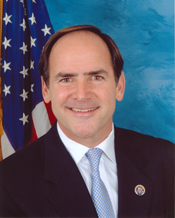
Issac Thomas (November 4, 1784 – February 2, 1859) was an American lawyer, militia officer, planter, and politician who represented Tennessee in the United States House of Representatives. He was born in Sevierville, Tennessee, on November 4, 1784. Orphaned at a young age, he moved in 1800 to Winchester, Tennessee, where he supported himself and pursued his own education. Largely self-taught, he read law and prepared for a legal career while still a young man on the Tennessee frontier.
Thomas was admitted to the bar in 1808 and commenced the practice of law in Winchester. As a young attorney, he built a regional practice in a period when Tennessee was rapidly developing and new communities were being established. During the War of 1812 he served as a brigadier general of the Louisiana Militia, reflecting his early connections to that region and establishing his reputation as a military leader as well as a lawyer. His experiences in law and the militia helped prepare him for later public service at both the state and federal levels.
Entering national politics as a member of the Republican Party—then commonly known as the Democratic-Republican Party—Thomas was elected to the Fourteenth Congress as a representative from Tennessee. He served a single term in the United States House of Representatives from March 4, 1815, to March 3, 1817. His tenure in Congress occurred during a significant period in American history, in the aftermath of the War of 1812, when the nation was consolidating its independence and addressing issues of economic development and western expansion. As a Democratic-Republican, he participated in the legislative process and represented the interests of his Tennessee constituents in the federal government.
After leaving Congress, Thomas relocated in 1819 to Alexandria, Louisiana, where he resumed the practice of law and quickly became a prominent figure in the region’s economic and political life. He purchased extensive tracts of land adjoining Alexandria and, over time, became one of the largest landowners and slaveholders in Louisiana. He was credited as the first man to introduce the cultivation of sugarcane in central Louisiana, an innovation that contributed to the expansion of the sugar economy beyond the traditional plantation districts closer to the Gulf Coast. In addition to operating plantations, he engaged in mercantile pursuits and invested in sawmills and steamboats, integrating agriculture, commerce, and transportation in ways that helped shape the development of central Louisiana.
Thomas also remained active in public affairs in his adopted state. He served as a member of the Louisiana Senate from 1823 to 1827, participating in the governance of a relatively new state still defining its institutions and laws in the decades following the Louisiana Purchase. His legislative service in Louisiana, combined with his earlier experience in Congress, gave him a political career that spanned both Tennessee and Louisiana during a formative era in the American South.
In his personal life, Thomas married Jane Bullard, with whom he was associated during his early years in Louisiana. She died in 1833. He later married Emmeline Flint, a member of a family with which he was also in business, further intertwining his domestic life with his commercial and planting interests. His family connections and business partnerships reinforced his position among the economic elite of central Louisiana.
In 1849, amid the excitement of westward expansion and the California Gold Rush, Thomas moved to California, reflecting the broader national movement toward the Pacific and the search for new opportunities. He later returned to Alexandria, Louisiana, where he spent his final years. Issac Thomas died there on February 2, 1859, at the age of 74 years and 90 days. He was interred in the Flint lot in Rapides Cemetery at Pineville, Louisiana, across the Red River from Alexandria, leaving a legacy as a frontier lawyer, wartime militia general, congressman, state legislator, and influential planter and businessman in the antebellum South.
Congressional Record