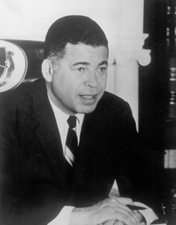
Isaac Chapman Bates (January 23, 1779 – March 16, 1845) was an American lawyer and legislator who represented Massachusetts in both houses of the United States Congress during the early nineteenth century. He was born in Granville, Massachusetts, on January 23, 1779, into a New England community shaped by the post-Revolutionary era. Details of his family background and early schooling are sparse, but his admission to Yale College reflects a solid preparatory education typical of aspiring professionals in the region at the time.
Bates attended Yale College in New Haven, Connecticut, and graduated in 1802. His education there provided him with the classical and legal grounding that would support his later career in law and politics. Following his graduation, he pursued legal studies and was admitted to the bar. By 1808 he had established himself in the practice of law in Northampton, Massachusetts, a prominent town in the Connecticut River Valley that would remain his professional and political base for the rest of his life.
Soon after beginning his legal practice, Bates entered public service at the state level. He served as a member of the Massachusetts House of Representatives from 1808 to 1809, participating in state legislative affairs during a period marked by national tensions leading up to the War of 1812. His work in the state legislature complemented his growing legal reputation in Northampton and helped introduce him to broader political networks within Massachusetts.
Bates’s national political career began with his election to the United States House of Representatives. He was elected as an Anti-Jacksonian and served in the U.S. House from March 4, 1827, to March 3, 1835, representing Massachusetts during the Twentieth through the Twenty-third Congresses. During his tenure, he aligned with the opponents of President Andrew Jackson, reflecting the emerging party realignments of the era that would soon coalesce into the Whig Party. In the Twenty-first Congress he served as chairman of the House Committee on Military Pensions, overseeing legislation related to the support and compensation of veterans and their families, an important issue in the decades following the Revolutionary War and the War of 1812. After four consecutive terms, Bates declined to be a candidate for renomination in 1834 and returned to private life and legal practice in Northampton.
Bates reentered national office several years later as a member of the United States Senate. He was elected as a Whig to the U.S. Senate from Massachusetts to fill the vacancy in the term ending March 3, 1841, created by the resignation of Senator John Davis. On the same day, he was also elected for the full term commencing March 4, 1841, thereby securing continuous service in the Senate. He took his seat on January 13, 1841, and served until his death in 1845. In the Senate, Bates continued his involvement with veterans’ issues as chairman of the Senate Committee on Pensions during the Twenty-seventh and Twenty-eighth Congresses, a role in which he helped shape federal policy on pension claims and relief for former soldiers and their dependents.
Isaac Chapman Bates died in office on March 16, 1845, in Washington, D.C., while serving as a United States senator. His death placed him among the members of Congress who died while in service during the nineteenth century. His remains were returned to Massachusetts, and he was interred in Bridge Street Cemetery in Northampton, Massachusetts, the community where he had long practiced law and from which he had risen to state and national prominence. His career, spanning state legislation, the U.S. House of Representatives, and the U.S. Senate, reflected the evolution of early American party politics from the Anti-Jacksonian opposition to the organized Whig Party, and his repeated leadership on pension committees underscored a sustained commitment to the welfare of American veterans.
Congressional Record