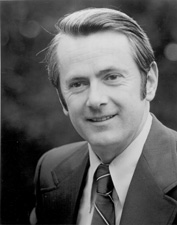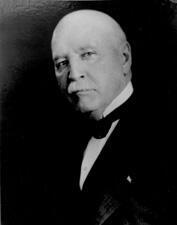
Irving Webster Drew (January 8, 1845 – April 10, 1922) was a United States senator from New Hampshire and a prominent lawyer, legislator, and party leader in his state. Born in Colebrook, Coös County, New Hampshire, he came of age in the years immediately following the Civil War, a period that shaped both his education and his early professional ambitions. He attended Kimball Union Academy in Meriden, New Hampshire, a long-established preparatory school that trained many of the region’s future professionals and public officials. Pursuing higher education, he enrolled at Dartmouth College in Hanover, New Hampshire, and graduated in 1870, laying the academic foundation for a career in law and public service.
After completing his studies at Dartmouth, Drew moved to Lancaster, New Hampshire, where he read law in the traditional manner of the period. He was admitted to the bar in 1871 and commenced the practice of law in Lancaster, quickly establishing himself in the legal community of northern New Hampshire. His professional activities extended beyond private practice as he became involved in local civic affairs and developed an interest in public service. In 1876 he was appointed a major in the New Hampshire National Guard, a post he held for three years. This appointment reflected both his standing in the community and the importance of state militia organizations in the postwar era, and it added military and administrative experience to his growing résumé.
Drew’s political career began at the state level. Initially affiliated with the Democratic Party, he was elected to the New Hampshire Senate and served as a state senator between 1883 and 1884. During this period he participated in the legislative process in Concord, contributing to the formulation of state policy at a time when New Hampshire was grappling with issues of economic development and governance in the late nineteenth century. His work in the state senate helped solidify his reputation as a capable legislator and advocate for his region, and it provided him with experience that would later inform his brief service in the United States Senate.
By the mid-1890s, Drew underwent a significant political realignment. In 1896 he left the Democratic Party and became a member of the Republican Party, a shift that placed him in the dominant political organization in New Hampshire at the turn of the century. Within the legal profession, his stature continued to grow. In 1899 he served as president of the New Hampshire Bar Association, a position that recognized his leadership among his peers and his influence on the development of legal practice in the state. Beyond law and politics, he engaged in banking and the railroad business, reflecting the close ties between professional, financial, and transportation interests in New England during this period and underscoring his role in the economic as well as civic life of his community.
Drew also played a notable role in shaping the fundamental law of New Hampshire. He was chosen as a delegate to the state constitutional conventions in 1902 and again in 1912, participating in deliberations over revisions to the New Hampshire Constitution. These conventions addressed structural and procedural questions of state government, and his selection as a delegate on two occasions testified to the confidence placed in his judgment and experience. Through these assignments, he contributed to the long-term framework of governance in New Hampshire, complementing his work as a legislator and party figure.
Irving Webster Drew’s service in the United States Congress came late in his life and was brief but occurred during a significant period in American history. A member of the Republican Party by this time, he was appointed on September 2, 1918, as a United States senator from New Hampshire to fill the vacancy caused by the death of Senator Jacob H. Gallinger. His appointment placed him in the Senate during the closing months of World War I, when the nation was addressing wartime legislation and the transition to peace. He served from September 2 to November 5, 1918, representing New Hampshire and contributing to the legislative process during this single term in office. He was not a candidate for election to the seat in his own right, and his service concluded when a successor was elected on November 5, 1918.
Following his brief tenure in the Senate, Drew retired from active business pursuits. Having spent decades in law, politics, banking, and railroad enterprises, he withdrew from public life and professional activity in his later years. He died in Montclair, New Jersey, on April 10, 1922. His remains were returned to New Hampshire, and he was interred in Summer Street Cemetery in Lancaster, the community where he had built his legal career and from which he had risen to state and national prominence.
Congressional Record