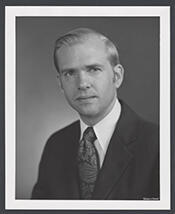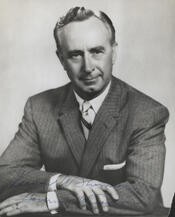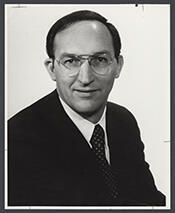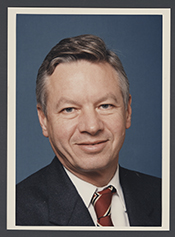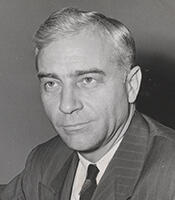
Howard Johnstone McMurray (March 3, 1901 – August 14, 1961) was a U.S. Representative from Wisconsin, educator, and businessman whose public career spanned the World War II era and the early Cold War period. A member of the Democratic Party, he served one term in the United States House of Representatives from 1943 to 1945, representing a Wisconsin district during a critical moment in American and world history.
McMurray emerged in national politics as a newcomer to the House of Representatives, winning election in 1942 by defeating his Republican opponent largely on the latter’s isolationist record at a time when foreign policy and America’s role in World War II were central campaign issues. Known as a man of considerable intellectual ability and a staunch internationalist, he had for years lectured on national and international affairs and was identified with pro-British views and advocacy of closer political and economic cooperation among English-speaking nations, including support for the “Union Now” concept. His internationalist stance placed him among those who favored robust American engagement in the Allied war effort and postwar planning.
During his term in Congress, from 1943 to 1945, McMurray participated in the legislative process as the United States mobilized for total war and began to shape the postwar international order. He represented the interests of his Wisconsin constituents while consistently supporting policies that strengthened cooperation with America’s Allies. He publicly criticized Republican efforts to demand precise dollar-and-cent estimates comparing Lend-Lease aid to Britain with British Reciprocal Aid, arguing that such figures would create a misleading impression of Allied indebtedness among the public. McMurray warned that this misunderstanding could be exploited by those seeking to undermine Allied unity or stir domestic controversy over foreign commitments. In the House, he was also known for a steady stream of wisecracks that, while reflecting a quick wit, sometimes irritated more solemn colleagues.
McMurray chose not to seek renomination to the House in 1944, instead entering the race for the United States Senate as the Democratic candidate from Wisconsin. He was unsuccessful in that 1944 Senate bid, but remained a prominent figure in state Democratic politics and national policy debates. In 1946 he again sought a Senate seat as the Democratic nominee and is best remembered politically for that campaign, in which he lost in a landslide to the Republican candidate, Joseph R. McCarthy, who would later gain national notoriety for his role in the anti-Communist investigations of the early 1950s. These defeats effectively ended McMurray’s pursuit of elective office at the federal level.
Parallel to and following his political career, McMurray developed a notable academic vocation. Drawing on his experience in public life and his longstanding interest in government and international relations, he joined the faculty of the University of Wisconsin–Madison as a lecturer in political science in 1945 and 1946, immediately after leaving Congress. He then moved to California, where he served as a professor of political science at Occidental College in Los Angeles from 1947 to 1949, contributing to the education of students during the formative years of the postwar era. In 1949 he accepted a position as professor of government at the University of New Mexico, where he taught and wrote on political affairs for more than a decade.
Howard Johnstone McMurray remained on the faculty of the University of New Mexico until his death in Albuquerque, New Mexico, on August 14, 1961. He was interred in Fairview Park Cemetery. Remembered as an internationalist legislator, an early opponent of isolationist sentiment, and a dedicated teacher of political science and government, his career bridged the worlds of electoral politics and higher education during a transformative period in American history.
Congressional Record