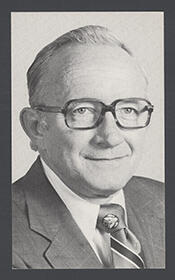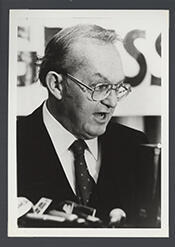
John Howard Coble (March 18, 1931 – November 3, 2015) was an American politician who served as the U.S. representative for North Carolina’s 6th congressional district from 1985 to 2015. A member of the Republican Party, he represented a district that, during his tenure, included all or portions of ten counties in the north-central part of North Carolina, including parts of Greensboro and Durham. Over 15 consecutive terms in office, he contributed to the legislative process during a significant period in American history, participating in the democratic process and representing the interests of his constituents.
Coble was born in Greensboro, North Carolina, on March 18, 1931. He grew up in the Piedmont region of the state, an area that would later form the core of his congressional district. His early years in North Carolina shaped his long-standing connection to the communities he would eventually represent in Congress, grounding his later public service in a familiarity with the economic, cultural, and social life of the region.
Coble attended Guilford College in Greensboro, where he earned a Bachelor of Arts degree. Following his undergraduate education, he served in the United States Coast Guard, an experience that informed his later interest in maritime and homeland security issues. After his military service, he pursued legal studies and obtained a law degree from the University of North Carolina School of Law. He was admitted to the bar and began practicing law in North Carolina, combining legal work with an emerging interest in public affairs and state governance.
Before his election to Congress, Coble built a career in state and local public service. He served in the North Carolina House of Representatives, where he gained legislative experience and developed a reputation as a conservative Republican attentive to fiscal restraint and regulatory issues. He also held positions in state government, including service as North Carolina’s Secretary of Revenue, where he was responsible for overseeing the administration of the state’s tax laws. These roles provided him with practical experience in public administration and policy implementation, preparing him for the responsibilities of federal office.
Coble was first elected to the U.S. House of Representatives in 1984. In the Republican primary, he narrowly defeated Walter Cockerham by a margin of 51 percent to 49 percent. In the general election, he unseated one-term Democratic incumbent Robin Britt, again by a 51 percent to 49 percent margin. His initial victory was widely viewed as having benefited from the strong performance of President Ronald Reagan, who carried the district by nearly a two-to-one margin that year. In 1986, Coble faced Britt in a rematch in what became one of the closest congressional races in the country; he prevailed by only 79 votes, winning 50.03 percent to Britt’s 49.97 percent, the closest margin of victory in that election cycle. After that contest, he would never again face a race nearly as close, and he was reelected 13 more times, consistently receiving 61 percent or more of the vote.
During his three decades in Congress, Coble became one of North Carolina’s most enduring Republican officeholders. He served during a period marked by the end of the Cold War, the rise of the digital economy, and significant shifts in national security and domestic policy. Over 15 terms, he participated in the legislative process on a wide range of issues affecting both his district and the nation. In July 2008, after winning the Republican primary unopposed, he became North Carolina’s longest-serving Republican U.S. congressman, surpassing former Representative Jim Broyhill, who had also been elected to 12 terms but left the House in July 1986 to fill a vacant U.S. Senate seat. Coble announced in 2013 that he would not run for another term in 2014 and would retire from Congress at the end of his 30th year in office, concluding his service in January 2015.
In his later years, Coble remained closely identified with the communities he had long represented. He died on November 3, 2015, in Greensboro, North Carolina. His three-decade tenure in the U.S. House of Representatives, his status as North Carolina’s longest-serving Republican member of Congress, and his consistent electoral support reflected a durable bond with his constituents and a sustained role in the political life of his state.
Congressional Record