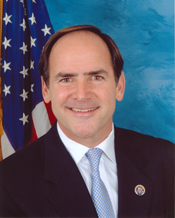
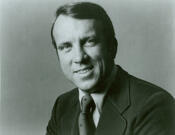
Horace Harrison Harrison (August 7, 1829 – December 20, 1885) was an American politician, jurist, and attorney who represented Tennessee’s 5th congressional district in the United States House of Representatives. Notably, he was the last Republican to serve as representative from Tennessee’s 5th congressional district, or to represent a significant portion of Nashville, until Andy Ogles was elected in 2022 following redistricting that made the district favorable to Republicans.
Harrison was born on August 7, 1829, in Lebanon, Wilson County, Tennessee, to Joshua Stone Harrison and Judith Coleman Turner. He received his early education at Carroll Academy and pursued a course in ancient classics under a private instructor, reflecting a traditional classical education of the period. In 1841 he moved with his parents to McMinnville in Warren County, Tennessee, where he would begin his public career in local government and the courts.
In Warren County, Harrison held several key county offices at a young age. He served as clerk of the county court, master of the chancery court, and register of deeds, positions that placed him at the administrative and judicial center of county affairs. Expanding his involvement in state government, he served as clerk of the Tennessee Senate in 1851 and 1852. During this time he studied law, and in 1857 he was admitted to the bar, commencing the practice of law in McMinnville. In 1859 he moved to Nashville, Tennessee’s capital and principal city, where he continued his legal practice and became more deeply engaged in state and federal legal matters.
During the Civil War and Reconstruction era, Harrison’s legal and judicial career advanced rapidly under Republican and Unionist auspices. He served as United States Attorney from 1863 to 1866, representing the federal government in the Middle District of Tennessee during and immediately after the war. In 1866 he was appointed chancellor of the Nashville division, a position in the state’s chancery court system. He then served as a judge of the Tennessee Supreme Court in 1867 and 1868 on the so‑called “apocryphal” court, a highly partisan tribunal that sat between the end of the Civil War and the adoption of the Tennessee Constitution of 1870. Contemporary and later accounts described this court as composed entirely of strong Union partisans who took a partisan view of questions arising from the war, and Harrison was grouped among several judges characterized as of “mediocre ability” who likely would not have attained such judicial prominence in more ordinary times. After leaving the supreme court, he again served as United States district attorney in 1872 and 1873.
Harrison entered national politics as a member of the Republican Party. He was elected as a Republican to the Forty-third Congress and represented Tennessee’s 5th congressional district in the U.S. House of Representatives from March 4, 1873, to March 3, 1875. His district included Nashville and surrounding areas, and his tenure occurred during the waning years of Reconstruction, when Republican influence in Tennessee was diminishing. He was an unsuccessful candidate for re-election, and after his defeat no Republican would again represent Tennessee’s 5th congressional district, or a substantial portion of Nashville, until the election of Andy Ogles in 2022, nearly a century and a half later.
After his congressional service, Harrison remained active in Republican politics and state government. He served as a delegate to the Republican National Convention in 1880, participating in the party’s national deliberations during a period of realignment and the end of Reconstruction-era policies. He was also a member of the Tennessee state legislature in 1880 and 1881, continuing his long involvement in public affairs and maintaining a role in shaping state policy during the post-Reconstruction era.
Horace Harrison Harrison died in Nashville, Tennessee, on December 20, 1885, at the age of 56 years, 135 days. He was interred at Mount Olivet Cemetery in Nashville, a burial place for many of the city’s prominent political and civic figures. His career, spanning local office, federal prosecution, state judicial service, and a term in Congress, reflected the turbulent political and legal transformations of Tennessee in the mid-nineteenth century, and his long-standing distinction as the last Republican to represent Nashville in Congress underscored the enduring impact of post–Civil War political realignment in the state.
Congressional Record