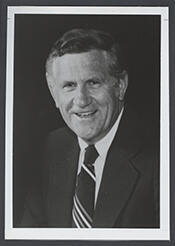
Horace Davis (March 16, 1831 – July 12, 1916) was an American businessman, educator, and politician who served two terms as a United States Representative from California from 1877 to 1881 and later as president of the University of California from 1887 to 1890. He was born in Worcester, Massachusetts, the son of John Davis, a prominent Whig statesman who served as governor of Massachusetts and as a United States senator, and Eliza Bancroft Davis. He was also the younger brother of John Chandler Bancroft Davis, a noted diplomat and jurist. Raised in a politically active and intellectually engaged household, he attended the Worcester public schools before pursuing higher education.
Davis first enrolled at Williams College in Williamstown, Massachusetts, and then transferred to Harvard University, from which he graduated in 1849. Following his undergraduate studies, he entered the Dane Law School of Harvard University to study law. His legal training was cut short, however, when failing eyesight prevented him from engaging in professional legal pursuits. This impairment influenced the direction of his career and contributed to his later shift toward business and public service rather than the practice of law.
In 1852 Davis sailed for San Francisco, California, traveling around Cape Horn during the early years of the California Gold Rush. Upon his arrival he briefly engaged in gold mining and then held a series of positions connected with the rapidly expanding Pacific trade, including work as a lumber supercargo surveyor for a coastal steamer and as a purser for the Pacific Mail Steamship Company. He helped found the Mercantile Library Association of California, the oldest public library in the state, and under his administrative leadership interest in the institution was revived. He created a library catalog that significantly improved access to the collection, an effort that further strained his already poor eyesight. He resigned his position with the library in 1855. By 1860 he had firmly established himself in San Francisco, where he founded the highly successful Golden Gate Flouring Mills and later became associated with the Sperry Flour Company, building a substantial reputation in the grain and flour trade. In 1862 he was elected a member of the American Antiquarian Society, reflecting his growing standing in intellectual and historical circles.
During the American Civil War, Davis was active in Unionist efforts in California. He served in the secretive San Francisco–based Home Guard, a group organized to secure the loyalty of California to President Abraham Lincoln and the Union cause. In this capacity he participated in activities intended to safeguard the state against secessionist influence and worked to promote the election of Leland Stanford as governor of California, including patrolling the polls on election day. His prominence in commercial affairs continued to grow, and from 1867 to 1877 he presided over the Produce Exchange of San Francisco, an important institution in the city’s mercantile life.
Davis entered national politics as a Republican and was elected to the United States House of Representatives from California, serving in the Forty-fifth and Forty-sixth Congresses from March 4, 1877, to March 3, 1881. During his tenure in Congress he took part in debates on issues of labor, commerce, and immigration that were central to the politics of the post–Civil War West. On June 8, 1878, he spoke in support of a bill to restrict Chinese immigration, aligning himself with a widespread movement in California seeking federal limitations on Chinese laborers. He was an unsuccessful candidate for reelection in 1880 to the Forty-seventh Congress, after which he returned to private and civic pursuits in San Francisco while remaining active in Republican Party affairs.
Following his retirement from the Produce Exchange, Davis continued to play a leading role in the city’s commercial and financial institutions. He served as president of the San Francisco Chamber of Commerce from 1883 to 1884 and as president of the Savings and Loan Society in 1885, helping to guide local economic development during a period of rapid urban growth. At the national party level, he was a member of the Republican National Committee from 1880 to 1888, participating in the organization and strategy of the Republican Party during several presidential election cycles. His experience in business and public life made him a respected figure in California’s civic leadership.
Davis also became a significant figure in higher education on the Pacific Coast. In 1885 he was named president of the board of trustees of the newly established Leland Stanford Junior University by its founder, Leland Stanford, and he served in that capacity from 1885 until his death in 1916. In this role he helped shape the early governance of the university and oversaw its consolidation with the Wilmerding and Lux schools, strengthening its technical and industrial education programs. In February 1888 he was elected president of the University of California, and he served as its chief executive from 1887 to 1890, guiding the institution through a formative period of expansion and organization before resigning in April 1890. His leadership at both Stanford and the University of California placed him at the center of the development of higher education in California in the late nineteenth century.
In addition to his roles in business, politics, and education, Davis remained active in civic and religious life. A devout Unitarian, he was married twice and contributed significantly to the Pacific Unitarian School for the Ministry, later known as Starr King School for the Ministry, supporting the training of liberal clergy in the region. He was an active student of history and literature, and his most noted written work was an essay entitled “American Constitutions,” reflecting his long-standing interest in constitutional development and political institutions. In 1899 he ran for mayor of San Francisco but was defeated by the incumbent, James D. Phelan, marking his last major bid for elective office.
Horace Davis died in San Francisco on July 12, 1916, following an operation for appendicitis. He was interred at Cypress Lawn Cemetery, now Cypress Lawn Memorial Park, in Colma, California. His long career as a merchant, legislator, university president, and educational trustee left a lasting imprint on the commercial, political, and academic life of California.
Congressional Record