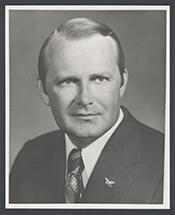
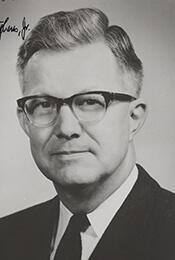
Hopkins Holsey (August 25, 1779 – March 31, 1859) was a United States representative, newspaper publisher, lawyer, and planter from Georgia. A member of the Democratic Party representing Georgia, he contributed to the legislative process during two terms in the United States Congress, serving during a significant period in American history and participating in the democratic process on behalf of his constituents.
Holsey was born on August 25, 1779, in Campbell County, Virginia, near Lynchburg, the second of five children of Susannah Ingram Holsey and James Holsey. In 1806 the Holsey family moved from Virginia to Hancock County, Georgia, where they established a large plantation. When Holsey was in his late teens, his father died, leaving the management of the plantation to his mother, Susannah, and to Hopkins and his older brother, Gideon. Despite these family responsibilities, Holsey was able to pursue formal education.
Holsey attended the University of Virginia in Charlottesville, Virginia, where he was a member of the Clariosophic Society. He graduated in 1819 and then went north to Connecticut to study law at the Litchfield Law School, one of the leading legal institutions of the era. After completing his course of study there, he returned to Hancock County, Georgia, where he established a law practice and began to enter local politics. In 1826 he married Elizabeth Blake Mitchell of Jones County, Georgia. Following their marriage, both the Holsey and Mitchell families moved to Harris County, Georgia, marking a shift in the center of his professional and personal life.
Holsey’s political career began in the Georgia General Assembly. After establishing his law practice in Hancock County, he ran for a seat in the Georgia House of Representatives. He narrowly lost races in 1823 and 1824, but in 1825 he was elected as one of three state representatives from Hancock County to the Georgia House of Representatives. He served one term in the state legislature before eventually relocating to Harris County. His early legislative experience in Georgia politics laid the groundwork for his later service at the national level.
In 1835 Holsey was elected to the United States House of Representatives as a Jacksonian from Georgia to the Twenty-fourth Congress, to fill the vacancy caused by the resignation of James C. Terrell due to poor health. He took his seat on October 5, 1835, and served until March 4, 1837. He then successfully sought reelection as a Democrat to the Twenty-fifth Congress, reflecting a shift in party designation while remaining aligned with the broader Jacksonian Democratic movement. His second term extended his continuous congressional service from October 5, 1835, to March 3, 1839. As a Democratic Party representative from Georgia, Holsey participated in the legislative debates of the period and represented the interests of his constituents during a time of growing sectional tensions and national expansion.
After his congressional service ended in 1839, Holsey moved to Athens, Georgia, where he took up farming and soon became active in journalism. He purchased the Southern Banner, a prominent local newspaper, and used its editorial pages to advance his political views. In his editorials, Holsey advocated the principles of the Missouri Compromise, supported the annexation of Texas, and called for the strict enforcement of the fugitive slave law. Although he was “unflinchingly opposed to federal encroachments, and strongly favored states’ rights,” he was equally “bitterly opposed” to secession. When South Carolina threatened secession in 1850 and sought to draw Georgia into the movement, Holsey used the Southern Banner to promote a strong unionist stance. Under his direction, the paper became a leading exponent of the Union cause in Georgia’s Sixth Congressional District, and arguably one of the principal unionist voices in the state.
Holsey’s outspoken unionism made him a political lightning rod and drew him into a notorious episode known as the “Tugalo Tragedy.” An apparently insane or disgruntled woman named Jane Young, who lived along the Tugalo River, entered the Southern Banner office in Athens looking for Holsey. Failing to find him, she mistakenly shot an employee and then fled into the street. Holsey was not injured and later claimed that Young had targeted him because of his unionist views. Jane Young was brought before Athens mayor Cincinnatus Peoples and sentenced to two years in prison for assault with intent to murder. In the wake of this incident, Holsey sought to capitalize on his heightened public profile and his recent brush with death by running for the Thirty-third Congress as a unionist Democrat on what was called the “Tugalo Ticket,” opposing both the disunion wing of the Democrats and the Whig Party. He was defeated in this race by the populist Democrat William Morton.
Within a year of his electoral defeat, Holsey sold the Southern Banner and resumed the practice of law, this time in Butler, Georgia, where he formed a partnership with his brother-in-law, Colonel Daniel W. Miller. He spent his later years practicing law and managing his estate, known as Brightwater, near Butler. Hopkins Holsey died at Brightwater on March 31, 1859, and was buried on his estate in Taylor County, Georgia.
Congressional Record