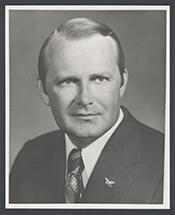
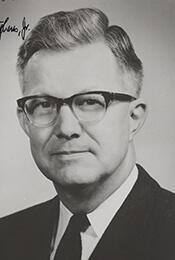
Homer Cling Parker (September 25, 1885 – June 22, 1946) was a U.S. Representative from Georgia and a longtime public official in that state. He was born in Baxley, Appling County, Georgia, where he attended the local public schools before moving with his family to Statesboro. He completed his secondary education at Statesboro High School in Statesboro, Georgia, graduating in 1904. Parker then pursued higher education at Mercer University in Macon, Georgia, from which he graduated in 1908, preparing for a career in the law and public service.
After his graduation from Mercer University, Parker read law and entered private legal practice in Georgia. Establishing himself as an attorney, he became active in local legal affairs and was elected solicitor of the city court, serving from 1914 to 1917. In that capacity he prosecuted cases on behalf of the state at the municipal level, gaining experience that would underpin his later roles in both military and civilian public office.
With the United States’ entry into World War I, Parker entered the United States Army in 1917. During the World War I era he served in the infantry, attaining the rank of captain. Following the Armistice, he continued his military service in the Judge Advocate General’s Corps of the United States Army. Stationed at Camp Gordon, Georgia, he handled legal and administrative matters for the Army and rose to the rank of major. His active service extended from 1917 to 1922, after which he returned to civilian life, maintaining his legal background and military connections.
Resuming his civic career in Statesboro, Parker returned to private law practice and entered municipal politics. He was elected mayor of Statesboro, Georgia, serving from 1924 to 1927. As mayor he oversaw local governance during a period of growth and modernization in the community. In addition to his municipal responsibilities, Parker remained closely associated with military affairs at the state level. From 1927 to 1931 he served in the Georgia National Guard and was appointed adjutant general of the state, the senior administrative officer of the Guard, responsible for its organization, training, and readiness.
Parker’s prominence in local and state affairs led to his election to the United States House of Representatives as a Democrat. He was chosen in a special election to the Seventy-second Congress to fill the vacancy caused by the death of Representative Charles G. Edwards and took his seat on September 9, 1931. He was subsequently reelected to the Seventy-third Congress and served continuously until January 3, 1935. During the Seventy-third Congress he was chairman of the Committee on Elections No. 1, where he oversaw contested election cases and related matters. In 1934 he sought renomination to his House seat but was unsuccessful, ending his congressional service at the conclusion of his second term.
After leaving Congress, Parker continued his career in state government. He was appointed comptroller general of Georgia in 1936, serving in that capacity through 1937. In this role he was involved in supervising state finances and insurance regulation. He later stood for the office in his own right and was elected comptroller general of Georgia in 1940. He held that elected position from 1940 until his death in 1946, remaining an influential figure in the fiscal administration of the state during the early 1940s.
Homer C. Parker died in office on June 22, 1946, in Atlanta, Fulton County, Georgia, while serving as the state’s comptroller general. He was interred in East Side Cemetery in Statesboro, Georgia, reflecting his long association with that community. His career encompassed service as a local prosecutor, mayor, state adjutant general, member of Congress, and state comptroller general, marking more than three decades of continuous involvement in public life at the municipal, state, and federal levels.
Congressional Record