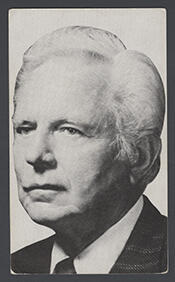
Hiram Bell (April 22, 1808 – December 21, 1855) was an American lawyer and politician who served as a U.S. Representative from Ohio’s Third Congressional District. A member of the Whig Party, he was active in local and state politics in Ohio before his election to Congress in 1850 and was known primarily for his legal practice and legislative service.
Bell was born on April 22, 1808, in Salem (now Derby), Orleans County, Vermont. He attended the public schools of his native town, receiving a basic common-school education typical of rural New England in the early nineteenth century. In 1826, when he was eighteen years old, his parents moved the family west to Hamilton, Ohio, reflecting the broader migration of New England families into the Old Northwest Territory during that period.
After settling in Ohio, Bell pursued legal studies in Hamilton and prepared for admission to the bar. He was admitted to the bar in 1829 and soon thereafter commenced the practice of law in Greenville, Darke County, Ohio. On July 25, 1832, he married Lusina Clark in Darke County; the couple had two children. Greenville remained his professional and personal base for the rest of his life, and his growing legal practice helped establish his prominence in the community.
Bell entered public service at an early age. In 1829, the same year he was admitted to the bar, he was elected auditor of Darke County, Ohio, an office to which he was again elected in 1834. Building on his local reputation, he won election to the Ohio House of Representatives, serving three terms in 1836, 1837, and 1840. During these years in the state legislature, he participated in the governance of a rapidly developing state, although the specific details of his committee assignments and legislative initiatives are not extensively documented.
In 1850, Bell successfully ran for the United States House of Representatives as a Whig from Ohio’s Third Congressional District. He took his seat in the Thirty-second Congress, representing a district in southwestern Ohio at a time of intensifying national debate over slavery, sectionalism, and the Compromise of 1850. Following the federal census of 1850, congressional redistricting in Ohio altered the configuration of his district. After this redistricting, he did not stand for re-election in the new district in 1852 and thus served only a single term in Congress.
After leaving Congress, Bell returned to Greenville and resumed the practice of law. He continued his legal work there until his death a few years later. Bell died in Greenville, Ohio, on December 21, 1855, at the age of 47. He was interred in Greenville Cemetery, Darke County, Ohio, where his burial marked the close of a career that combined local, state, and national public service.
Congressional Record