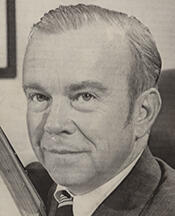
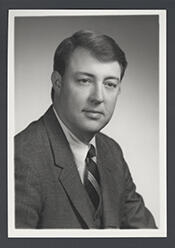
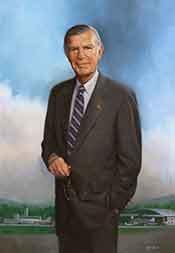
Herman Peter Eberharter (April 29, 1892 – September 9, 1958) was a Democratic member of the U.S. House of Representatives from Pennsylvania who served as a Representative from Pennsylvania in the United States Congress from 1937 to 1959. A member of the Democratic Party, he contributed to the legislative process during 11 terms in office, serving from the Seventy-fifth Congress through the Eighty-fifth Congress during a significant period in American history. His long tenure in the House of Representatives spanned the New Deal, World War II, the early Cold War, and the beginning of the civil rights era, during which he participated in the democratic process and represented the interests of his constituents.
Eberharter was born on April 29, 1892, in Pittsburgh, Pennsylvania. His father was an immigrant from Austria, and his maternal grandparents were German immigrants, placing him within the broader story of Central European immigration to the industrial communities of western Pennsylvania. Raised in a city shaped by steel, coal, and heavy industry, he grew up in an environment that would later inform his political identification with the New Deal and with policies attentive to working-class concerns. He was a Roman Catholic, a fact noted by contemporaries who observed his interest in European affairs, particularly those involving Austria.
During the First World War, Eberharter served in the United States Army, initially as a private in the 20th Infantry Regiment. Over the course of his service he was commissioned as a second lieutenant, reflecting both his leadership ability and his commitment to military duty. After the war he continued his association with the armed forces as a member of the Officers’ Reserve Corps, in which he attained the rank of major. His military experience, extending from active duty in World War I through reserve service in the interwar years, helped shape his later positions on foreign policy, national defense, and international cooperation.
Following his military service, Eberharter pursued legal studies. He graduated from Duquesne University Law School in 1925 and was admitted to the bar, beginning the practice of law in Pittsburgh. As an attorney, he became familiar with the legal and economic issues facing residents of his district, including labor relations, social welfare, and the regulation of industry. His legal career provided a foundation for his later legislative work and helped establish his reputation in local Democratic politics.
Eberharter entered elective office at the state level before coming to Congress. He was a member of the Pennsylvania House of Representatives in 1935 and 1936, serving in Harrisburg during the depths of the Great Depression. His work in the state legislature coincided with the expansion of New Deal programs, and his alignment with these policies contributed to his emergence as a New Dealer from Pittsburgh. His performance in the Pennsylvania House positioned him for national office and introduced him to the legislative process that would define his subsequent career.
In 1936, Eberharter was elected as a Democrat to the Seventy-fifth Congress and was subsequently reelected to the ten succeeding Congresses. He served in the U.S. House of Representatives from January 3, 1937, until his death in 1958, representing a Pittsburgh-area district in western Pennsylvania. A confidential 1943 analysis of the House Foreign Affairs Committee by Isaiah Berlin for the British Foreign Office described him as an internationalist-minded New Dealer from Pittsburgh of Austrian origin, inclined at times to move “slightly faster and further than the Administration.” Berlin noted that Eberharter had urged that the renewal of Lend-Lease legislation contain no implication that repayment was expected from recipient nations, underscoring his support for robust American assistance to allies during World War II and his broader internationalist outlook.
Within Congress, Eberharter held significant committee assignments and played a notable role in key legislative debates. Beginning with the 78th United States Congress, he served as a member of the powerful House Committee on Ways and Means, which oversees taxation, tariffs, and major social welfare programs. His work on this committee placed him at the center of fiscal and social policy discussions during and after World War II. In 1945, he introduced the legislation that gave official congressional approval to the Pledge of Allegiance, formalizing its status in American civic life. His sponsorship of this measure reflected his interest in national unity and patriotic expression in the immediate aftermath of the war.
Eberharter also served on the House Special Committee on Un-American Activities, commonly known as the Dies Committee, a predecessor to the House Un-American Activities Committee. In that capacity, he participated in the committee’s review of the so‑called “Yellow Report,” which alleged Japanese-American espionage during World War II based on cultural traits such as adherence to the Buddhist faith and the presence of a high proportion of fishermen among Japanese Americans. Eberharter distinguished himself as the only member of the committee to openly oppose the wartime internment of Japanese Americans, rejecting the report’s assumptions and objecting to the mass deprivation of civil liberties on the basis of ancestry and religion. His stance marked him as a critic of one of the most controversial domestic policies of the war years and aligned him with a minority in Congress who questioned the internment policy at the time.
Herman Peter Eberharter’s congressional service continued uninterrupted until his death in office. He died on September 9, 1958, in Arlington, Virginia, while still serving in the House of Representatives. Although his service in Congress is sometimes described as extending to 1959 because his final term ran until that year, his active tenure ended with his death during the Eighty-fifth Congress. He was buried at Mount Carmel Cemetery in Pittsburgh, Pennsylvania, returning to the city that had shaped his early life, legal career, and long service in public office.
Congressional Record