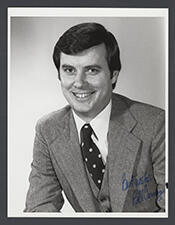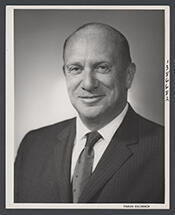
Herbert Tenzer (November 1, 1905 – March 24, 1993) was an American Democratic Party politician, lawyer, and philanthropist who served two terms in the United States House of Representatives from 1965 to 1969 as a Representative from New York. Over the course of his career he combined a prominent legal and business practice with extensive civic, educational, and charitable work, and played an active role in the legislative process during a significant period in American history.
Tenzer was born in New York City on November 1, 1905, and was educated in the city’s public schools. He graduated from Stuyvesant High School in 1923, reflecting an early record of academic achievement. He then attended New York University School of Law, from which he received his law degree in 1927. Two years later, in 1929, he was admitted to the bar and commenced the practice of law in New York, beginning a professional path that would later intersect with both business leadership and public service.
In 1937 Tenzer founded the law firm that became known as Tenzer Greenblatt Fallon & Kaplan, where he served as a senior partner. His legal practice was complemented by substantial business responsibilities; from 1940 to 1960 he was chairman of the Barton’s Candy Corporation, a position that placed him at the helm of a growing confectionery enterprise during and after World War II. Alongside his professional work, he became deeply involved in Jewish communal and humanitarian efforts. After World War II he headed Rescue Children Inc., an organization that cared for Jewish children in Europe who had been orphaned by the Holocaust. He was also a founder and past president of the United Jewish Appeal of Greater New York, helping to shape major philanthropic responses to postwar needs.
Tenzer’s commitment to education and public health was reflected in his extensive institutional work. He was a founder of the Albert Einstein College of Medicine at Yeshiva University and played a central role in the creation of the Benjamin N. Cardozo School of Law at Yeshiva University, where he served on the board of trustees and held the posts of chairman and later chairman emeritus. He was also active in founding Yeshiva University’s Sy Syms School of Business, further broadening the university’s professional education offerings. Beyond Yeshiva University, he served on the board of directors and as board president of the National Council to Combat Blindness (NCCB), now known as Fight for Sight, contributing to efforts to advance research and combat visual impairment.
Tenzer entered national politics as a member of the Democratic Party and was elected to the Eighty-ninth and Ninetieth Congresses. He represented New York’s 5th congressional district in the U.S. House of Representatives from January 3, 1965, to January 3, 1969. His service in Congress occurred during a transformative era in American history marked by the civil rights movement, the Great Society legislative agenda, and the Vietnam War. As a member of the House of Representatives, Herbert Tenzer participated in the democratic process, contributed to the legislative work of the period, and represented the interests of his New York constituents. He did not run for reelection in 1968 and, upon leaving Congress, resumed the practice of law.
Following his congressional service, Tenzer continued to hold significant public and advisory positions in New York. From 1969 to 1983 he served as chairman of the Nassau County Board of Ethics, overseeing ethical standards in county government. In 1975 he was vice chairman of New York State’s special advisory committee on medical malpractice, a body convened to address complex legal and policy issues in the state’s health care system. From 1977 to 1983 he served as chairman of the New York State Board of Social Welfare, reflecting his ongoing engagement with social policy and public welfare administration at the state level.
In his personal life, Tenzer was married to the former Florence Novor. The couple had two children, a daughter, Diane, and a son, Barry, and were grandparents to nine grandchildren. A resident of Lawrence, on Long Island, New York, in his later years, Tenzer remained closely associated with the New York metropolitan area where he had been born, educated, and had built his career.
Herbert Tenzer died in Lawrence, New York, on March 24, 1993, at the age of 87. He was buried at Beth David Cemetery in Elmont, New York. His life encompassed service as a lawyer, businessman, philanthropist, and member of Congress, marked by sustained involvement in civic, educational, and charitable institutions at the local, state, and national levels.
Congressional Record