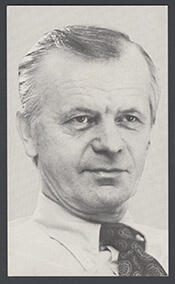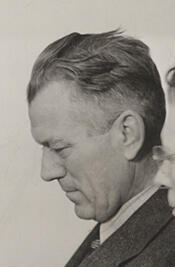
Henry George Teigan (August 7, 1881 – March 12, 1941) was an American teacher, editor, and politician who served as a member of the United States House of Representatives from Minnesota. A member of the Farmer-Labor Party, he represented Minnesota in the U.S. Congress for one term from 1937 to 1939, contributing to the legislative process during a significant period in American history and participating in the democratic process on behalf of his constituents.
Teigan was born on August 7, 1881, in Forest City, Winnebago County, Iowa. He pursued his early education in the Upper Midwest, attending Luther Academy in Albert Lea, Minnesota, and Central College in Pella, Iowa. He later enrolled at Valparaiso University in Valparaiso, Indiana, from which he graduated in 1908. At Valparaiso, he distinguished himself as a student speaker; his commencement address, published in the university’s 1909 yearbook, argued for the merits of socialism, foreshadowing his later involvement in progressive and agrarian political movements.
Before entering full-time political and editorial work, Teigan spent more than a decade as a teacher in various rural and small-town communities. From 1900 to 1904 he taught in rural schools in Iowa, gaining firsthand familiarity with the conditions of farm families and small communities. He later taught in Des Lacs, North Dakota, from 1909 to 1910, and in Logan, North Dakota, from 1912 to 1913. This experience in the rural Midwest and Great Plains helped shape his political outlook and his later advocacy for farmers and working people.
Teigan’s formal political career began in North Dakota. In 1913 he was elected state secretary of the Socialist Party of North Dakota, a post he held until 1916. In that capacity he hired flax farmer Arthur C. Townley as a party organizer, a decision that proved pivotal in regional politics. Townley’s organizing work among farmers in the rural western part of the state laid the foundation for the Nonpartisan League, an influential agrarian reform movement. In 1916 Teigan became secretary of the National Nonpartisan League, and in 1917 he moved to Minneapolis, Minnesota, to carry out his duties. He served as secretary of the National Nonpartisan League until 1923, helping to coordinate its activities and expand its influence in the Upper Midwest.
After his work with the Nonpartisan League, Teigan continued his involvement in public life at both the federal and state levels. From 1923 to 1925 he served as secretary to U.S. Senator Magnus Johnson of Minnesota, gaining direct experience with congressional operations and national legislative issues. During this period he also began working as an editor and newspaper writer, a vocation that would remain central to his career. In 1930 he was the Minnesota Farmer-Labor Party nominee for state auditor, finishing second in the general election with 35.96 percent of the vote, a showing that reflected the growing strength of the Farmer-Labor movement in the state. He continued in newspaper and editorial work until 1932, when he was elected to the Minnesota Senate. As a state senator, he served one term, further solidifying his role in Minnesota’s Farmer-Labor politics.
In 1936, Teigan was elected as a candidate of the Minnesota Farmer-Labor Party to the Seventy-fifth Congress. He served in the U.S. House of Representatives from 1937 to 1939, representing Minnesota during a critical phase of the New Deal era. As a member of the House of Representatives, Henry George Teigan participated in the democratic process and represented the interests of his constituents, bringing to Congress his long-standing commitment to agrarian reform, labor rights, and progressive economic policies. His single term in office reflected both the opportunities and the volatility of Farmer-Labor politics in the late 1930s. After serving one term, he failed to win reelection in 1938 and was subsequently defeated in a 1940 bid to regain his seat.
Following his congressional service, Teigan returned to Minneapolis and resumed his work as a newspaper writer and editor, remaining active in public discourse even after leaving elective office. He continued this work until his death on March 12, 1941, in Minneapolis, Minnesota. Henry George Teigan was interred in Hillside Cemetery in Minneapolis. His papers and related materials are preserved by the Minnesota Historical Society in St. Paul, Minnesota, providing a record of his contributions to the Socialist Party of North Dakota, the Nonpartisan League, the Minnesota Farmer-Labor movement, and his service in both the Minnesota Legislature and the United States Congress.
Congressional Record