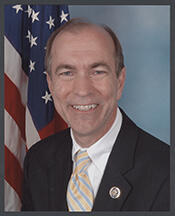
Henry Southard (October 7, 1747 – May 22, 1842) was a United States Representative from New Jersey and a long-serving public official in both state and national government during the early decades of the Republic. He was born in Hempstead, Long Island, New York, on October 7, 1747. In 1755, when he was still a child, he moved with his parents to the Basking Ridge section of Bernards Township, in what is now Somerset County, New Jersey. There he attended the local common schools and worked on a farm, experiences that rooted him in the agrarian life that would remain central to his livelihood and political identity.
During the American Revolutionary War, Southard served in the patriot cause, first as a private and later as a wagon master. In these capacities he contributed to the Continental effort by performing the essential work of transporting supplies and supporting military operations, a role that, while not front-line command, was critical to sustaining the army in the field. After the war concluded, he resumed agricultural pursuits in the Basking Ridge area, establishing himself as a farmer and local citizen of standing in his community.
Southard’s public career began at the local level. He served as a justice of the peace from 1787 to 1792, a position that placed him at the center of local judicial and civic affairs in post-Revolutionary New Jersey. His work in this role reflected the growing trust placed in him by his neighbors and helped launch his subsequent political career. Building on this local service, he entered state politics and was elected a member of the New Jersey General Assembly, serving from 1797 to 1799. He later returned to the Assembly for an additional term in 1811, participating in state legislative deliberations during a period of institutional consolidation and partisan development in New Jersey.
At the national level, Southard became aligned with the Democratic-Republican Party, which opposed Federalist policies and advocated for limited federal government and an agrarian-based republic. He was elected as a Democratic-Republican to the 7th United States Congress and to the four succeeding Congresses, serving continuously from March 4, 1801, to March 3, 1811. During this decade in the U.S. House of Representatives, he served through the administrations of Presidents Thomas Jefferson and James Madison and participated in the legislative debates of the early national period, including issues of commerce, foreign relations, and federal authority. In the 11th Congress, he held the chairmanship of the Committee on Revisal and Unfinished Business, which was responsible for reviewing pending legislation and managing the House’s accumulated docket, a role that underscored his experience and reliability as a legislator.
After a brief interval out of Congress, Southard returned to national office when he was again elected as a Democratic-Republican to the 14th, 15th, and 16th Congresses. He served in this second stretch from March 4, 1815, to March 3, 1821, a period that encompassed the close of the War of 1812 and the beginning of the so‑called “Era of Good Feelings.” During these years he continued to represent New Jersey’s interests in the House of Representatives, contributing to the legislative response to postwar economic adjustment, westward expansion, and evolving national policy. His combined service gave him a lengthy tenure in Congress that spanned some of the formative years of the United States government under the Constitution.
Following his final departure from Congress in 1821, Southard returned permanently to his farm and agricultural pursuits in Basking Ridge. He lived there for the remainder of his life, remaining a respected elder figure in the community as the nation he had helped to shape continued to expand and change around him. He died in Basking Ridge, Somerset County, New Jersey, on May 22, 1842, at the age of ninety-four, and was interred in Basking Ridge Cemetery.
Southard was part of a politically prominent family in New Jersey. He was the father of Isaac Southard, who also served as a United States Representative from New Jersey, and of Samuel Lewis Southard, who became a leading statesman of his generation. Samuel Lewis Southard served as a United States Senator from New Jersey, Secretary of the Navy under President James Monroe and briefly under President John Quincy Adams, Governor of New Jersey, and later as president of the United States Senate. Through his own long record of service and through the public careers of his sons, Henry Southard was closely connected to the development of both New Jersey and national politics in the early nineteenth century.
Congressional Record