United States Representative Directory

Henry Howard Ross

Henry Howard Ross served as a representative for New York (1825-1827).

  • Adams
  • New York
  • District 19
  • Former
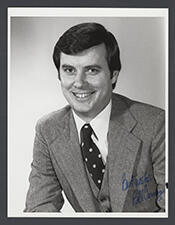
Portrait of Henry Howard Ross New York
Role Representative

Current assignment referenced in the congressional directory.

State New York

Representing constituents across the New York delegation.

District District 19

District insights and legislative focus areas.

Service period 1825-1827

Years of public service formally recorded.

Font size

Biography

Henry Howard Houston (October 3, 1820 – June 21, 1895) was a leading Philadelphia businessman, railroad executive, and philanthropist whose career in transportation, industry, and real estate development made him one of the most prominent figures in nineteenth-century Pennsylvania. He worked in the iron and transportation industries, invested in oil and precious metal concerns, and sat on the boards of a number of railroad organizations. He was a trustee of the University of Pennsylvania and Washington and Lee University and developed Wissahickon Heights, an exclusive community in western Chestnut Hill, Philadelphia. In addition to his business and philanthropic endeavors, he participated in the democratic process as a member of the Adams Party representing New York, serving one term in office during a significant period in American history and contributing to the legislative process on behalf of his constituents.

Houston was born on the Houston family farm near Wrightsville, York County, Pennsylvania, on October 3, 1820, the son of Samuel Nelson Houston and Susan (Strickler) Houston. Of Scots-Irish heritage, his ancestors had immigrated to colonial America in the early eighteenth century. He had an older brother and three younger sisters, and during his childhood the family also lived in Columbia, Pennsylvania, along the Susquehanna River. This riverine and canal-centered region, then a hub of emerging internal improvements, exposed him early to the world of transportation and commerce that would shape his later career.

Houston’s formal schooling was limited, and he entered the workforce at an early age. At fourteen he became a clerk in the mercantile house of John S. Futhey in Wrightsville, a firm that supplied construction materials for major infrastructure projects, including a tow bridge, a dam on the Susquehanna River, the Tide-Water Canal, and the Baltimore and Susquehanna Railroad. He remained in this position for five years, gaining practical experience in logistics, supply, and finance. As a young adult he moved into the iron furnace industry, working in Clarion and Venango Counties in western Pennsylvania, where he became familiar with industrial operations and the movement of raw materials. In 1847 he joined D. Leech and Company, a canal and railroad transportation firm, further deepening his expertise in freight and transportation systems that were then transforming the American economy.

Houston’s abilities brought him to the attention of Col. William C. Patterson, president of the Pennsylvania Railroad, who hired him in 1851 to establish and operate the company’s freight business. In 1852 he was appointed General Freight Manager of the Pennsylvania Railroad, a position from which he helped organize and expand one of the most important freight operations in the United States. During the American Civil War, the Pennsylvania Railroad played a critical role in transporting troops and supplies for the Union Army, and Houston accumulated substantial wealth as the company’s freight system became integral to the war effort. He resigned from the railroad in 1867 due to poor health but remained active in the transportation field as promoter and manager of the Union and Erie Lines, which formed part of the growing network of transcontinental freight routes. He later oversaw the Philadelphia, Germantown and Chestnut Hill Railroad—now SEPTA’s Chestnut Hill West Line—constructed in the 1880s to link downtown Philadelphia with the affluent and expanding suburbs to the northwest.

Beyond railroads, Houston built a diversified portfolio of industrial and transportation investments. He was among the early investors in the Pennsylvania oil industry and acquired significant interests in silver and gold mines in Colorado and Montana. He was part-owner of twenty-one ocean vessels and twenty steamers operating on the Great Lakes and served as president of the Pacific Mail Steam Ship Company, which was central to transoceanic commerce in the late nineteenth century. He also invested in coal mines in West Virginia and Pennsylvania. After the Civil War he benefited from the efficiency and reach of his transcontinental freight lines, but he derived much of his fortune from his holdings in the Atlantic Refining Company, one of the major refiners in the burgeoning petroleum industry. His prominence in business life was reflected in his service on the boards of the International Navigation Company, the Pittsburgh, Cincinnati, Chicago and St. Louis Railroad, the Cumberland Valley Railroad, the Pennsylvania Steel Company, and the Erie and Western Transportation Company.

Houston’s public and civic roles extended into education, science, and philanthropy. He served as a trustee of the University of Pennsylvania and Washington and Lee University, and in 1887 he was elected a member of the American Philosophical Society, underscoring his standing in the intellectual and scientific community. As a philanthropist, he was known for his generosity and often preferred that his charitable activities remain anonymous. He donated $500,000—equivalent to many millions of dollars in twenty-first-century terms—to the University of Pennsylvania. In memory of his son Henry H. Houston Jr., who died in June 1879 in Rome while on a post-graduate tour of Europe, he gave $100,000 for the construction of Houston Hall, a student recreation hall at the university that became a model for student unions nationwide. He was also a benefactor of Washington and Lee University and of the Protestant Episcopal Church of St. Martin-in-the-Fields in Chestnut Hill, and he attended St. Peter’s Church in the Germantown neighborhood of Philadelphia.

In the realm of real estate and community planning, Houston played a decisive role in shaping northwest Philadelphia. He was the developer of Wissahickon Heights, now known as the St. Martins area of Chestnut Hill, conceived as an exclusive suburban community in western Chestnut Hill. There he built many of the original structures later used by Chestnut Hill Academy and the Philadelphia Cricket Club, and he owned the Wissahickon Inn, a landmark hotel that served as a social center for the area. His own Chestnut Hill mansion, Druim Moir, completed in 1886, was a prominent example of Gilded Age residential architecture; it survived into the late twentieth century and was converted into multiple residential units in 1980, with Springside School occupying part of the former estate grounds. His development work in Chestnut Hill and along the railroad line exemplified the close relationship between transportation infrastructure and suburban growth in the late nineteenth century.

Houston’s personal life was centered in Philadelphia. In 1856 he married Sarah (Sallie) S. Bonnell, and the couple had six children. Only three survived him: Sallie Bonnell Houston, Samuel Frederic Houston, and Gertrude Houston Woodward. Their son Henry Houston Jr. died in 1879 while traveling in Europe after his college graduation, and two of the children’s names are not known in surviving records. Houston’s family connections and wealth positioned his descendants as significant figures in Philadelphia society well into the twentieth century, and his estate planning later became a subject of legal and academic interest.

Henry Howard Houston died on June 21, 1895, at his country house in Wissahickon, Philadelphia. His 1895 will gave rise to protracted litigation that continued until 1964, by which time the property he had left in trust was valued at approximately $145 million. The resulting decision by the Supreme Court of Pennsylvania, addressing the interpretation of future interests created in favor of Houston’s grandchildren, became a leading case in American property and probate law and is frequently studied in law school courses. His memory is preserved in several public commemorations. A statue in Wissahickon Valley Park, at the southeast corner of Lincoln Drive and Harvey Street, depicts Houston in top hat and tails with his Irish wolfhound; created by Scottish-American sculptor John Massey Rhind for the Fairmount Park Commission, it was installed in 1900 and honors his role as real estate developer, railroad magnate, and philanthropist. Houston is also the namesake of Henry H. Houston Elementary School in the Mount Airy section of Philadelphia, reflecting his enduring association with education and civic life in the city.

Congressional Record

Loading recent votes…

More Representatives from New York