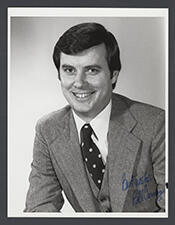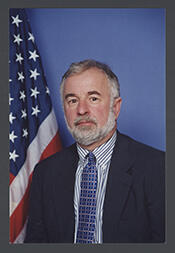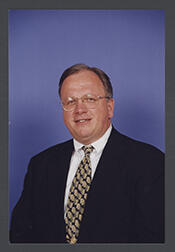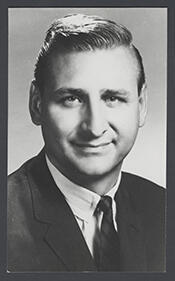
Henry James Nowak (February 21, 1935 – July 21, 2024) was an American lawyer and politician who served as a Democratic member of the United States House of Representatives from New York between 1975 and 1993. Over nine consecutive terms in Congress, he represented first New York’s 37th congressional district and later the 33rd district, contributing to the legislative process during a significant period in American history and representing the interests of his Buffalo-area constituents.
Nowak was born in Buffalo, New York, on February 21, 1935. He attended public elementary schools in Buffalo and graduated from Riverside High School there in 1953. Remaining in his hometown for higher education, he enrolled at Canisius College in Buffalo, where he earned a Bachelor of Arts degree in 1957. At Canisius, he distinguished himself not only academically but also athletically, becoming one of the college’s most celebrated basketball players.
During his college career, Nowak was a star basketball player for the Canisius Golden Griffins. In three years as a starter, he scored 1,449 points and averaged 18.6 points per game, and at the time of his graduation he was the school’s all-time scoring leader. He also became the program’s all-time leader in rebounding and long remained among its top scorers, ranking first in rebounding and third in all-time scoring. Known for his tough, aggressive play, he was nicknamed “Hammerin’ Hank.” Nowak led the Griffs to three of their four appearances in the NCAA basketball tournament, and his performance attracted professional attention; the St. Louis Hawks selected him with the 28th overall pick in the 1957 NBA draft.
Following his graduation, Nowak entered public service and military duty rather than pursuing a professional basketball career. From 1957 to 1958 he served in the United States Army. He then enrolled in the University of Buffalo Law School, where he earned a Juris Doctor degree in 1961. After law school, he again served in the United States Army from 1961 to 1962, further fulfilling his military obligations before embarking on a legal and political career.
Admitted to the New York bar in 1963, Nowak commenced the practice of law in Buffalo. He quickly moved into public legal service, becoming an assistant district attorney of Erie County, New York, in 1964. His expertise in public finance and administration led to his election as Erie County Comptroller, a position he held from 1966 to 1974. During this period he also became active in party politics, serving as a delegate to the New York State Democratic convention in 1970 and as a delegate to the Democratic National Convention in 1972 and again in 1988, reflecting his growing influence within the Democratic Party at both the state and national levels.
Nowak was elected to Congress in 1974 as part of the group of reform-minded Democrats often referred to as the “Watergate Babies,” who entered the House in the wake of the Watergate scandal. He took office on January 3, 1975, representing New York’s 37th congressional district in the 94th Congress. After four terms, redistricting placed him in New York’s 33rd congressional district, which he then represented for five additional terms. He served continuously from January 3, 1975, to January 3, 1993, choosing not to seek a return to the House after the 33rd district was abolished during redistricting. Throughout his entire congressional career, he was a member of the U.S. House Committee on Public Works and Transportation, where he focused on infrastructure, transportation, and public works policy.
In Congress, Nowak was known as a self-effacing but highly effective legislator whose work was closely tied to the economic and infrastructural needs of western New York. The Buffalo News described him as “Buffalo’s billion-dollar man,” a reference to the substantial federal grants and public works funding he helped secure for his region. Among the projects associated with his efforts was the construction of Interstate 990, which improved transportation links in the Buffalo area. His tenure coincided with major national developments in transportation and infrastructure policy, and he used his committee position to channel federal investment into his district while participating in the broader legislative process of the House of Representatives.
After leaving Congress at the conclusion of his ninth term on January 3, 1993, Nowak remained a respected figure in New York Democratic politics. During the period surrounding the 103rd Congress, he chose not to run for reelection in 1994. With substantial turnover anticipated and many new members expected to arrive in 1995, he reportedly did not want to remain in Congress so long that his eventual successor would begin a House career with a significant seniority disadvantage. His decision to retire prompted disappointment among Democratic leaders in both Buffalo and Albany, who valued his experience and his ability to deliver federal resources to the region.
Nowak was a lifelong resident of Buffalo, New York, maintaining close ties to his community and to Canisius College. His family also achieved distinction in public and athletic life. His daughter, Diane (Nowak) Kent, followed in his athletic footsteps and was inducted into the Canisius Sports Hall of Fame in 2002. His son, Henry Joseph Nowak, pursued a legal and judicial career, serving as a judge of the Buffalo Housing Court from 2003 to 2010 and being elected a justice of the New York Supreme Court’s 8th Judicial District in 2010. Henry James Nowak died in Pompano Beach, Florida, on July 21, 2024, at the age of 89.
Congressional Record