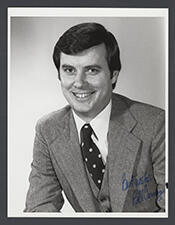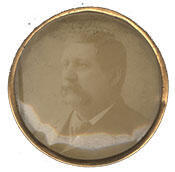
Henry Clay Miner (March 23, 1842 – February 22, 1900) was an American theatrical impresario, businessman, and politician who served one term as a U.S. Representative from New York from 1895 to 1897. A member of the Democratic Party, he represented his constituents in the House of Representatives during a significant period in American history, contributing to the legislative process over the course of a single term in office.
Miner was born in New York City on March 23, 1842. He attended the public schools of the city and began working at an early age, serving as a clerk in drug stores while learning the pharmacy business. He studied medicine under his brother, Dr. Edward Miner, who was then president of the Brooklyn Medical College, and he also attended the Institute of Physicians and Surgeons, an alternative healing school in New York City. These experiences provided him with both practical and formal training in pharmacy and related medical fields.
During the American Civil War, Miner served as pharmacist of the 1st New York Volunteer Engineer Regiment during its mobilization and training on Long Island. In addition to his wartime service, he worked at various times as a police officer and became a volunteer fireman, reflecting a pattern of public and civic engagement early in his life. After the war, he continued to build on his pharmaceutical training, becoming a full-fledged pharmacist and expanding his activities in the drug trade.
Miner’s pharmacy business grew steadily until he incorporated the H. C. Miner Company, which operated multiple retail drug stores and functioned as a wholesale supplier of toiletries and other merchandise to drug stores throughout the region. His business interests soon extended beyond pharmacy. In 1864, after working as an advance man for a traveling medical lecturer, he became interested in the theatrical business. He gradually built a substantial theatrical empire, eventually owning five theaters in New York City and Newark, New Jersey, and later extending his chain to additional locations, including Detroit, Michigan. He served as president of a lithographing company that produced advertising and posters for his theatrical productions, published the American Dramatic Directory, and was president of the Actors’ Fund Association. Beyond theater and printing, he held ownership stakes in banks, real estate, railroads, and other ventures, amassing a considerable fortune.
Miner entered national politics as a Democrat and was elected to the Fifty-fourth Congress, serving from March 4, 1895, to March 3, 1897, as a Representative from New York. His tenure in Congress coincided with a period of economic and political realignment in the United States, and he participated in the democratic process as a member of the House of Representatives, representing the interests of his New York constituents. He did not seek renomination in 1896 and returned to his extensive business interests after the conclusion of his term.
In his personal life, Miner was married twice. His first wife was Julia Lucinda Moore, who died in 1894; together they had four sons: Henry C. Miner Jr., Edwin D. Miner, Thomas W. Miner, and George H. Miner. Following Julia’s death, he married Annie O’Neill, an actress who retired from the stage after their marriage. With his second wife, he was the father of one son, John. His family life was closely connected to his business affairs, particularly through the involvement of his eldest son in managing his estate.
Henry Clay Miner died suddenly in New York City on February 22, 1900. He was interred in Green-Wood Cemetery in Brooklyn, New York. At the time of his death, his net worth was estimated at more than $5 million (equivalent to over $146 million in 2017), reflecting the scale of his success in pharmacy, theater, and various investments. His assets were administered by the Estate of Henry C. Miner, Incorporated, of which his son Henry C. Miner Jr. served as president, ensuring the continuation of his business legacy beyond his lifetime.
Congressional Record