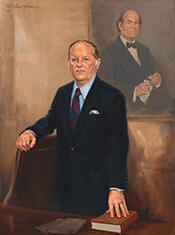
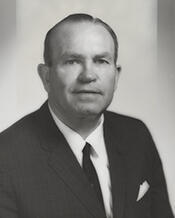
Henry Middleton (1717 – June 13, 1784) was an American politician and planter from South Carolina who became one of the largest landowners in the colony and a prominent leader in its political life before and during the American Revolution. A member of the colonial legislature, he attended the First Continental Congress and served as that body’s president for four days in 1774 after the passage of the Continental Association, which he signed. Although he later left the Second Continental Congress before it declared independence, he remained influential in South Carolina’s revolutionary government, serving as president of the provincial congress and as a senator in the newly created state government. After his capture by the British in 1780, he accepted defeat and returned to the status of a British subject until the end of the war.
Middleton was born in 1717 on the family plantation known as “The Oaks,” near Charleston in the Province of South Carolina. He was the second son of Susan (née Amory) Middleton (1690–1722) and Arthur Middleton (1681–1737), a wealthy planter who served as acting governor of South Carolina. His grandfather, Edward Middleton, had emigrated from England via Barbados, establishing the family in the Lowcountry planting elite. Henry Middleton was educated in England, a common practice among affluent colonial families, before returning to South Carolina to assume his place in the provincial gentry. Upon his father’s death, he inherited extensive estates and, over time, became one of the largest landowners in the colony, holding approximately 50,000 acres (200 km²) and about 800 enslaved people.
In 1741, Middleton married Mary Baker Williams (1721–1761), daughter of John Williams, an early South Carolina planter who began building what is today known as Middleton Place around 1730. Through this marriage he consolidated his position among the colony’s leading planter families. Henry and Mary were the parents of five sons and seven daughters, seven of whom survived to adulthood. Their children included Arthur Middleton (1742–1787), who became a signer of the Declaration of Independence and married Mary Izard (1747–1814); Henrietta Middleton (1750–1792), who married Governor Edward Rutledge; Thomas Middleton (1753–1797), who married Anne Manigault; Hester Middleton (1754–1789), who married Charles Drayton; Sarah Middleton (1756–1784), who married Charles Cotesworth Pinckney; Mary Middleton (1757–1825), who married Peter Smith; and Susannah Middleton (1760–1834), who married Continental Congressman John Parker. After Mary’s death in 1761, Middleton married Maria Henrietta Bull (1722–1772) in 1762, daughter of William Bull Sr., lieutenant governor of South Carolina. Through this second marriage he was connected to another powerful political family: Maria’s sister, Charlotta (née Bull) Drayton, was the mother of Continental Congressman William Henry Drayton, and her brother, William Bull II, later served as governor of South Carolina before leaving the colony in 1782 when British troops were evacuated at the end of the war. Following Maria’s death in 1772, Middleton married for a third time in 1776, to Lady Mary McKenzie, daughter of George Mackenzie, 3rd Earl of Cromartie. Lady Mary, for whom this was a fourth marriage, came from a Scottish noble family that had supported Charles Edward Stuart, the Jacobite Pretender; her father was tried and sentenced to death for his role in the Jacobite rising but received a conditional pardon, though his peerage was forfeited.
Middleton’s public career began well before the Revolution. He served as a justice of the peace and became a member of the Commons House of Assembly, the lower house of the colonial legislature, where he was elected speaker in 1747, 1754, and 1755. His repeated selection as speaker reflected his standing among the colony’s political leadership. He later sat on the provincial council, the upper advisory body to the royal governor, but resigned in 1770 in opposition to British policy, signaling his growing alignment with colonial resistance to imperial measures. By this time, he was firmly established as a leading figure in South Carolina’s political and social hierarchy.
At the outset of the American Revolution, Middleton was chosen in 1774 as a delegate from South Carolina to the First Continental Congress in Philadelphia. During that body’s deliberations he joined in the adoption of the Continental Association, an agreement to implement economic measures against Great Britain, and he signed the document. When Peyton Randolph departed near the close of the session, Middleton was elected president of the Continental Congress and served in that capacity for the final four days of the First Continental Congress in 1774. He continued as a delegate to the Second Continental Congress, but he opposed an immediate declaration of independence from Great Britain. As sentiment in Congress moved toward separation, he resigned his seat in February 1776, before the Declaration of Independence was adopted. He was succeeded in Congress by his son Arthur Middleton, who took a more radical stance and became one of the signers of the Declaration.
Returning to South Carolina, Middleton assumed major responsibilities in the emerging revolutionary government. He was elected president of the provincial congress, the extra-legal body that directed the colony’s resistance to royal authority, and beginning on November 16, 1775, he served on the council of safety, which oversaw military and security matters. In 1776, he and his son Arthur participated in framing a temporary state constitution for South Carolina, helping to shape the institutional foundations of the new state. As the conflict progressed, Middleton continued to serve in the state’s political institutions and, in 1779, became a state senator in the newly organized government. In this capacity, he contributed to the legislative process during a significant period in American history, participating in the democratic process and representing the interests of his constituents in South Carolina.
The course of the war in the South eventually brought Middleton into direct conflict with British arms. When Charleston fell to British forces at the Siege of Charleston in 1780, he was captured. In the aftermath of the city’s surrender, Middleton accepted defeat and the status of a British subject. This reversal, however, did not permanently damage his standing. Because of his earlier and substantial support for the American cause, he did not suffer the confiscation of his estates that befell many Loyalists after the war, and he was able to retain his extensive properties and social position.
Henry Middleton died on June 13, 1784, in Charleston, South Carolina. He was buried at Goosecreek Churchyard in St. James Parish, Berkeley County, South Carolina, near the center of the world in which he had lived as planter, legislator, and revolutionary leader. His political legacy extended into the next generation: his grandson, also named Henry Middleton (1770–1846), pursued a long and distinguished public career as governor of South Carolina from 1810 to 1812, as a U.S. Representative from 1815 to 1819, and as United States minister to Russia from 1820 to 1830. The younger Henry had fourteen children, including Williams Middleton and Edward Middleton, ensuring the continuation of the family’s prominence in South Carolina and national affairs.
Congressional Record