United States Representative Directory

Henry May

Henry May served as a representative for Maryland (1853-1863).

  • Unionist
  • Maryland
  • District 4
  • Former
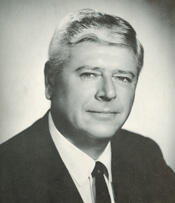
Portrait of Henry May Maryland
Role Representative

Current assignment referenced in the congressional directory.

State Maryland

Representing constituents across the Maryland delegation.

District District 4

District insights and legislative focus areas.

Service period 1853-1863

Years of public service formally recorded.

Font size

Biography

Henry May was the name of several notable public figures active in politics and public service in the nineteenth and twentieth centuries, including Henry May (American politician) (1816–1866), a U.S. Representative from Maryland, and Henry May (New Zealand politician) (1912–1995), a New Zealand politician. The name was also borne by distinguished military officers, scholars, religious leaders, and administrators whose careers spanned the British Empire and the English-speaking world.

Henry May (American politician) (1816–1866) served as a U.S. Representative from Maryland during a turbulent period in American history. Born in 1816, he came of age in the antebellum era and entered public life as sectional tensions over slavery and states’ rights intensified. Representing Maryland in the United States House of Representatives, he participated in national debates that preceded and then overlapped with the American Civil War. His service in Congress placed him at the center of legislative struggles over the preservation of the Union and the conduct of the war, and he remained in office through part of this critical period until his death in 1866.

Henry May (New Zealand politician) (1912–1995) was a New Zealand politician whose career reflected the development of New Zealand’s modern political and social institutions in the mid-twentieth century. Born in 1912, he entered public life as New Zealand was emerging from the economic and social dislocations of the interwar years and the Second World War. As a politician, he was involved in the governance of a country that was expanding its welfare state, redefining its relationship with the British Empire and Commonwealth, and gradually asserting a more independent foreign policy. His career extended into the postwar decades, and he remained active in New Zealand politics until later in the twentieth century, dying in 1995.

Several other individuals named Henry May achieved prominence in military and public service roles. Henry May (VC) (1885–1941) was a Scottish recipient of the Victoria Cross, the highest award for gallantry in the face of the enemy awarded to British and Commonwealth forces. Born in 1885, he served in the British Army during the First World War and distinguished himself by acts of conspicuous bravery that earned him the Victoria Cross, placing him among the most highly honored soldiers of his generation. His military career and decoration exemplified the sacrifices and heroism of Scottish and British troops on the Western Front before his death in 1941.

The name was also associated with senior officers and administrators in the British imperial system. Henry Allan Roughton May (1863–1930) was an English army officer whose career unfolded during the late Victorian and Edwardian eras, a time when the British Army was engaged in colonial campaigns and the reorganization of its professional forces. Sir Francis Henry May (1860–1922), a contemporary in imperial service, served as Governor of Hong Kong. Born in 1860, he rose through the colonial administrative ranks to become the chief executive of the Crown Colony, overseeing its governance during the early twentieth century, a period marked by commercial expansion, strategic concerns in East Asia, and the First World War. His tenure as governor made him one of the most prominent British officials in the Far East before his death in 1922.

Other bearers of the name Henry May contributed to intellectual, religious, and social movements in the English-speaking world. Henry F. May (1915–2012) was an American historian whose long academic career spanned much of the twentieth century. Born in 1915, he became known for his scholarship on American intellectual and cultural history, teaching and writing through decades that saw the professionalization and expansion of historical studies in the United States. Henry May (co-operative activist) (1867–1939) was a British co-operative activist who worked within the co-operative movement that sought to improve economic conditions for working people through mutual ownership and democratic control of enterprises. His efforts took place during a period of rapid industrialization and social reform in Britain. Henry John May (died 1893), an Anglican priest, served as Dean of St George’s Cathedral in Georgetown, Guyana, a key ecclesiastical position in the Anglican Church in the Caribbean. His tenure as dean, ending with his death in 1893, reflected the role of the established church in colonial society and its religious and educational life.

Congressional Record

Loading recent votes…

More Representatives from Maryland