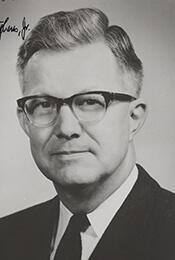
Henry Graybill Lamar (July 10, 1798 – September 10, 1861) was a United States representative, lawyer, and jurist from Georgia who was active in state and national public life during the first half of the nineteenth century. A member of the Jacksonian movement in national politics, he combined a legal career with service on the bench and in both the Georgia legislature and the U.S. House of Representatives.
Lamar was born on July 10, 1798, in Clinton, Jones County, Georgia, a growing interior community in the early years of the state’s post-Revolutionary expansion. Raised in this developing region of central Georgia, he came of age as the state’s political and legal institutions were taking shape. Details of his early family life are sparse in surviving records, but his subsequent professional trajectory indicates that he obtained a solid legal education by the standards of the period, most likely through the customary practice of reading law under established attorneys rather than through formal law school training, which was then uncommon in the United States.
After completing his legal studies, Lamar was admitted to the Georgia bar and established a law practice in Macon, Georgia, a rising commercial and legal center in the state. His work as an attorney in Macon brought him into contact with prominent figures in Georgia’s legal and political circles and laid the foundation for his later judicial and legislative service. Lamar’s professional reputation led to his appointment or election as a state superior court judge, a position of considerable responsibility in Georgia’s judicial system, where he presided over significant civil and criminal matters during a period of rapid growth and legal development in the state.
Building on his judicial experience, Lamar entered elective politics at the state level. He served in the Georgia House of Representatives, where he participated in shaping state policy in the Jacksonian era, a time marked by debates over states’ rights, internal improvements, banking, and the expansion of the electorate. His legislative service in the state house further elevated his profile and positioned him for national office.
In 1828, Lamar was elected as a Jacksonian Representative from Georgia to the 21st United States Congress to fill the remainder of the term left vacant by the resignation of Representative George Rockingham Gilmer. He took his seat in the U.S. House of Representatives on December 7, 1829. Identified with the Jacksonian wing of the Democratic movement, Lamar supported the policies associated with President Andrew Jackson, including a more populist approach to federal governance and skepticism toward concentrated financial power. He was reelected to the 22nd Congress and served continuously from December 7, 1829, to March 3, 1833. During his tenure in Congress, he represented Georgia at a time when issues such as Indian removal, tariff policy, and the balance of power between the federal government and the states were at the forefront of national debate. In 1832, he was an unsuccessful candidate for reelection to the 23rd Congress, bringing his period of federal legislative service to a close.
After leaving Congress, Lamar returned to Georgia and resumed his legal and judicial pursuits. Over the following decades he remained an influential figure in the state’s public life. He served as an associate justice of the Supreme Court of Georgia, the state’s highest appellate tribunal, where he contributed to the development of Georgia jurisprudence in the antebellum period. His judicial service on the Supreme Court reflected both his legal expertise and the confidence placed in him by Georgia’s political leadership. In addition to his judicial duties, Lamar sought higher executive office; in 1857 he ran for governor of Georgia, though his gubernatorial campaign was unsuccessful.
Lamar spent his later years in Macon, continuing to be identified with the city where he had long practiced law and where he had built much of his public career. He died in Macon on September 10, 1861, shortly after the outbreak of the Civil War, at the age of sixty-three. He was buried in Rose Hill Cemetery in Macon, a prominent burial ground for many of the city’s leading citizens, thus closing a life closely intertwined with the legal and political history of Georgia in the early nineteenth century.
Congressional Record