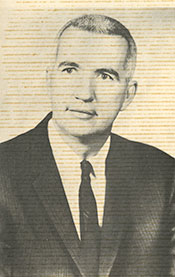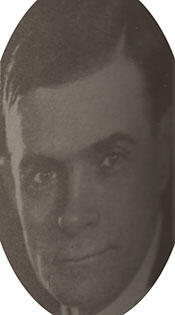
Henry Lee Jost (December 6, 1873 – July 13, 1950) was an American lawyer and Democratic politician who served as mayor of Kansas City, Missouri, from 1912 to 1916 and as a U.S. Representative from Missouri from March 4, 1923, to March 3, 1925. Over the course of his public career, he played a role in the civic and political development of Kansas City and represented Missouri in the United States Congress for one term during a significant period in American history.
Jost was born on December 6, 1873, in New York City. As a child, he stayed at the Five Points Mission for Homeless Children, a charitable institution in one of the city’s most impoverished neighborhoods. He was later sent westward on an orphan train, part of a broader movement to resettle destitute children from Eastern cities into homes in the Midwest and West. Jost was adopted in Hopkins, Missouri, and grew up there. His origins and rise from an orphaned childhood to public office later earned him the popular sobriquet “the orphan boy mayor.”
After settling in Missouri, Jost pursued legal studies and enrolled in the Kansas City School of Law. He graduated from the Kansas City Law School in 1898, entering the legal profession at a time when Kansas City was rapidly expanding as a commercial and transportation hub. Building on his legal education, he became active in public service and the local Democratic Party. By 1909 he was working in the Jackson County, Missouri, prosecuting attorney’s office, gaining experience in criminal law and public administration that would inform both his legal practice and his later political career.
Jost emerged as a significant figure in Kansas City politics in the early twentieth century, backed by Democratic power broker Joe Shannon and the “rabbits” faction of the local party organization. With this support, he was elected mayor of Kansas City, serving from 1912 to 1916. His tenure coincided with a period of major civic development. Among the notable events during his administration were the construction of Kansas City’s Union Station, which became a central rail hub for the region, and the establishment of the Federal Reserve Bank of Kansas City, an institution that anchored the city’s role in the nation’s financial system. While serving as mayor and thereafter, he also contributed to legal education as a lecturer on criminal law at the Kansas City School of Law, reflecting his continued engagement with the legal profession alongside his political responsibilities.
Building on his local prominence, Jost was elected as a Democrat to the United States House of Representatives from Missouri and served one term in the Sixty-eighth Congress, from March 4, 1923, to March 3, 1925. As a member of the House of Representatives, he participated in the legislative process and represented the interests of his Missouri constituents during a significant period in American history marked by post–World War I economic and social change. During his term, he contributed to the work of Congress as part of the Democratic Party, engaging in national policymaking and the broader democratic process. His service in Congress was limited to this single term, after which he did not return to the House.
In his later years, Jost retired from active political life and settled in Belton, Missouri. He remained associated with the Kansas City area, where his earlier public service had left a lasting imprint on the city’s civic and institutional landscape. Henry Lee Jost died on July 13, 1950. He was buried at Mount Moriah Cemetery in Kansas City, Missouri, closing a life that had taken him from an orphan train in the late nineteenth century to positions of significant responsibility in municipal government and the United States Congress.
Congressional Record