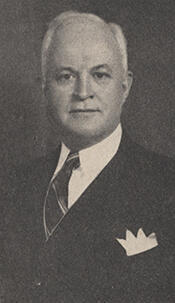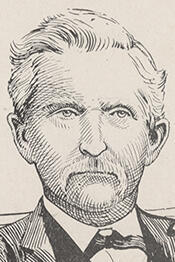
Henry Aydelotte Houston (July 10, 1847 – April 5, 1925) was an American teacher, businessman, and politician from Millsboro, in Sussex County, Delaware. A member of the Democratic Party, he served as the at-large U.S. Representative from Delaware in the United States Congress from 1903 to 1905. His surname, “Houston,” was pronounced “house-ton,” in contrast to the pronunciation of the city in Texas with the same spelling.
Houston was born on July 10, 1847, in Sussex County, Delaware, and spent his early life in and around Millsboro, a small community in the southern part of the state. Growing up in a largely rural and agricultural region, he was exposed early to the concerns of farmers, local merchants, and small-town professionals, experiences that later informed his work as both a businessman and a public official. His formative years in Millsboro helped establish the local ties and community relationships that would support his later political career.
Educated in the schools of Sussex County, Houston prepared for a career in teaching at a time when formal higher education was less common in rural Delaware. He became a teacher and spent part of his early adulthood in the classroom, contributing to the education of young people in his home region. His work as a teacher not only provided him with a respected position in the community but also developed his skills in communication and public engagement, which later proved valuable in business and politics.
After his period as a teacher, Houston turned to business pursuits, reflecting the broader economic development of Delaware in the late nineteenth century. Based in Millsboro, he engaged in commercial activities that connected him to the economic life of Sussex County, likely including trade and enterprises related to the agricultural and timber resources of the area. Through these endeavors he became a recognized local businessman, gaining practical experience in finance, management, and community leadership that would underpin his entry into public service.
Houston’s political career culminated in his election to the United States House of Representatives as a Democrat. He was elected to represent Delaware’s at-large congressional district and served one term in the Fifty-eighth Congress, from March 4, 1903, to March 3, 1905. His service in Congress occurred during a significant period in American history, as the nation confronted issues related to industrial expansion, regulation of commerce, and the early stirrings of the Progressive Era. As a member of the House of Representatives, Henry Aydelotte Houston participated in the legislative process, contributed to debates of the time, and represented the interests of his Delaware constituents at the national level.
During his single term in Congress, Houston worked within the Democratic Party minority in a period dominated by Republican control. While serving in Washington, he was part of the broader democratic process that shaped federal policy in the early twentieth century, including questions of economic policy, infrastructure, and governance affecting both Delaware and the nation. After completing his term on March 3, 1905, he did not return to Congress, and Delaware’s at-large seat passed to another representative.
Following his congressional service, Houston returned to private life in Delaware. He resumed his business and community activities in Millsboro and remained a respected figure in Sussex County. His combined experience as a teacher, businessman, and former member of Congress gave him a lasting local stature, and he continued to be associated with the civic and economic life of his region.
Henry Aydelotte Houston died on April 5, 1925. His life spanned from the aftermath of the Mexican–American War through the Civil War, Reconstruction, and into the modernizing United States of the early twentieth century. Remembered as a teacher, businessman, and Democratic U.S. Representative from Delaware, he exemplified the locally rooted public servant who carried the concerns of a small but significant state to the national stage.
Congressional Record