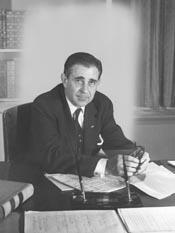
Henry Thomas Ellett (March 8, 1812 – October 15, 1887) was a lawyer, politician, judge, and U.S. Representative from Mississippi. A member of the Democratic Party, he served one term in Congress during a significant period in American history, participating in the legislative process and representing the interests of his Mississippi constituents.
Ellett was born in Salem, New Jersey, on March 8, 1812. He attended the Latin School in Salem, receiving a classical preparatory education, and subsequently enrolled at Princeton College. At Princeton he pursued legal studies, laying the foundation for a professional career in the law. After completing his studies, he continued reading law and was admitted to the bar in 1833.
Following his admission to the bar, Ellett commenced the practice of law in Bridgeton, New Jersey. He practiced there for several years before deciding to move south. In 1837 he relocated to Port Gibson, Mississippi, where he continued the practice of law. In Mississippi he quickly established himself as a successful attorney, gaining prominence in the local bar and entering public life as a Democrat.
Ellett’s national political career began with his election to the U.S. House of Representatives. In the 1846 election he defeated future Civil War general Peter B. Starke to win a seat in the Twenty-ninth Congress, filling the vacancy caused by the resignation of Jefferson Davis. Representing Mississippi as a Democrat, he served from January 26, 1847, to March 3, 1847. His brief tenure coincided with the era of the Mexican–American War and growing sectional tensions in the United States. He declined to be a candidate for reelection in 1846 and, upon the expiration of his term, resumed the practice of law in Mississippi.
Ellett remained deeply involved in state politics and law after leaving Congress. He served as a member of the Mississippi State Senate from 1853 to 1865, a period that spanned the years leading up to the Civil War and the conflict itself. During this time he was appointed one of three commissioners who framed the Mississippi code of 1857, contributing to a major revision of the state’s statutory law. In 1861 he was a member of the Mississippi state secession convention and served on the committee that framed and reported the ordinance of secession by which Mississippi left the Union. That same year, in February 1861, he was appointed Postmaster General of the Confederacy but declined to accept the position, continuing instead his work within Mississippi.
After the Civil War, Ellett played a significant role in the reestablishment of civil government in Mississippi. On October 2, 1865, he was elected a judge of the newly reconstituted Mississippi Supreme Court. He served on the high court through the early years of Reconstruction until January 1868, when he resigned his position. Later in 1868 he moved to Memphis, Tennessee, where he resumed the practice of law. In Memphis he joined with William Littleton Harris and James Phelan Sr. to form a law firm, continuing his long legal career in a new state and legal community.
In the later years of his life, Ellett remained active in both the law and public affairs. He was elected chancellor of the twelfth division of Tennessee in 1886, adding a further judicial office to his record of public service. On October 15, 1887, while delivering an address of welcome to President Grover Cleveland in Memphis, Ellett collapsed and died. He was interred in Elmwood Cemetery in Memphis.
Congressional Record