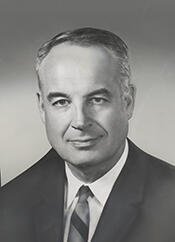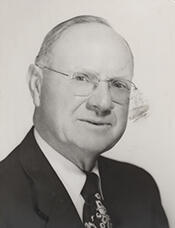
Henry Aldous Dixon (June 29, 1890 – January 22, 1967) was an American businessman, educator, and academic administrator who served three terms as a U.S. Representative from Utah from 1955 to 1961. A member of the Republican Party, he represented the interests of his Utah constituents in the House of Representatives during a significant period in mid‑twentieth‑century American history, contributing to the legislative process over the course of his service in Congress.
Dixon was born on June 29, 1890, in Provo, Utah County, Utah, then a part of the Utah Territory. He grew up in a region shaped by agricultural development and the growth of educational institutions associated with the Church of Jesus Christ of Latter-day Saints, influences that helped direct his later career in education and public service. His early life in Provo placed him within a community that valued both civic engagement and schooling, providing a foundation for his later work as an academic administrator and legislator.
Dixon pursued higher education in Utah and developed a professional interest in teaching and educational administration. Over time, he became closely associated with the state’s emerging system of public and higher education. His training and early professional experiences prepared him for leadership roles in academic institutions, where he combined administrative ability with an understanding of the needs of students and local communities. In addition to his work in education, he engaged in business activities, reflecting the dual focus on enterprise and public service that characterized much of his career.
A central part of Dixon’s professional life was his service as president of Weber College and later Utah State Agricultural College. At Weber College, then a growing institution in northern Utah, he oversaw programs designed to expand access to postsecondary education and to strengthen the college’s role in regional development. He subsequently became president of Utah State Agricultural College (now Utah State University) in Logan, Utah, where he guided an institution with a land‑grant mission focused on agriculture, engineering, and the mechanical arts. In these positions he worked to improve academic standards, support research and extension services, and align the colleges’ offerings with the economic and social needs of the state.
Dixon’s experience in education and business provided a platform for his entry into national politics. A Republican, he was elected to the United States House of Representatives from Utah and served three consecutive terms from 1955 to 1961. His tenure in Congress coincided with the administration of President Dwight D. Eisenhower and the early years of the Kennedy era, a time marked by Cold War tensions, domestic economic growth, and the beginnings of the modern civil rights movement. As a member of the House of Representatives, Dixon participated in the democratic process by debating and voting on legislation affecting both Utah and the nation, and by working to ensure that the concerns of his constituents were represented in federal policymaking.
During his years in Congress, Dixon’s background in education and agriculture informed his approach to legislative issues. He served at a time when federal support for schools, infrastructure, and scientific research was expanding, and he brought to these debates the perspective of a former college president and businessman. While specific committee assignments and individual bills associated with his name are less widely documented, his three terms in office reflected the confidence of Utah voters in his judgment and his ability to navigate the complex policy questions of the postwar era. His service from 1955 to 1961 placed him among the Utah delegation during key national discussions on economic development, defense, and social policy.
After leaving Congress in 1961, Dixon concluded his formal role in national politics and returned to private life, drawing on his long experience in education and business. He remained identified with the institutions he had led and the communities he had represented, and his career was remembered for the continuity between his work as an academic administrator and his service as a legislator. Henry Aldous Dixon died on January 22, 1967, closing a life that had spanned the transition of Utah from a largely rural territory to a modern state and that had combined leadership in higher education with representation in the United States Congress.
Congressional Record