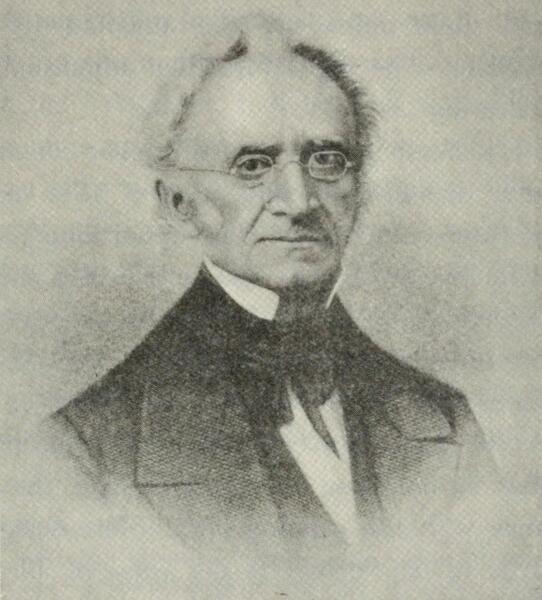
Henry Young Cranston (October 9, 1789 – February 12, 1864) was a U.S. Representative from Rhode Island and a prominent state legislator, and was the brother of fellow Rhode Island congressman Robert B. Cranston. Born in Newport, Rhode Island, he attended the public schools of his native town. As a young man he entered commercial life, engaging in mercantile pursuits in New Bedford, Massachusetts, before returning to Newport in 1810. Upon his return he established himself as a commission merchant, conducting business there until 1815, when he began to turn his attention toward the study of law.
Cranston pursued legal studies after his early business career and was admitted to the bar in 1819. He commenced the practice of law in Newport, where he would remain professionally and politically active for the rest of his life. Even before his formal admission to the bar, he had begun public service in the judiciary, serving as clerk of the court of common pleas for Newport County from 1818 to 1833. In addition to his legal and judicial responsibilities, he was active in the state militia. He held the rank of colonel in the Rhode Island Militia and commanded the historic Artillery Company of Newport from 1825 to 1828, reflecting his standing in the community and his involvement in civic affairs.
Cranston entered elective office as a member of the Rhode Island House of Representatives in 1827, beginning a long and influential career in state politics. He served continuously in the state House from 1827 to 1843, participating in legislative deliberations during a period of growing debate over suffrage and constitutional reform in Rhode Island. His experience and prominence led to his selection as a member, and vice president, of the convention that framed the Rhode Island state constitution in 1842, a critical moment in the state’s transition from its colonial charter to a more modern constitutional framework.
Cranston’s prominence in state affairs paved the way for his election to the United States Congress. He was elected to the Twenty-eighth Congress as a candidate of the Law and Order Party of Rhode Island, a political organization that emerged in the aftermath of the Dorr Rebellion and supported the legally established government and its approach to constitutional change. He was subsequently reelected as a member of the Whig Party to the Twenty-ninth Congress, serving in the U.S. House of Representatives from March 4, 1843, to March 3, 1847. As a member of the Whig Party representing Rhode Island, Henry Young Cranston contributed to the legislative process during two terms in office, participating in the democratic process at the national level and representing the interests of his constituents during a significant period in American history marked by debates over expansion, economic policy, and sectional tensions.
After leaving Congress in 1847, Cranston returned to state politics and resumed service in the Rhode Island House of Representatives, where he served from 1847 to 1854. During this second period in the state legislature, he rose to a leadership role and served three years as Speaker of the House, presiding over the chamber and helping to shape state legislation in the years leading up to the Civil War. His continued engagement in public life extended into the national political realignments of the late 1850s and early 1860s. In 1860 he was among the signatories of the letter calling for the creation of the Constitutional Union Party, a short-lived national party that sought to avert sectional conflict by emphasizing adherence to the Constitution and the preservation of the Union.
Henry Young Cranston remained a respected figure in Newport and Rhode Island public life until his death. He died in Newport, Rhode Island, on February 12, 1864. He was interred in Island Cemetery in Newport, where his grave marks the resting place of a lawyer, militia officer, state legislator, and two-term U.S. Representative who played a notable role in Rhode Island’s political and constitutional development in the first half of the nineteenth century.
Congressional Record