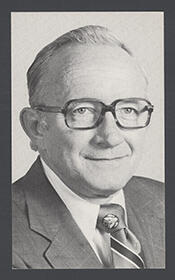
Henry Selby Clark (September 9, 1809 – January 8, 1869) was a Democratic Congressional Representative from North Carolina who served one term in the United States House of Representatives in the mid-nineteenth century. He was born near Leechville, Beaufort County, North Carolina, on September 9, 1809, in a rural part of the eastern coastal plain. Raised in that region, he attended the local common schools, receiving the basic classical and literary education typical of the period and preparing for advanced study.
Clark pursued higher education at the University of North Carolina at Chapel Hill, one of the principal institutions of learning in the South at the time. He was graduated from the university in 1828, a period when the school was training many of the state’s future lawyers, legislators, and public officials. Following his graduation, he read law in the traditional manner, studying under established attorneys rather than in a formal law school, and completed the requirements for admission to the bar.
After being admitted to the bar, Clark commenced the practice of law in Washington, North Carolina, a town in Beaufort County that served as a regional commercial and legal center. His legal practice brought him into contact with local landowners, merchants, and public officials and helped establish his reputation in eastern North Carolina. Building on his standing in the community, he entered public life and was elected to the North Carolina House of Commons, the lower house of the state legislature, serving from 1834 to 1836. During these years he participated in state-level lawmaking at a time when North Carolina was addressing issues of internal improvements, representation, and economic development.
Clark continued to advance in the legal profession and in public service. In 1842 he was appointed or elected solicitor for his judicial district, a position roughly equivalent to a public prosecutor, in which he represented the state in criminal cases. This role further enhanced his prominence in the legal community and provided additional experience in courtroom advocacy and the administration of justice. His combined legislative and prosecutorial experience positioned him as a credible candidate for national office within the Democratic Party, which was then dominant in much of North Carolina.
In 1844, running as a Democrat, Clark was elected to the Twenty-ninth Congress and served in the United States House of Representatives from March 4, 1845, to March 3, 1847. As a member of the Democratic Party representing North Carolina, he contributed to the legislative process during one term in office, participating in the democratic process and representing the interests of his constituents during a significant period in American history. The Twenty-ninth Congress coincided with the administration of President James K. Polk and dealt with major national issues including the annexation of Texas, the Mexican–American War, questions of territorial expansion, and debates over slavery in new territories. Although specific committee assignments and floor activities for Clark are not extensively documented, his service placed him among those North Carolina Democrats who supported or engaged with the party’s expansionist and states’ rights agenda.
After the conclusion of his term in Congress, Clark did not seek or did not secure reelection and returned to private life. He moved to Greenville, North Carolina, another important town in the eastern part of the state, where he resumed the practice of law. In Greenville he continued his professional career as an attorney, drawing on his experience as a legislator, solicitor, and former Member of Congress to serve clients in the region. His post-congressional years unfolded against the backdrop of growing sectional tensions, the Civil War, and the early years of Reconstruction, although the surviving record focuses primarily on his legal work rather than on any further formal political office.
Henry Selby Clark died in Greenville, North Carolina, on January 8, 1869. He was interred at his country home near Leechville, returning in death to the area of his birth in Beaufort County. His career reflected the trajectory of many nineteenth-century Southern politicians who combined legal practice with periods of state and national service, and his single term in the Twenty-ninth Congress linked him to a formative era in the nation’s expansion and political realignment.
Congressional Record