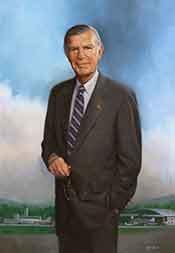
Henry P. Baldwin was an American businessman and politician who served as a United States senator from Michigan in the late nineteenth century. Born on February 22, 1814, in Coventry, Rhode Island, he was raised in New England before moving west as a young man. His early life was shaped by the commercial and industrial growth of the era, and he entered mercantile pursuits at a relatively young age, gaining practical experience in trade and finance that would underpin his later career in business and public service.
Baldwin’s education was typical of many nineteenth-century American businessmen, consisting of local schooling followed by direct entry into commercial life rather than extended formal study. He moved to Detroit, Michigan, in the 1830s, where he established himself as a successful merchant and later became involved in banking. His business acumen and growing prominence in Detroit’s commercial community led to leadership roles in civic and charitable organizations, and he became an influential figure in the city’s economic development. Over time, he expanded his interests into manufacturing and finance, helping to shape the emerging industrial economy of Michigan.
Baldwin’s political career developed out of his prominence in business and civic affairs. A member of the Republican Party, he became active in state politics during the period of the party’s rise in the 1850s and 1860s. He served in various party and local capacities before attaining higher office, and his reputation for practical management and public-mindedness made him a natural candidate for statewide leadership. In 1868 he was elected governor of Michigan, serving from January 6, 1869, to January 1, 1873. As governor, he presided over the state during the Reconstruction era, focusing on issues of infrastructure, education, and the continued economic development of Michigan’s cities and frontier regions.
Following his tenure as governor, Baldwin continued to be a significant figure in Michigan politics and business. His standing within the Republican Party and his record in state government led to his selection for national office. He was appointed to the United States Senate from Michigan, serving as a U.S. senator in the 1870s. In the Senate, he participated in the legislative debates of the post–Civil War period, which included questions of economic policy, veterans’ affairs, and the integration of the rapidly industrializing Midwest into national political and economic structures. His senatorial service capped a public career that linked local, state, and national concerns at a time of major transformation in American society.
In his later years, Baldwin remained a respected elder statesman and businessman in Michigan. He continued to be involved in banking and charitable work, contributing to religious and philanthropic institutions in Detroit and the wider state. His long experience in commerce and politics made him a reference point for younger leaders navigating the challenges of industrial growth and urbanization. Henry P. Baldwin died on December 31, 1892, in Detroit, Michigan. He was buried in Elmwood Cemetery in Detroit, leaving a legacy as a key figure in Michigan’s nineteenth-century political and economic development and as a U.S. senator from Michigan who helped represent the interests of his state during a critical period in the nation’s history.
Congressional Record