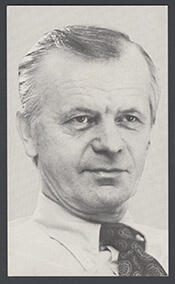
Henry Martin Arens (November 21, 1873 – October 6, 1963) was a German-American farmer and politician from Minnesota who served in several public offices, including as lieutenant governor and U.S. Representative. Born Heinrich Martin Arens in Bausenrode near Fretter in the Kingdom of Prussia—an area that is today part of the municipality of Finnentrop in Westphalia, Germany—he spent his early years in rural Europe before emigrating to the United States. He migrated in November 1889, settling in Minnesota, where he established himself as a farmer near Jordan in Scott County. His background as an immigrant and agricultural worker would shape his political outlook and later align him with the agrarian and labor-oriented Farmer-Labor movement in Minnesota.
Arens’s formal education is not extensively documented, but his early life as a young immigrant farmer in Minnesota placed him within the social and economic world of smallholders and rural communities at the turn of the twentieth century. Working the land near Jordan, he became closely acquainted with the concerns of local farmers and townspeople, which in turn drew him into civic affairs and local governance. His experience in agriculture and community life provided the practical foundation for his entry into public service and informed his later legislative priorities.
Arens’s first public office was at the municipal level in Jordan, Minnesota. He served as a member of the board of aldermen for the city from 1905 to 1913, participating in local decision-making during a period of growth and change in small-town Minnesota. Through this role he gained experience in public administration and built a reputation as a representative of local interests. His work on the board of aldermen marked the beginning of a long career in public life and demonstrated his commitment to addressing the needs of his community.
Building on his municipal service, Arens was elected to the Minnesota House of Representatives, where he served from 1919 to 1922. He then advanced to the Minnesota Senate, serving as a state senator from 1923 to 1930. During these years in the state legislature, he was associated with the Farmer-Labor movement, which championed the interests of farmers, workers, and small producers against larger corporate and financial interests. His legislative work in both chambers of the Minnesota Legislature helped establish him as a prominent figure in state politics and prepared him for higher executive office.
In 1930, Arens was elected the 26th Lieutenant Governor of Minnesota. He served one two-year term in that office, holding statewide executive responsibility during the early years of the Great Depression. As lieutenant governor, he presided over the Minnesota Senate and played a role in shaping state policy at a time of severe economic hardship for farmers and working families. His tenure in this position further raised his profile within the Farmer-Labor Party and set the stage for his entry into national politics.
As a member of the Farmer-Labor Party representing Minnesota, Henry Martin Arens contributed to the legislative process during one term in office in the United States Congress. In the 1932 elections, when all of Minnesota’s representatives were elected at large, he was elected to the 73rd Congress as a Farmer-Labor candidate. He served as a U.S. Representative from March 4, 1933, to January 3, 1935, a period that coincided with the early New Deal era and significant federal efforts to address the Great Depression. Arens’s service in Congress occurred during this significant period in American history, in which he participated in the democratic process and represented the interests of his Minnesota constituents, particularly those aligned with the agrarian and labor constituencies of the Farmer-Labor Party.
Arens sought to continue his congressional career but was defeated for re-election in 1934 by Elmer Ryan. Following this loss, he remarked that he was convinced “that politics is not worthwhile and that never again will I ask favors of the electorate,” reflecting his disappointment with electoral politics after many years of public service. Nevertheless, he remained engaged enough to attempt a political comeback; in 1936 he again ran for his former seat in the U.S. House of Representatives and was once more defeated by Ryan. These defeats effectively ended his pursuit of elective office after a long career that had taken him from local government to the state legislature, the lieutenant governorship, and the United States Congress.
In his later years, Arens withdrew from active political life and returned to private citizenship in Minnesota. He lived to see the transformation of both his native Germany and his adopted United States through two world wars and major social and economic changes. Henry Martin Arens died on October 6, 1963. His life traced a path from Prussian-born immigrant farmer to influential Minnesota public official, reflecting the opportunities and challenges of political life for an early twentieth-century German-American in the Upper Midwest.
Congressional Record