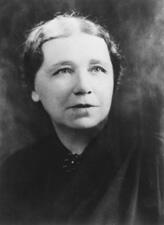
Hattie Ophelia Wyatt Caraway (February 1, 1878 – December 21, 1950) was an American politician who served as a United States Senator from Arkansas from 1931 to 1945. A member of the Democratic Party, she was the first woman elected to the Senate, the first woman to serve a full term as a United States senator, the first woman to be reelected to the Senate, and the first woman to preside over the Senate. Over the course of three terms in office, she contributed to the legislative process during a significant period in American history, representing the interests of her Arkansas constituents through the Great Depression, the New Deal era, and the Second World War.
Caraway was born Hattie Ophelia Wyatt near rural Bakerville in Humphreys County in west-central Tennessee, the daughter of William Carroll Wyatt, a farmer and shopkeeper, and the former Lucy Mildred Burch. When she was four years old, her family moved to Hustburg, also in Humphreys County. Despite the family’s relative poverty, she aspired to higher education, a goal made possible through the financial assistance of a wealthy aunt. She attended a one-room schoolhouse and Ebenezer Church in Hustburg before enrolling at Dickson (Tennessee) Normal College. There she completed her studies and received a Bachelor of Arts degree in 1896. After graduation, she taught school for a time, gaining practical experience in education that would later inform her understanding of rural and small-town life.
In 1902, Hattie Wyatt married Thaddeus H. Caraway, whom she had met while in college. The couple settled in Jonesboro, Arkansas, where Thaddeus established a law practice. They had three sons—Paul, Forrest, and Robert—two of whom, Paul and Forrest, later became generals in the United States Army. In Jonesboro, Hattie Caraway devoted herself to raising their children, maintaining the household, tending a kitchen garden, and helping oversee the family’s cotton farm. The Caraways later established a second home, Riversdale, at Riverdale Park, Maryland, to accommodate Thaddeus Caraway’s growing responsibilities in Washington. Although she took an interest in her husband’s political career, she generally avoided the capital’s social and political life and did not participate actively in the campaign for women’s suffrage. She later remarked that “after equal suffrage I just added voting to cooking and sewing and other household duties,” reflecting both her traditional domestic role and her acceptance of the new political rights of women.
Thaddeus Caraway was elected as a Democrat to the United States House of Representatives from Arkansas in 1912 and served there until 1921, when he entered the United States Senate. During his years in Congress, Hattie Caraway remained largely in the background, but she gained familiarity with the rhythms and demands of public life. His death in office in 1931 created a vacancy in the Senate. Following the then-common precedent of appointing widows to temporarily succeed their husbands, Arkansas Governor Harvey Parnell appointed Hattie Caraway to the vacant seat, and she was sworn in on December 9, 1931. With the backing of the Democratic Party of Arkansas, she easily won a special election in January 1932 to fill the remaining months of her husband’s term, thereby becoming the first woman elected to the United States Senate.
In May 1932, Caraway surprised Arkansas political leaders by announcing that she would seek a full term in her own right, entering a crowded field of prominent male candidates who had assumed she would step aside. She declared, “The time has passed when a woman should be placed in a position and kept there only while someone else is being groomed for the job.” Invited by Vice President Charles Curtis to preside over the Senate, she used the occasion to make public her intention to run for reelection, becoming the first female senator to preside over the body. Lacking a strong independent political organization, she accepted the offer of campaign assistance from Senator Huey P. Long of neighboring Louisiana, whose populist program to curb the wealth of the rich and expand aid to the poor she had supported. Long, also motivated by sympathy for the widow and by his desire to extend his influence into the home state of his rival, Senator Joseph T. Robinson, undertook a seven-day, statewide campaign tour on her behalf. With his flamboyant style and carefully staged events—down to managing crying infants in the audience so that mothers could listen to speeches—Long helped Caraway secure nearly twice as many votes as her closest opponent in the Democratic primary. She went on to win the general election in November 1932, coinciding with Franklin D. Roosevelt’s election to the presidency, and thus became the first woman to serve a full term in the Senate.
Caraway quickly developed a reputation as a diligent and conscientious legislator. She was the first woman to chair a Senate committee, heading the Committee on Enrolled Bills, and she also served on the Committees on Agriculture and Forestry, Commerce, and the Library. Her legislative interests reflected the needs of her largely rural state: she focused on relief for farmers, flood control, and benefits for veterans. She cast her votes for nearly every major New Deal measure, aligning herself generally with the Roosevelt administration and supporting its efforts to combat the economic crisis. A prohibitionist and a Southern Democrat, she joined fellow Southern senators in a filibuster against federal anti-lynching legislation in 1938 and voted against such measures, consistent with the prevailing position of her regional party colleagues. Although she carefully prepared for her Senate work, she spoke infrequently on the floor and rarely delivered extended speeches, leading some reporters to label her “Silent Hattie” or describe her as “the quiet grandmother who never said anything or did anything.” She explained her reticence by saying she did not wish “to take a minute away from the men. The poor dears love it so,” but her steady committee work and reliability earned the respect of her colleagues.
In 1938, Caraway faced a difficult reelection campaign when Representative John L. McClellan challenged her under the slogan “Arkansas Needs Another Man in the Senate!” Drawing support from federal employees, women’s organizations, and labor unions, she narrowly won the Democratic primary and then carried the general election with 89.4 percent of the vote against Republican C. D. Atkinson of Fayetteville, Washington County. In doing so, she became not only the first woman elected to the Senate but also the first woman to be reelected. During her tenure, three other women—Rose McConnell Long, Dixie Bibb Graves, and Gladys Pyle—served brief terms of two years or less in the Senate, but their service did not overlap with one another, and at no time were more than two women serving simultaneously. Caraway supported Roosevelt’s foreign policy in the years leading up to and during World War II, backing measures such as the Lend-Lease Act and arguing for them from the perspective of a mother with two sons in the United States Army. While she encouraged women to contribute to the war effort, she continued to emphasize that caring for home and family remained a woman’s primary responsibility. Yet she was acutely aware of the barriers women faced in politics; upon being assigned in 1931 to the same Senate desk once briefly occupied by the first widow appointed to the Senate, she privately remarked, “I guess they wanted as few of them contaminated as possible.”
Caraway’s record also included early support for measures advancing women’s legal equality and veterans’ postwar opportunities. In 1943, she became the first woman legislator to cosponsor the Equal Rights Amendment, signaling her recognition of the need for broader legal protections for women. In early 1944, she was an early sponsor of the Servicemen’s Readjustment Act of 1944, widely known as the G.I. Bill, which provided education and other benefits to returning veterans. Her support for the G.I. Bill placed her in opposition to some powerful members of Congress who criticized the legislation as socialist. By 1944, however, Caraway’s visibility in Arkansas had diminished, and in her bid for another term that year she finished a distant fourth in the Democratic primary. She lost the nomination to Representative J. William Fulbright of Arkansas’s 3rd congressional district, a young and dynamic former president of the University of Arkansas at Fayetteville who had already achieved a national reputation. Fulbright went on to defeat sitting Governor Homer Martin Adkins and then Republican Victor Wade of Batesville to claim the Senate seat. Caraway’s defeat ended her 14-year Senate career, during which she had participated in the democratic process at the highest legislative level and helped set enduring precedents for women in national office.
On her final day in the Senate, Caraway received a rare standing ovation from her all-male colleagues, a gesture recognizing her years of service and the barriers she had broken. President Franklin D. Roosevelt subsequently appointed her to the Employees’ Compensation Commission, where she continued her public service. In 1946, President Harry S. Truman named her to the Employees’ Compensation Appeals Board, on which she served until she suffered a stroke in January 1950. Hattie Wyatt Caraway died on December 21, 1950, in Falls Church, Virginia. She was buried in Oaklawn Cemetery in Jonesboro, Arkansas; her gravesite was listed on the National Register of Historic Places in 2007. Her papers are preserved in the Special Collections Department of the University of Arkansas as the Hattie Wyatt Caraway Papers (MS C176), and her personal reflections were later published as “Silent Hattie Speaks: The Personal Journal of Senator Hattie Caraway,” edited by Diane D. Kincaid (1979). In recognition of her pioneering role in American politics, the United States Postal Service issued a 76-cent Distinguished Americans series postage stamp in her honor on February 21, 2001.
Congressional Record