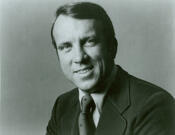
Harvey Magee Watterson (November 23, 1811 – October 1, 1891) was an American lawyer, newspaper editor, and Democratic politician who was active in Tennessee politics at both the state and federal levels. Born in Bedford County, Tennessee, he came of age in the early decades of the nineteenth century in a region that was rapidly developing politically and economically. His only child, the journalist and editor Henry Watterson, later described him as an “undoubting Democrat of the schools of Jefferson and Jackson,” a characterization that reflected his lifelong adherence to the principles of limited federal government, states’ rights, and Jacksonian democracy.
Watterson pursued classical studies in his youth and then studied law at Cumberland College in Princeton, Kentucky, an institution that drew aspiring professionals from across the trans-Appalachian West. After completing his legal studies, he was admitted to the bar and commenced practice in Shelbyville, Tennessee. Establishing himself as both a lawyer and a man of letters, he founded and edited a newspaper in Shelbyville in 1831, an early indication of the dual legal and journalistic career that would mark much of his public life. His work as an editor helped position him as a spokesman for Democratic politics in his region and brought him into the orbit of Tennessee’s rising political figures.
By the mid-1830s, Watterson had entered elective office. He served as a member of the Tennessee House of Representatives in 1835, participating in state legislative affairs at a time when Tennessee was an important base of support for the national Democratic Party. His performance in state politics, together with his growing prominence as a Democratic editor and attorney, led to his election to the United States House of Representatives. Elected as a Democrat to the Twenty-sixth and Twenty-seventh Congresses, he represented Tennessee’s ninth district and served from March 4, 1839, to March 3, 1843. In Congress he immediately drew attention, in part because of his youth and his succession to James K. Polk, who had left the House to become governor of Tennessee and later President of the United States.
Watterson’s son Henry later recalled those congressional years in his autobiography, noting that his father, “immediately succeeding Mr. Polk, and such a youth in appearance, … attracted instant attention.” According to Henry, Watterson’s father—Henry’s grandfather—“allowed him a larger income than was good for him—seeing that the per diem then paid Congressmen was altogether insufficient—and during the earlier days of his sojourn in the national capital he cut a wide swath.” His principal companion in what Henry termed the “pleasures and dissipations” of Washington society was Franklin Pierce of New Hampshire, then first a representative and later a senator, who would go on to become President. Henry wrote that “fortunately for both of them, they were whisked out of Washington by their families in 1843,” the year Watterson’s congressional service ended.
After leaving Congress, Watterson continued to be entrusted with national responsibilities. President John Tyler sent him on a diplomatic mission to Buenos Aires, where he remained for two years, engaging in United States relations with the Argentine Confederation during a period of complex hemispheric politics. Returning to Tennessee, he resumed his role in state government and served in the Tennessee Senate from 1845 to 1847. During this period he rose to a leadership position in the upper chamber, serving as speaker of the Tennessee Senate, which placed him at the center of legislative deliberations in Nashville and confirmed his standing as a leading Democrat in the state.
Watterson’s political influence was closely tied to his work in the press. From 1847 to 1851 he was editor and proprietor of the Nashville Union, one of Tennessee’s principal Democratic newspapers, through which he advocated party policies and supported Democratic candidates. In 1851 he moved to the national capital to become editor of the Washington Union, then the leading Democratic organ in Washington, D.C. With the election of his friend Franklin Pierce as President of the United States in 1853, the Washington Union became widely regarded as the “organ of the Administration,” articulating and defending Pierce’s policies. Henry Watterson later recounted that his father’s and Pierce’s “rather conspicuous frivolity” resumed in Washington during the Pierce administration, and he preserved an anecdote in which, returning late at night from an excursion, his father fell into the canal that then divided the city. After several unsuccessful attempts to pull him out, Pierce is said to have exclaimed, “Well, Harvey, I can’t get you out, but I’ll get in with you,” and joined him in the water, where they were eventually rescued by passersby, “very well pleased with themselves.”
As sectional tensions mounted in the late 1850s, Watterson remained active in national Democratic politics. He served as a delegate to the Democratic National Convention at Baltimore, Maryland, in 1860, participating in the fractious party deliberations that preceded the presidential election of that year. In the ensuing campaign he was a presidential elector on the Stephen A. Douglas ticket, supporting the Northern Democratic candidate in the four-way contest that culminated in Abraham Lincoln’s election. During and after the Civil War, Watterson’s Democratic loyalties coexisted with a willingness to work with the federal government in the process of Reconstruction. Following the conflict, President Andrew Johnson appointed him as one of a commission to investigate conditions and behavior in the states “lately in rebellion,” a role that placed him in the midst of the federal government’s efforts to assess and shape the postwar South.
In the later phase of his career, Watterson returned to the practice of law and to journalism. He practiced law in Washington, D.C., for fourteen years, drawing on his experience in Congress, diplomacy, and party politics to advise clients in the capital. Eventually he moved to Louisville, Kentucky, where he joined the editorial staff of the Louisville Courier-Journal, the influential newspaper edited by his son Henry. In Louisville he remained connected to public affairs through both his legal work and his contributions to the paper, and he lived to see his son become one of the most prominent journalists in the country. Harvey Magee Watterson died in Louisville on October 1, 1891, and was interred at Cave Hill Cemetery, a resting place for many of the city’s leading figures.
Congressional Record