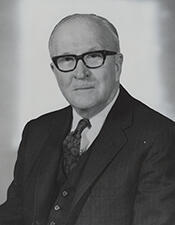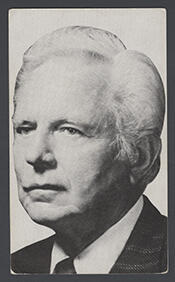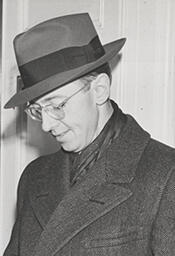
Harry Palmer Jeffrey (December 26, 1901 – January 4, 1997) was an attorney and one-term Republican member of the United States House of Representatives from Ohio, serving from 1943 to 1945. His congressional service took place during a critical period in American history in the midst of World War II, and he contributed to the legislative process during his single term in office, notably in the development of benefits for returning veterans.
Jeffrey was born in Dayton, Montgomery County, Ohio, the son of Samuel Jeffrey, a department store manager, and his wife Grace. He attended Patterson Grade School in Dayton and graduated from Steele High School. Demonstrating early academic promise, he went on to Ohio State University, from which he graduated in 1924. He continued at the same institution for legal training, earning his degree from the Ohio State University College of Law in 1926, laying the foundation for a long and distinguished legal career.
In 1926, Jeffrey was admitted to the bar and commenced the practice of law in Columbus, Ohio. The following year, in 1927, he returned to his native Dayton, where he continued in private practice and joined the firm of Iddings & Iddings, which became Iddings & Jeffrey. Building on the firm’s existing work for entrepreneurs and business enterprises, he broadened the practice to include litigation, personal injury, and divorce, establishing himself as a versatile trial lawyer. Parallel to his early legal work, Jeffrey served as a second lieutenant in the United States Army Reserve Corps from 1927 to 1930, reflecting an early commitment to public service. He further advanced his public legal career as special assistant attorney general of Ohio from 1933 to 1936.
Jeffrey entered national politics in the context of the 1942 midterm elections. A member of the Republican Party, he was elected to the Seventy-eighth Congress as the representative from Ohio’s 3rd congressional district, serving from January 3, 1943, to January 3, 1945. During his term in the House of Representatives, he represented the interests of his constituents while participating in the broader democratic process at a time when the United States was fully engaged in World War II. As a member of the House Veterans Committee, Jeffrey was one of several authors of the Servicemen’s Readjustment Act of 1944, commonly known as the G.I. Bill of Rights. This landmark legislation provided returning World War II veterans with a range of benefits, including educational opportunities and loan programs that enabled many to attend college and purchase homes. Despite this significant legislative contribution, he was unsuccessful in his bid for reelection in 1944 and left Congress at the conclusion of his term in 1945.
After his congressional service, Jeffrey resumed the practice of law in Dayton, where he continued to work as a trial lawyer until his retirement in the 1980s. Over the course of his legal career, he argued a case before the United States Supreme Court and was recognized by his peers as a Fellow of the American College of Trial Lawyers, an honor reflecting his professional standing and skill in the courtroom. He also played a prominent role in the local legal community, serving as president of the Dayton Bar Association from 1954 to 1955.
In addition to his legal and political work, Jeffrey was deeply involved in higher education and civic affairs in the Dayton region. In 1965, Ohio Governor James A. Rhodes appointed him to the Advisory Committee of the Wright State Campus of Miami and Ohio State Universities, which oversaw the development of what would become Wright State University. When the campus achieved full university status, Jeffrey served as a trustee of Wright State University from 1967 to 1977. He was chair of the Wright State University Board of Trustees in 1976 and retired from the board in September 1977. His service continued through the university’s Foundation Board of Directors, where he served for many years, first as secretary and later as president from 1981 to 1983. In recognition of his contributions, a scholarship in his memory was established at Wright State University.
Jeffrey was also active in religious and community life. He was a founding member of Fairmont Presbyterian Church in Kettering, Ohio, reflecting his long-standing engagement in local civic and spiritual institutions. Harry Palmer Jeffrey died at Dayton Hospice on January 4, 1997, at the age of 95. He was interred with his wife, Susan (1912–1986), at Woodland Cemetery in Dayton, Ohio, leaving a legacy that spanned law, public service, education, and community leadership.
Congressional Record