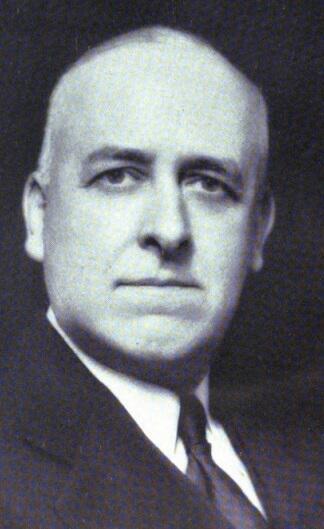
Harry Wilbur Griswold (May 19, 1886 – July 4, 1939) was an American farmer, educator, and Republican politician from La Crosse County, Wisconsin. He was elected to represent Wisconsin’s 3rd congressional district in the U.S. House of Representatives for the 76th Congress, but died just six months into his term. He previously served four years in the Wisconsin Senate, representing Wisconsin’s 32nd Senate district from 1933 to 1937, and was active for many years in local and state educational and agricultural affairs.
Griswold was born on a farm near West Salem, La Crosse County, Wisconsin, on May 19, 1886. He was raised in a rural environment that shaped his lifelong commitment to agriculture and public service. He attended the public schools and high school in West Salem, receiving a local education typical of rural Wisconsin at the turn of the twentieth century. Seeking further training in scientific farming, he went on to attend the College of Agricultural and Life Sciences at the University of Wisconsin–Madison, where he was exposed to contemporary methods in agricultural production and livestock breeding.
After completing his studies, Griswold returned to La Crosse County and engaged in agricultural pursuits, specializing in the breeding of cattle. He became particularly associated with Guernsey cattle and emerged as a leader in Wisconsin’s dairy industry. He served as president, secretary, and a director of the Wisconsin Guernsey Cattle Breeders Association, roles that placed him at the center of efforts to improve breeding standards and promote the state’s dairy interests. His work in agriculture reflected both his professional livelihood and his broader interest in advancing rural economic development.
Alongside his farming activities, Griswold developed a substantial record in local and state educational governance. He served as a member of the West Salem school board from 1912 to 1929, a seventeen-year tenure during which he helped oversee the administration and improvement of local public schools. Building on this experience, he was appointed to the Wisconsin Board of Vocational Education, on which he served from 1930 to 1936. In that capacity he participated in shaping vocational and technical education policy during a period when such training was increasingly important to the state’s industrial and agricultural workforce.
Griswold’s formal political career began at the state level. A member of the Republican Party, he was elected to the Wisconsin Senate from the 32nd legislative district, serving from 1933 to 1937. In the Senate he represented a largely rural constituency and brought his agricultural and educational background to bear on legislative matters. During his time in office, he served on the Committee on Contingent Expenditures and the powerful Joint Committee on Finance, participating in deliberations over state spending and fiscal policy during the challenging years of the Great Depression. His service in the Wisconsin Senate from 1933 to 1937 established his reputation as a diligent and fiscally attentive legislator.
In 1938, Griswold was elected as a Republican to the U.S. House of Representatives from Wisconsin’s 3rd congressional district, winning a seat in the 76th United States Congress. His term began on January 3, 1939. As a member of the Republican Party representing Wisconsin, he contributed to the legislative process during one term in office, participating in the democratic process and representing the interests of his constituents during a significant period in American history marked by the tail end of the New Deal and growing international tensions on the eve of World War II. During his brief service in Congress, he developed a reputation for attentiveness to his duties; he missed only one of the 72 roll call votes taken between January 1939 and June 1939, demonstrating a strong record of participation despite his short tenure.
Griswold’s personal life was rooted in family and community. He was married and had five children, and he continued to reside near West Salem when not in session in Madison or Washington, D.C. His ties to his home community remained strong throughout his career, reflected in his long service on the local school board and his leadership in statewide agricultural organizations.
Harry Wilbur Griswold died in office on July 4, 1939, in Washington, D.C. He suffered a heart attack at the age of 53 while driving with his wife and one of his daughters in the capital. His death brought an abrupt end to a congressional career that had lasted just six months. He was interred in Hamilton Cemetery in West Salem, Wisconsin, returning to the community where he had been born, educated, and had built his life as a farmer, educator, and public servant.
Congressional Record