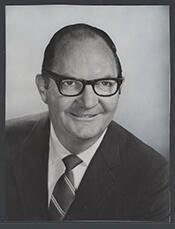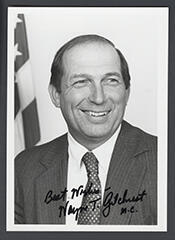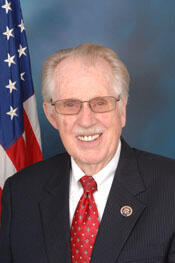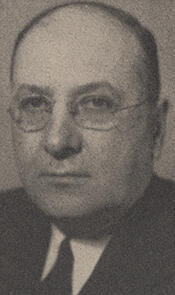
Harry Streett Baldwin (August 21, 1894 – October 19, 1952) was a Democratic politician and farmer who represented Maryland’s second congressional district in the United States House of Representatives from 1943 to 1947. Over the course of his public career, he served at multiple levels of government, including the Maryland House of Delegates and the Board of County Commissioners of Baltimore County, and played a prominent role in local governmental reform and in representing his constituents during World War II.
Baldwin was born on August 21, 1894, on the family farm in Baldwin, Baltimore County, Maryland. His father was both a farmer and a canner, and Baldwin grew up in a rural environment that would shape his later professional and political interests. He attended a one-room schoolhouse in his early years and went on to graduate from Towson High School in 1912. He then enrolled at the Maryland Agricultural College, a predecessor of the University of Maryland, where he pursued agricultural studies. His formal education was cut short when his father died in an accident at the family cannery, compelling Baldwin to leave college to manage family responsibilities. He was a descendant of Lieutenant Colonel John Streett, a lineage that connected him to a long-standing Maryland family.
Following his departure from college, Baldwin devoted himself to agriculture. He initially operated dairy farms for seven years, gaining practical experience in livestock and milk production. He later shifted his focus to truck farming, concentrating on the intensive cultivation of vegetables for market. Over time, he specialized in farming green beans, developing a reputation as a successful agricultural producer in Baltimore County. His work in farming kept him closely attuned to the concerns of rural communities and the economic challenges facing small producers, experience that would later inform his political positions and legislative priorities.
Baldwin’s entry into politics grew out of his involvement in the 1928 presidential campaign of Democratic nominee Al Smith. His activity in that campaign brought him to the attention of local party leaders, and the Democratic organization in Baltimore County soon considered him as a candidate for public office. He was elected to represent Baltimore County’s 11th district in the Maryland House of Delegates, serving from 1931 to 1935. In this role, he participated in state-level legislative deliberations during the early years of the Great Depression, representing the interests of his largely rural constituency.
In addition to his service in the state legislature, Baldwin became a central figure in Baltimore County government. He was elected to the Baltimore County Board of County Commissioners in 1934 and served on the board until 1942. During this period, he led a reform drive aimed at modernizing key county services, including the police and fire departments, sewage systems, garbage disposal, and purchasing operations. His efforts to streamline and professionalize county administration met with resistance from some fellow commissioners, prompting him to seek the presidency of the board. Running on a reform platform, he successfully won election as president of the Board of County Commissioners in 1938 and held that position until 1942, overseeing the implementation of many of his proposed improvements in local governance.
Baldwin advanced to national office when he was elected as a Democrat to the Seventy-eighth and Seventy-ninth Congresses, representing Maryland’s second congressional district from January 3, 1943, to January 3, 1947. His two terms in the U.S. House of Representatives coincided with World War II and the beginning of the postwar transition, a significant period in American history. As a member of the House of Representatives, he participated in the legislative process and represented the interests of his Maryland constituents, contributing to debates and decisions on wartime mobilization, veterans’ issues, and domestic policy during and immediately after the conflict. He was not a candidate for renomination to the House in 1946, instead seeking higher office that year.
In 1946, Baldwin entered the Democratic primary for governor of Maryland, running against prominent party figures Preston Lane and Millard Tawes. His bid for the gubernatorial nomination was unsuccessful, and Lane ultimately secured the nomination and the governorship. After this statewide campaign, Baldwin returned to his agricultural pursuits, resuming his work in farming and maintaining his longstanding connection to the land and rural life of Baltimore County. His commitment to public service, however, continued at the local level. In 1950, he was again elected to the Baltimore County Board of County Commissioners and, drawing on his earlier experience, was serving as chairman of the board at the time of his death.
Baldwin’s personal life was rooted in Baltimore County. In 1916, he married Mary Virginia Smith of Sunnybrook, Maryland. The couple had five children: four sons—Harry Wallace Baldwin, John Streett Baldwin, Maurice W. Baldwin, and William S. Baldwin—and one daughter, who became Mrs. Robert H. Price. The family experienced significant sacrifice during World War II. Harry Wallace Baldwin served as a fighter pilot and lieutenant and was shot down during the Tunisian campaign. Another son, John Streett Baldwin, died in New Mexico during a test flight of a B-29 bomber, underscoring the family’s direct connection to the wartime service and losses that marked the era in which Baldwin served in Congress.
In his final years, Baldwin continued to balance his responsibilities as a farmer and public official. On October 9, 1952, he suffered an intracerebral hemorrhage at his home in Hydes, Maryland. He was taken to Union Memorial Hospital in Baltimore, where he died on October 19, 1952. Harry Streett Baldwin was interred in Chestnut Grove Cemetery in Jacksonville, Maryland. His career reflected a steady progression from local farmer to state legislator, county reformer, and member of the United States Congress, with his public life consistently shaped by his agricultural background and his commitment to the communities of Baltimore County and Maryland’s second congressional district.
Congressional Record