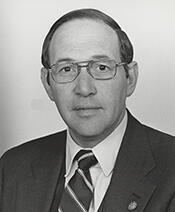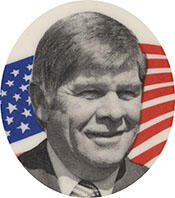
Harold Lowell Runnels (March 17, 1924 – August 5, 1980) was an American businessman and Democratic politician who served as a U.S. Representative from New Mexico from January 3, 1971, until his death in 1980. Over the course of five terms in the United States Congress, he represented his constituents during a significant period in American history, contributing to the legislative process and the work of the House of Representatives.
Runnels attended public schools in Dallas, Texas, and pursued higher education at Cameron State Agricultural College (now Cameron University) in Lawton, Oklahoma. His early professional life began in federal service: in 1942 he was employed by the Federal Bureau of Investigation in Washington, D.C., an experience that introduced him to the workings of the federal government at a young age.
After World War II, Runnels entered private business. From 1945 to 1951, he served as a manager for the Magnolia Amusement Co. in Magnolia, Arkansas. In 1951 he moved to Lovington, New Mexico, where he became a partner in Southland Supply Co. the following year. Demonstrating a strong entrepreneurial drive in the oil and gas sector, he founded Runnels Mud Co. in 1953 and later established RunCo Acidizing & Fracturing Co. in 1964. His leadership in the regional energy industry was further reflected in his role as a founder of the Permian Basin Petroleum Association in 1960.
Runnels’s political career began at the state level. He served as a member of the New Mexico Senate from 1960 to 1970, where he gained legislative experience and developed a reputation as an advocate for his region’s economic and energy interests. During this period he was also active in party affairs, serving as a delegate to New Mexico State Democratic conventions from 1960 to 1979. His work in the state legislature and within the Democratic Party laid the groundwork for his subsequent election to national office.
In 1970, Runnels was elected as a Democrat to the Ninety-second Congress and was subsequently re-elected to the four succeeding Congresses. He served in the U.S. House of Representatives from January 3, 1971, until his death on August 5, 1980. His tenure in Congress thus spanned much of the 1970s, a decade marked by major national challenges including the end of the Vietnam War, the Watergate scandal, and significant economic and energy issues. As a member of the House of Representatives, Harold Lowell Runnels participated actively in the democratic process and represented the interests of his New Mexico constituents, contributing to legislative deliberations over five terms in office. Existing records variously describe his congressional service as extending from 1971 to 1978 and from 1971 to 1981, but he in fact served continuously from 1971 until his death in 1980.
Runnels died in New York City on August 5, 1980, of respiratory failure while being treated for pleurisy and cancer. His death in office placed him among the members of the United States Congress who died while serving between 1950 and 1999. He was interred at Rest Haven Memorial Gardens in Lovington, New Mexico, reflecting his long-standing ties to that community and to the state he represented.
Runnels’s legacy has been preserved in part through archival and commemorative efforts. The Harold Runnels Papers (1971–1980), documenting his time in the U.S. Congress, are held in the Special Collections of Eastern New Mexico University. Within the university’s Golden Student Success Center, the Runnels Room, an art gallery named in his honor, recognizes his contributions and reflects a portion of his estate that was bequeathed to the institution. Public service continued in his family: his son, Mike Runnels, served as Lieutenant Governor of New Mexico from 1983 to 1987.
Congressional Record