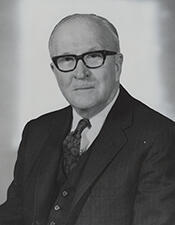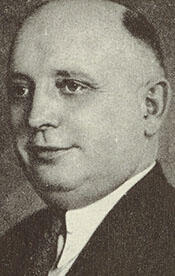
Harold Kile Claypool (June 2, 1886 – August 2, 1958) was an American businessman, publisher, and Democratic politician who represented Ohio in the United States House of Representatives for three consecutive terms from 1937 to 1943. He was born in Bainbridge, Ross County, Ohio, the son of Horatio Clifford Claypool, himself a former U.S. Representative from Ohio, and was a cousin of John Barney Peterson, further situating him within a family with a tradition of public service.
Claypool was educated in the public schools of Ohio before pursuing higher education at Ohio State University in Columbus. His early academic experience in the state’s capital city helped prepare him for a career that would combine business, law-related public service, and elective office. After leaving Ohio State University, he began to build a professional life that reflected both entrepreneurial initiative and engagement with local civic affairs.
Before entering national politics, Claypool engaged in the publishing business in Columbus, Ohio. He became the publisher of Hunter and Trader Magazine, a periodical that reflected the interests of sportsmen and traders and demonstrated his involvement in the growing field of specialized print media in the early twentieth century. In addition to his work in publishing, he served as deputy probate judge of Ross County, Ohio, a position that gave him experience in legal and administrative matters and connected him closely with the concerns of local citizens.
Claypool was elected as a Democrat to the Seventy-fifth, Seventy-sixth, and Seventy-seventh Congresses, serving from January 3, 1937, to January 3, 1943. His tenure in the House of Representatives coincided with a significant period in American history, encompassing the later years of the New Deal and the early phase of World War II. As a member of the House, Harold Kile Claypool participated in the legislative process during these critical years, contributing to debates and decisions that affected both his Ohio constituents and the nation at large. A member of the Democratic Party, he represented the interests of his district while supporting the broader legislative agenda of his party during a time of economic recovery and mounting global conflict.
After three terms in office, Claypool sought reelection in 1942 to the Seventy-eighth Congress but was unsuccessful. With the conclusion of his congressional service in January 1943, he returned to private life and resumed his involvement in the publishing and office supply business. This return to business underscored his longstanding ties to the commercial and professional communities of Ohio, particularly in and around Columbus and Ross County.
Claypool continued his public service in a different capacity when he was appointed United States marshal for the southern district of Ohio, a post he held from 1944 to 1953. In this federal law enforcement role, he was responsible for duties that included overseeing the security of federal courts, executing federal court orders, and managing the custody and transport of federal prisoners, thereby extending his record of service to the federal government beyond his years in Congress.
Harold Kile Claypool died in Chillicothe, Ohio, on August 2, 1958. He was interred in Grandview Cemetery in Chillicothe, Ross County, Ohio. His career encompassed business, local judicial administration, three terms in the United States House of Representatives, and nearly a decade as a United States marshal, reflecting a lifetime of engagement in both public and private spheres within his home state.
Congressional Record