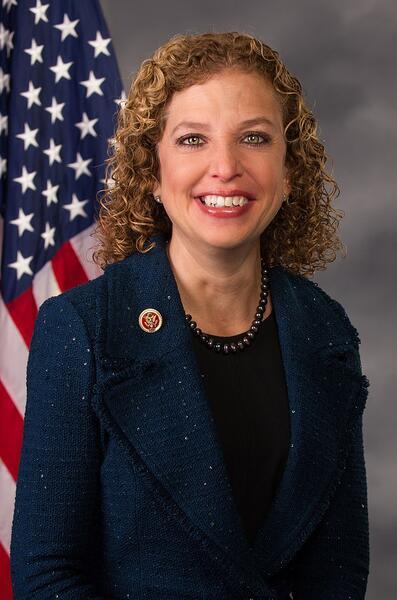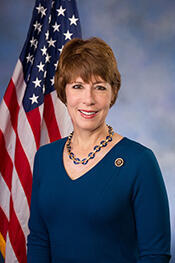
Gwendolyn Graham (born January 31, 1963) is an American attorney and politician who served as the U.S. representative for Florida’s 2nd congressional district from January 3, 2015, to January 3, 2017. A member of the Democratic Party, she served one term in the United States Congress, contributing to the legislative process during a significant period in American history and representing the interests of her North Florida constituents. She later became a candidate in the 2018 Democratic primary for governor of Florida and served in the Biden administration as assistant secretary of education for legislation and congressional affairs from 2021 to 2025. She is the daughter of Bob Graham, former governor of Florida and United States senator, and Adele (née Khoury) Graham.
Graham was born in Miami Lakes, Florida, and moved with her family to Tallahassee in 1978 when her father was elected governor of Florida. Through her parents she is of Scots-Irish ancestry and, through her maternal grandfather, of Syrian-Lebanese descent. Growing up in a prominent political family, she was exposed early to public service and state government in Tallahassee. She graduated from Leon High School in Tallahassee in 1980. Graham went on to attend the University of North Carolina at Chapel Hill, where she joined the Delta Delta Delta sorority and received a Bachelor of Arts degree in 1984. She then studied law at American University’s Washington College of Law in Washington, D.C., earning her Juris Doctor in 1988.
After completing law school, Graham began her legal career as an associate at the law firm Andrews & Kurth in Washington, D.C. She later returned to Florida and devoted substantial time to raising her family, describing herself as a “stay-at-home mom” for 13 years while her three children were growing up. In addition to her legal background, she built a career in public education administration, working for Leon County Schools in Tallahassee as an administrator, including service as director of employee relations. Her early professional and family life, combined with her experience in education and labor relations, helped shape the policy interests she later carried into elective office.
Graham became more directly involved in national politics in the early 2000s. In 2003, she joined her father’s 2004 presidential campaign. After he withdrew from the race following a heart attack, she joined Howard Dean’s presidential campaign and subsequently helped coordinate John Kerry’s unsuccessful 2004 general election campaign efforts in Florida. Drawing on this experience, she developed a reputation as an effective political organizer in a large and competitive swing state. In 2013, Graham announced her candidacy for Congress in Florida’s 2nd congressional district, challenging incumbent Republican Representative Steve Southerland in the 2014 election. The Democratic Congressional Campaign Committee targeted the race and provided support to her campaign. In November 2014, she defeated Southerland by more than 2,800 votes, becoming one of only two Democrats nationwide to unseat a Republican incumbent in that election cycle.
Graham served in the U.S. House of Representatives during the 114th Congress, from 2015 to 2017. Prior to her swearing-in, she publicly called for new leadership in both parties and announced she would not support Nancy Pelosi for Speaker of the House; instead, she cast her vote for Representative Jim Cooper of Tennessee, and again supported Cooper when the House voted on a new Speaker following John Boehner’s resignation. During her term, she was ranked as the ninth most bipartisan member of the House by the Bipartisan Index created by The Lugar Center and the McCourt School of Public Policy. Her voting record earned her a lifetime rating of 8 out of 100 from the conservative American Conservative Union and a rating of 0 on the 2016 scorecard of FreedomWorks, a group associated with the Tea Party movement, reflecting her generally liberal positions within a bipartisan working style.
In Congress, Graham served on the Committee on Agriculture and the Committee on Armed Services. On the Agriculture Committee, she sat on the Subcommittee on General Farm Commodities and Risk Management and the Subcommittee on Biotechnology, Horticulture, and Research, where she addressed issues affecting North Florida’s agricultural economy. On the Armed Services Committee, she served on the Subcommittee on Tactical Air and Land Forces, the Subcommittee on Oversight and Investigations, and the Subcommittee on Seapower and Projection Forces, engaging in oversight of defense policy and military readiness. She advocated for congressional reforms, including legislation to prohibit members of Congress from using federal funds to pay for first-class airfare and a bill intended to prevent future federal government shutdowns.
Graham’s legislative record reflected a mix of national security, social policy, and environmental priorities. She introduced and helped pass legislation to assist Israel in developing an anti-tunneling defense system to detect, map, and destroy tunnels between the Gaza Strip and Israel, and she joined Florida Democrats Ted Deutch, Lois Frankel, and Alcee Hastings in opposing the Iran nuclear deal. Domestically, she repeatedly voted to defend the Affordable Care Act from repeal while supporting targeted fixes to the law. She supported the legalization of medical marijuana and the decriminalization of recreational marijuana in Florida. Graham is pro-choice, holding a 100 percent rating from Planned Parenthood, and she supports same-sex marriage and LGBT equality, with a 100 percent rating from the Human Rights Campaign. On immigration, she backed comprehensive immigration reform, voted to protect the Deferred Action for Childhood Arrivals (DACA) program for young immigrants, supported bipartisan legislation to grant permanent legal status to refugees of the 2010 Haiti earthquake, and voted to place more stringent safeguards on refugee vetting.
Gun policy and environmental protection were also central to Graham’s congressional agenda. She supports gun control measures and, during her term, joined Representative John Lewis in the House sit-in against gun violence. She co-sponsored legislation to strengthen background checks and to prevent individuals on the terrorist watch list from purchasing firearms. On environmental issues, she co-sponsored bipartisan legislation with Representative David Jolly and Senator Bill Nelson to oppose oil drilling off Florida’s beaches and rallied nearly the entire Florida congressional delegation to support the Apalachicola Bay Restoration Act. She supported Florida counties in their campaigns against fracking and used public records to help expose and investigate Governor Rick Scott’s response to a massive sinkhole in Central Florida. At the same time, she voted for the Keystone XL pipeline, citing studies suggesting the pipeline would generate fewer greenhouse gas emissions than transporting oil by rail, truck, or barge, and she voted to have the Environmental Protection Agency re-examine its Waters of the United States rule with more input from affected stakeholders. She also supported purchasing land south of Lake Okeechobee to help restore the Everglades’ River of Grass.
Graham’s congressional career was significantly affected by redistricting. In 2015, the Florida Supreme Court ruled that the state’s congressional map was an unconstitutional partisan gerrymander in violation of the Fair Districts Amendment. The court-ordered redistricting shifted most of Tallahassee, which had long anchored the 2nd district, into the 5th district, and moved most of Graham’s Black constituents into the 5th as well. To compensate for the population loss, the 2nd district was pushed southward, taking in heavily Republican territory from the 3rd and 11th districts. The reconfigured 2nd district became one of the most Republican-leaning in the nation; had it existed in 2012, Mitt Romney would have carried it with 64 percent of the vote, compared with 52 percent in the old 2nd. Although the new district retained about 68 percent of Graham’s former territory, it was far more difficult terrain for a Democrat. Her alternative would have been to seek election in the heavily Democratic, Black-majority 5th district, challenging 24-year incumbent Corrine Brown in a primary and running in a district that would have been more than 67 percent new to her, even though members of Congress are only required to live in the state, not the district, they represent.
Confronted with these choices, Graham announced in a YouTube video sent to her fundraising list that she would not seek reelection to the House in 2016. She criticized the redistricting process, arguing that it had split Tallahassee into “two partisan districts,” and indicated that she was considering a campaign for governor of Florida in 2018. On May 2, 2017, she formally announced her intention to seek the Democratic nomination for governor. Her gubernatorial campaign emphasized improving Florida’s public schools, protecting the environment, and advancing economic policies at odds with those of Republican Governor Rick Scott, including raising the state minimum wage to $15 per hour and implementing mandatory paid sick leave. She pledged to expand Medicaid in Florida if elected and was an outspoken critic of President Donald Trump, particularly after he equated counter-protesters with white nationalists following the white supremacist rally in Charlottesville, Virginia. Continuing the “Workdays” tradition begun by her father—during which the Grahams spend full shifts working alongside Floridians at their jobs—she completed more than 50 such workdays in her campaigns for Congress and governor, building on the 408 workdays her father performed during his gubernatorial and senatorial service. In the August 2018 Democratic primary, Graham narrowly lost the nomination to Tallahassee mayor Andrew Gillum and subsequently endorsed him in the general election.
Following her time in elective office, Graham returned to federal public service in the executive branch. On April 16, 2021, the Biden administration announced that she would be nominated to serve as assistant secretary of the United States Department of Education for legislation and congressional affairs. Her nomination was formally sent to the Senate on April 22, 2021, and she was confirmed by voice vote on October 6, 2021. In that role, which she held from 2021 to 2025, she was responsible for managing the Department of Education’s relations with Congress, advancing the administration’s education agenda, and overseeing legislative strategy and outreach.
Graham has long resided in Tallahassee, Florida. She married Mark Logan in 1985, and the couple had three children together. During their children’s formative years, she devoted more than a decade to full-time parenting before returning to more intensive professional and political work. The marriage later ended in divorce, and she subsequently married attorney and law enforcement official Stephen Hurm. As one of the women in the United States House of Representatives and among the Arab and Middle Eastern Americans to have served in Congress, Gwen Graham’s career has combined family political legacy, legal training, and a focus on bipartisan problem-solving in both legislative and executive roles.
Congressional Record