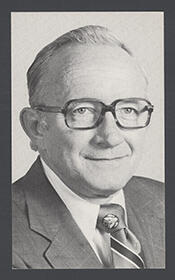
Greene Washington Caldwell (April 13, 1806 – July 10, 1864) was a Congressional Representative from North Carolina and a physician, lawyer, and state legislator whose career spanned medicine, law, politics, and military service. He was born in Belmont, North Carolina, in 1806, in what was then a largely rural region of the state. Little is recorded about his early childhood and family background, but his subsequent education and professional choices indicate access to advanced schooling and an early inclination toward public service.
Caldwell pursued higher education in medicine and, in 1831, graduated from the Medical Department of the University of Pennsylvania, one of the leading medical institutions in the United States at the time. Following his graduation, he entered federal service in a medical capacity. In 1832 he served for several months as an assistant surgeon in the United States Army. Despite this early commitment to medicine, he decided to change his professional course, leaving the medical field to study law. After reading law, he was admitted to the bar and established a legal practice in Charlotte, North Carolina, which became his principal base of professional and political activity.
Caldwell’s political career began at the state level. In 1836 he was elected to the North Carolina House of Commons, the lower house of the state legislature, representing his constituents during a period of growing political and sectional tensions in the United States. He remained in this legislative position until 1841, participating in debates over state policy and internal improvements and building a reputation that would support his advancement to national office. His service in the House of Commons marked the start of a long engagement with public affairs in North Carolina.
In 1841 Caldwell was elected as a Democrat to the Twenty-seventh Congress, representing North Carolina in the U.S. House of Representatives. As a member of the Democratic Party representing North Carolina, he contributed to the legislative process during one term in office, serving from 1841 to 1843. Caldwell’s service in Congress occurred during a significant period in American history, as the nation confronted economic questions following the Panic of 1837 and contentious debates over federal power and states’ rights. He participated in the democratic process and represented the interests of his constituents but was not a candidate for renomination at the end of his term, thus concluding his single term in the national legislature.
After leaving Congress in 1843, Caldwell continued in federal service in a different capacity. In 1844 he was appointed Superintendent of the United States Mint in Charlotte, North Carolina, an important regional branch mint that processed gold from the Carolina gold fields. His appointment placed him in charge of overseeing coinage operations and federal assets at a time when the mint played a significant role in the local and regional economy. This position further solidified his standing as a trusted Democratic officeholder in North Carolina.
Caldwell’s government service was interrupted by the Mexican–American War. On April 9, 1847, he entered military service as a commissioned captain in the Third Dragoons, a mounted regiment of the United States Army. In this role he served in the field during the conflict, adding military leadership to his record of public service. He was mustered out of the Army on July 20, 1848, following the conclusion of major hostilities and the winding down of wartime forces.
Returning to North Carolina after the war, Caldwell reentered state politics. In 1849 he was elected to the North Carolina Senate, the upper house of the state legislature. His influence extended beyond his own seat: two of his lieutenants, Davidson and Harrison, were elected to the House of Commons, reflecting his continued prominence in Democratic political circles. Seeking to return to national office, he made an unsuccessful bid for Congress in 1851. After this electoral defeat, Caldwell resumed his medical practice in Charlotte, drawing on his earlier professional training and serving the community in a civilian capacity while remaining a figure of local note.
Greene Washington Caldwell spent his later years in Charlotte, where he continued his professional and civic engagements against the backdrop of mounting sectional conflict that would culminate in the Civil War. He died in Charlotte, North Carolina, on July 10, 1864. Caldwell was buried in Old Settlers’ Cemetery in Charlotte, a historic burial ground for many of the city’s early leaders, marking the final resting place of a man whose career encompassed medicine, law, state and national politics, and military service.
Congressional Record