United States Representative Directory

Granville Gaylord Bennett

Granville Gaylord Bennett served as a representative for DK (1879-1881).

  • Republican
  • DK
  • District -1
  • Former
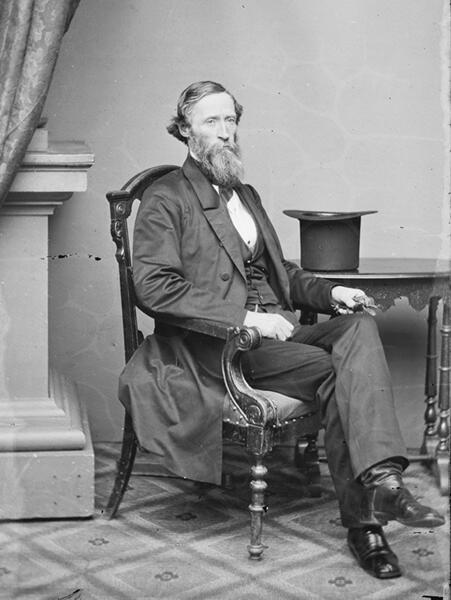
Portrait of Granville Gaylord Bennett DK
Role Representative

Current assignment referenced in the congressional directory.

State DK

Representing constituents across the DK delegation.

District District -1

District insights and legislative focus areas.

Service period 1879-1881

Years of public service formally recorded.

Font size

Biography

Granville Gaylord Bennett is a name shared by two notable American public figures: Granville G. Bennett (1833–1910), an American lawyer, judge, and delegate to the United States House of Representatives, and Granville Gaylord Bennett (1883–1975), an American Episcopal bishop. Though they lived in different generations and pursued distinct careers in law, politics, and religion, both men were associated with public service and leadership in their respective fields.

Granville G. Bennett was born in 1833, a period marked by rapid territorial expansion and political realignment in the United States. He trained in the law and entered legal practice at a time when the American frontier was still developing, and legal institutions were being established in new territories. His early career as a lawyer laid the foundation for his later judicial and political roles, as he became involved in the legal and civic affairs of his community and region.

Advancing from private practice, Bennett served as a judge, a position that placed him at the center of interpreting and applying the law in a rapidly changing society. His judicial work coincided with the broader national context of post–Civil War reconstruction and westward settlement, in which territorial courts and judges played a crucial role in establishing order and governance. His reputation as a lawyer and judge contributed to his selection as a delegate to the United States House of Representatives, a role in which he represented a U.S. territory rather than a fully admitted state.

As a delegate to the U.S. House of Representatives, Granville G. Bennett participated in the national legislative process during the late nineteenth century. Delegates from territories could debate and serve on committees, though they lacked a final vote on the House floor. In this capacity, Bennett was involved in advocating for the interests of his territory, including issues related to governance, infrastructure, and the eventual path to statehood. His service in Congress reflected both his legal expertise and his commitment to public service. He remained active in public life until his death in 1910.

Granville Gaylord Bennett, the Episcopal bishop, was born in 1883, as the United States was entering an era of industrialization, urbanization, and growing social reform movements. Coming of age in the late nineteenth and early twentieth centuries, he pursued religious vocation in the Episcopal Church, undertaking theological education and preparation for ordained ministry. His early life and education prepared him for pastoral responsibilities and for leadership within the church’s institutional structures.

Ordained in the Episcopal tradition, Bennett served in parish and diocesan roles before rising to the episcopate. As an American Episcopal bishop, he exercised oversight of clergy and congregations, participated in the governance of the church, and contributed to the shaping of Episcopal responses to the social and spiritual challenges of his time. His episcopal ministry would have included preaching, confirmation, pastoral visitation, and engagement with broader ecumenical and civic issues, reflecting the Episcopal Church’s role in American religious and public life in the mid-twentieth century.

Bishop Granville Gaylord Bennett’s tenure as an Episcopal leader spanned decades marked by two world wars, the Great Depression, and significant cultural change. Within this context, he worked to maintain and strengthen the life of the church, support clergy and laity, and address the moral and spiritual concerns of his communities. He continued in active or emeritus ecclesiastical service until his death in 1975, leaving a legacy of religious leadership that paralleled, in a different sphere, the public service of his namesake predecessor in law and politics.

Congressional Record

Loading recent votes…

More Representatives from DK