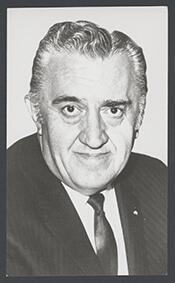
Gordon Newell Mott (October 21, 1812 – April 27, 1887) was the second and final delegate to the United States House of Representatives from Nevada Territory, serving from March 1863 until Nevada achieved statehood. A member of the Republican Party representing the Nevada Territory, he held office during a critical phase of the American Civil War and the nation’s westward expansion, participating in the democratic process and representing the interests of his frontier constituents in Congress.
Born on October 21, 1812, Mott came of age in the early decades of the nineteenth century, a period marked by rapid territorial growth and political realignment in the United States. Details of his early life, including his family background and formative influences, are not extensively documented in surviving public records, but his later professional achievements indicate that he obtained a level of education sufficient to enter the legal profession and to participate in the political life of emerging Western communities.
Mott pursued a career in law, a common pathway to public office in the nineteenth century. By the time he emerged as a public figure in Nevada Territory, he had established himself as a practicing attorney and public servant, equipped to navigate the complex legal and political issues associated with territorial governance, mining development, and settlement in the Great Basin region. His legal background positioned him to play a role in shaping the institutional framework of the territory as it moved toward statehood.
With the organization and rapid development of Nevada Territory during the Civil War era, Mott became involved in territorial politics as a Republican, aligning with the party that dominated national policy during the conflict. He was elected as the territory’s delegate to the United States House of Representatives and took his seat in March 1863. As the second and final delegate from Nevada Territory, he served one term in office, during which he contributed to the legislative process at a time when questions of Union loyalty, resource development—particularly silver mining—and the admission of new states were central to national debate.
In Congress, Mott’s role as a territorial delegate meant that he could participate in discussions, serve on committees, and advocate for legislation affecting Nevada, though without a formal vote on the House floor. Nonetheless, his tenure coincided with the crucial period in which Nevada moved from territorial status to full statehood in 1864. During this time, he worked to represent the interests of his constituents, including miners, settlers, and emerging civic institutions, and to secure federal recognition and support for the territory’s political and economic development.
Mott’s congressional service ended when Nevada was admitted to the Union as a state on October 31, 1864, at which point the territory’s nonvoting delegate position was replaced by a voting representative in the House. After his term concluded, he returned to private life and to his professional pursuits, remaining associated with the legal and civic affairs of his region. His career reflects the trajectory of many nineteenth-century Western leaders who helped guide territories through the transition to statehood.
Gordon Newell Mott died on April 27, 1887. His public service as the second and final delegate from Nevada Territory placed him at the center of a formative chapter in the history of Nevada and the broader story of American expansion and nation-building during the Civil War era.
Congressional Record